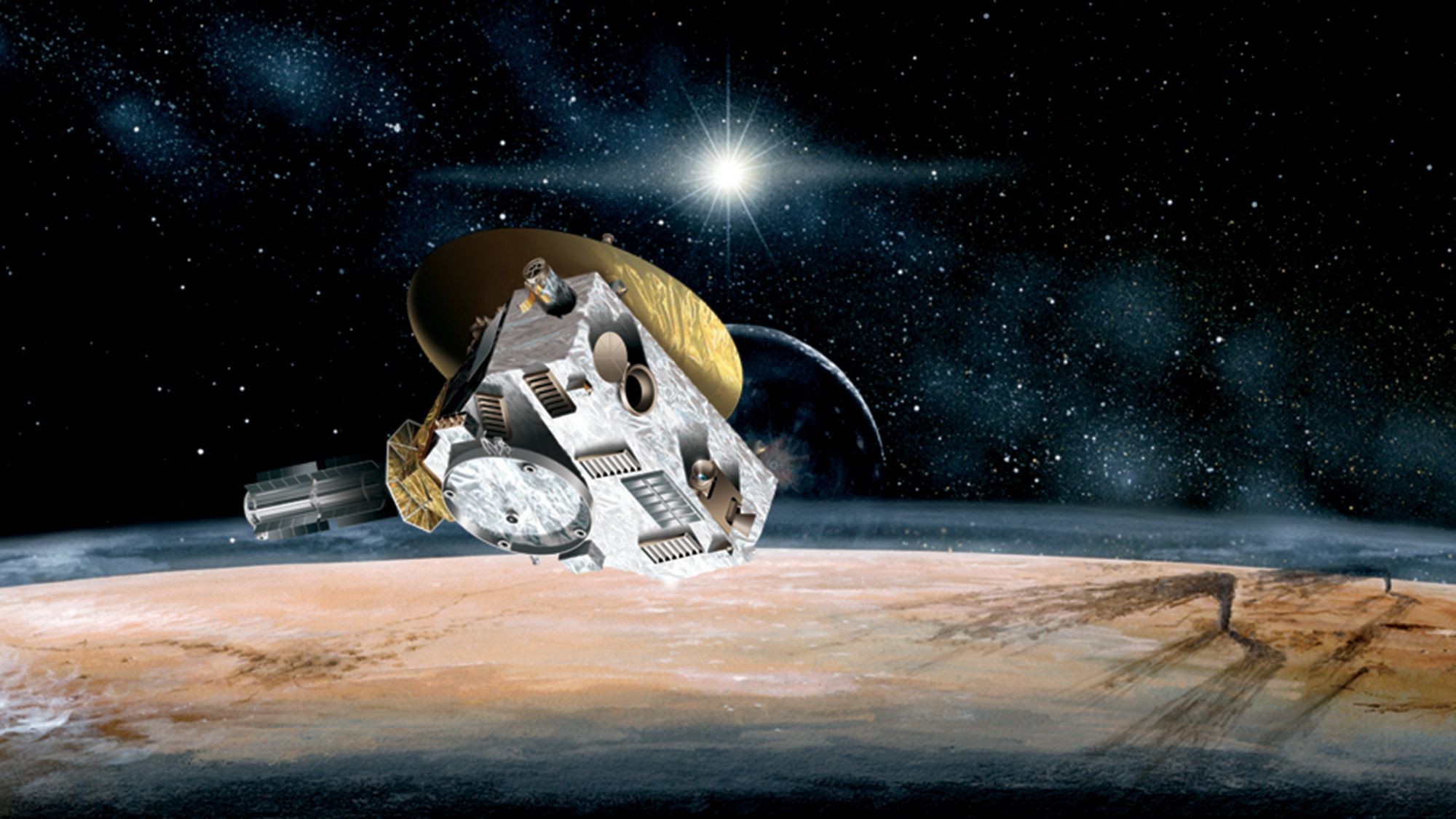
Falling asleep and waking up to find you’re billions of miles past Pluto is weird. Even weirder? Doing it with a metal probe.
NASA’s New Horizons just shook off a 321-day slumber. The spacecraft is healthy. It’s talking. And it’s ready to do the most unprecedented science in history right at the edge of everything we know.
Waking Up at the Edge of Known Space
“Every status report through this hibernation was green.”
Alice Bowman, the mission operations manager, didn’t mince words in the recent NASA statement. All systems were go every single week while New Horizons drifted through the deep freeze near the solar system’s boundary.
The wake-up is a big deal because the probe is far from home. We are talking about 5.9 billion miles away. That’s 64 astronomical units. For context, it’s 64 times further from Earth than our sun is.
The journey started with a bang. Launched in 2006, New Horizons broke records back then. It hit 36,400 miles per hour on day one. It got faster, too. Gravity assists from Jupiter in 2007, and later Pluto in 2015, gave it extra kicks. It’s been coasting ever since.
It’s currently the farthest-working spacecraft in the universe. Well, except for the Voyager twins from 1977. Pioneer 10 and 11 went further but died decades ago. New Horizons is still breathing.
How New Horizons Will Measure the Heliosphere Boundary
Here is why you should care.
Voyager 1 and 2 proved that the sun’s influence doesn’t just stop. It hits a wall. They found the heliopause—the place where the solar wind crashes into the interstellar medium. It’s a hot, thick plasma barrier. A real physical dividing line in the void.
But those old probes? Their sensors are dusty and dimming.
New Horizons has better toys. It’s equipped with more sensitive instruments that will collect the most detailed data ever gathered on this region. It’s going to map the transition zone where our solar neighborhood ends and true interstellar space begins.
It won’t get there tomorrow. Or next year.
Scientists estimate the heliopause starts around 120 astronomical units from the sun. New Horizons is currently at 64 AU. It has a long, lonely road ahead through the Kuiper Belt. But it’s moving in the right direction.
The Data Delay
Communication isn’t instant. Not even close.
Right now, a signal takes 8 hours and 52 one-way. That gap grows wider by the second. By the time the probe wakes up, we’ve already spent hours listening to its heartbeat before it knows it’s awake.
For the coming weeks, New Horizons will dump the data it saved during its long sleep. It’s studying hydrogen in the outer heliosphere. It’s checking its bearings. It’s preparing for the real work.
The heliopause is waiting. It’s 60 million miles away (in astronomical terms) from the probe’s current position. The sun’s realm is finite. The rest is a mystery.
New Horizons is heading into it. With a full tank of data. And a lot of quiet.
We wait. The signal will come. It always does.