The first heavy piece just rolled into place. 🚀
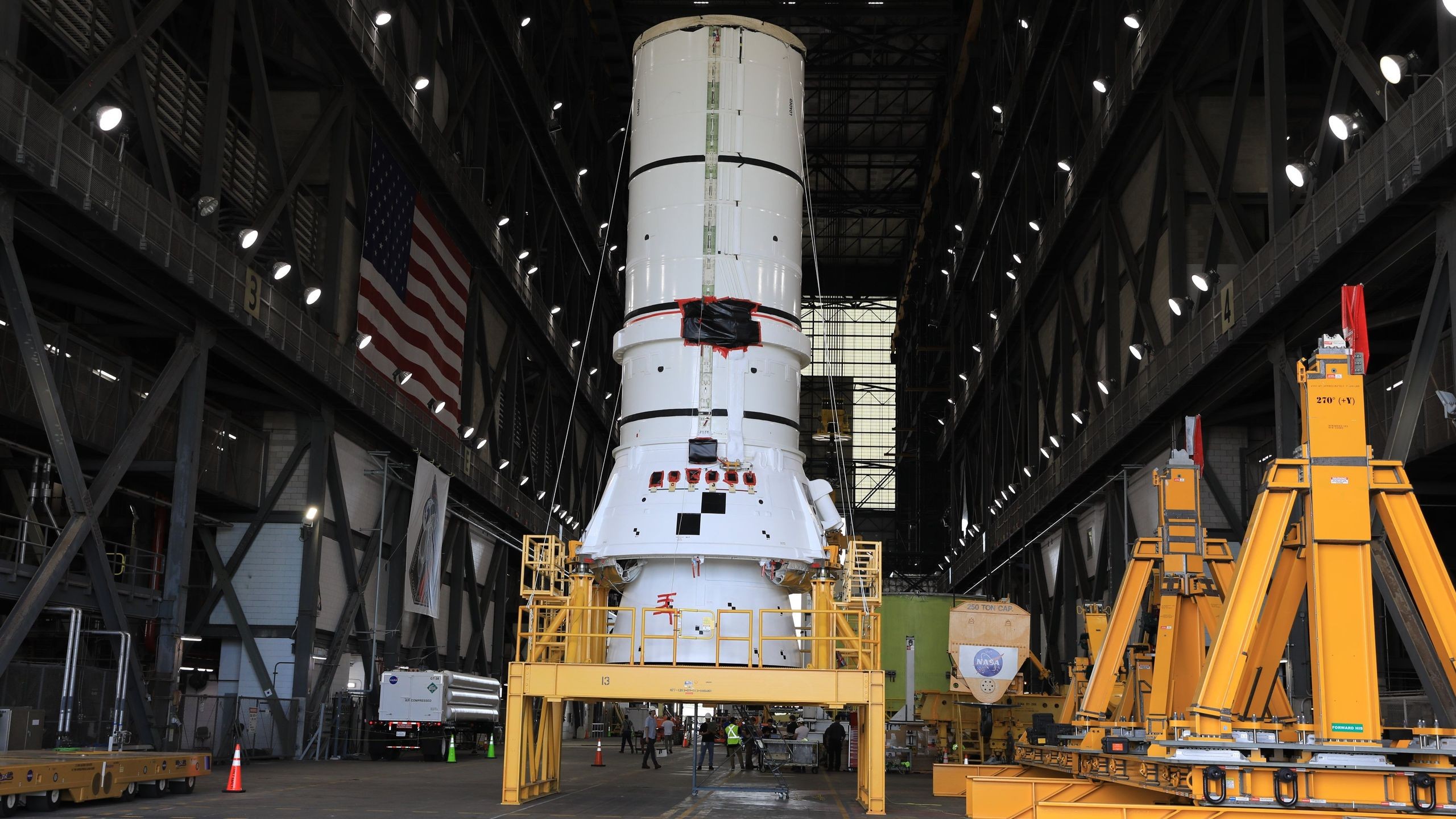
The bottom section of the left solid rocket booster (SRB)—the muscle behind the Artemis III mission—is now at the Kennedy Space Center in Florida. It sat there for a week, then got moved. Specifically to the Vehicle Assembly Building, or VAB. That’s where the actual magic happens.
This SRB segment isn’t alone for long. It’s one of two that will flank NASA’s Space Launch System (SLS). Together, they pump out 7.2 million pounds thrust at liftoff. That’s over 75 percent of the power needed to break the planet’s gravity hold. Without them, the core engines can’t lift the beast off the pad. Period.
NASA says assembly begins soon. The goal is testing rendezvous and docking skills for later moon landings.
Timeline Pressure
Building the previous SLS for Artemis II took roughly a year after components arrived. Good news for Artemis III? That gives the team some wiggle room. The targeted launch window is mid-to-late 2032—wait, no. 2027. Just in time.
But stacking might not start right away.
The core stage already arrived at the VAB in May, though it missed the engine section unlike its Artemis II predecessor. Once engines attach, parts stack higher. NASA administrator Jared Isaacman wants a “wet dress rehearsal” finished before the calendar year ends. Components keep coming while we wait.
Each SRB towers about 177 feet tall. Heavy stuff. Over three million pounds total, loaded with PBAN rubber binder, ammonium perchlorate oxidizer, and aluminum powder.
You know the problem with solids? No brakes. 🔥
Ignition starts, propellants burn. You can’t stop them mid-flight. Not even close. The four RS-25 liquid engines on the core provide guidance and extra oomph, but without the SRBs’ brute force, the whole stack stays grounded.
Testing Before Flying
Artemis III doesn’t actually go to the moon surface. Yet. It’s a rehearsal in low Earth orbit. The Artemis II mission flew four crew past Earth around the Moon recently; Artemis III flies four again, but stays closer to home for about two weeks.
The purpose is simple. Practice meeting other ships. Dock with them. Verify everything works before the long trek down to lunar regolith.
NASA contracted two companies for landers: SpaceX and Blue Origin.
First, Orion docks with Blue Origin’s Blue Moon. Crew might step inside Blue Moon’s cabin. There, they’ll test suits—the heavy EVA gear designed specifically for walking on the Moon. How does the fabric flex? Does the helmet fog?
Afterward, Orion shifts attention to SpaceX. A boilerplate version of Starship V3 comes calling. Version 3 features upgraded launch capacity, better efficiency, but notably lacks life support. And definitely lacks a crew cabin for this specific flight. Just a docking adapter and raw hardware.
Starship meets Orion. Blue Moon watched. All systems tested.
Artemis III launches early next year? Or slips further toward 2027? Only time will tell, really.