The music industry didn’t wait for him. It moved on, faster than anyone could have predicted. When Elvis Presley returned from military service in 1960, the landscape was unrecognizable. The wild, hip-shaking rebellion that had defined his early years had been replaced by polished, safe teen idols. Bobby Vee. Frankie Avalon. Connie Francis. They were clean-cut. They were selling well. The Twist ruled the dance floors, and the raw energy of the Sun Studio days felt like a relic of a different time.
Elvis and his manager, Colonel Tom Parker, knew the game had changed. They couldn’t lean on controversy anymore. That rebellious persona was gone, traded for a mature, respectable image that wouldn’t scare off the middle class. It wasn’t a surrender. It was a pivot.
The Peak of Musical Control
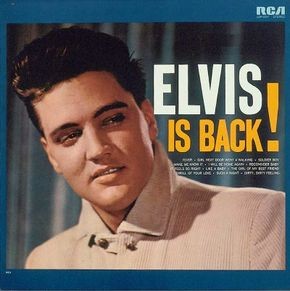
Critics often mistake this shift for a decline in talent. They’re wrong. Elvis Is Back isn’t a step down. It’s a peak.
With maturity came control. The artist was no longer reacting to trends; he was curating them. The album features an eclectic mix that proves his versatility hasn’t faded—it’s just focused. He delivers a sentimental duet with Charlie Hodge on “I Will Be Home Again” with genuine warmth. Then he pivots hard to the gritty, blues-soaked “Reconsider Baby,” driven by a saxophone solo from Boots Randolph that cuts through the mix.
He unified these disparate styles—pop, blues, country—into something cohesive. The result was an innovative record that hit No. 2 on the charts. It proved that the King could evolve without losing his core.
The Nashville Sessions and Hidden Gems
Not every track made the cut for the initial release. RCA Records held back two powerhouse ballads recorded during the Nashville sessions, planning to release them separately later. These were “It’s Now or Never” and “Are You Lonesome Tonight?”
The decision to pull these tracks highlights how carefully Parker was managing the brand. These songs were darker. More complex. They required a different kind of listener.
Take “Are You Lonesome Tonight?” It was a stark departure from his pre-army catalog. The song has history. Al Jolson popularized it in the 1920s, but Elvis likely knew it through a 1959 pop version by Jaye P. Morgan. Morgan had adapted an arrangement originally created by the Blue Baron Orchestra in 1950.
Colonel Parker urged Elvis to record “Are You Lonesome Tonight?” It was unusual for Parker to interfere with song choices, but he saw the fit perfectly.
The song was melancholy. It was mainstream. It suited the new, polished Elvis exactly. It wasn’t about rocking out; it was about crooning to a living room audience.
The Opera That Changed Everything
Who could have guessed that a reworked version of an 1901 Italian opera classic would become Elvis’s biggest-selling single? “It’s Now or Never” is based on “O Sole Mio,” but it’s not a direct cover. It’s a transformation.
The contrast between his 1956 image and his 1960 reality is staggering. In ’56, newspapers skewered him for thrusting his hips to “Hound Dog.” He was a scandal. By the time “It’s Now or Never” dropped, he was a press favorite.
How did that happen?
Serving in the army from 1958 to 1960 did the heavy lifting. It cleaned up the image. It won over the mainstream press and the general public. Suddenly, conservative radio stations that had blacklisted him were spinning his records. He wasn’t just a rockabilly rebel anymore. He was a viable, adult artist.
The shift wasn’t just cosmetic. It opened doors to a wider, older audience that had previously refused to touch a Presley record. The rock and roll kid had grown up, and the country had grown up with him. Or at least, they pretended to.
How “It’s Now or Never” Transformed Elvis’ Sound
Elvis didn’t record It’s Now or Never just to chase radio play. The tune was originally ‘O sole mio by Capurro and di Capua, but Elvis knew it through Mario Lanza’s operatic version—and the English lyrics There’s No Tomorrow by Tony Martin. He liked the drama. He liked the challenge.
In the army, he told his publisher Freddie Bienstock at Hill and Range to get new words on it. The label’s only available writers were Aaron Schroeder and Wally Gold. They saw the royalty potential and cranked out lyrics in under thirty minutes. A demo by David Hill (also known as David Hess) arranged in a cha-cha style sealed the deal. Elvis loved it.
The result was historic. It’s Now or Never stayed on the charts for twenty weeks. It hit number one in the US for five. Guinness records later pegged worldwide sales at over twenty million copies. It proved Elvis could handle serious vocal weight, not just rockabilly energy.
The Sinatra Special: A Strategic Rebrand
May 8, 1960. Elvis stepped onto TV screens for the first time since leaving the military. The venue: The Frank Sinatra-Timex Special, billed as Welcome Home Elvis. Colonel Parker had locked in this appearance months before Elvis even got his discharge papers.
The plan was clear. Parker wanted to reposition his asset. He didn’t just want teenage girls screaming; he wanted adults. He wanted pop enthusiasts. He wanted Elvis to sit at the same table as the Rat Pack.
To guarantee a loud, energetic atmosphere, Parker filled the studio audience with 400 members from Elvis’ biggest fan clubs. The strategy worked. ABC-TV pulled a 41.5 share that night. It was a massive rating win. Elvis walked away with $125,000 for six minutes of airtime.
Sinatra, Sammy Davis Jr., Peter Lawford, and Joey Bishop were there. Nancy Sinatra, the object of recent gossip columns, was on set too. Elvis performed his new hits. Then came the duet.
Elvis wore a conservative tuxedo. His hair was shorter, the sideburns gone. He looked like a serious adult. When he sang Witchcraft and Sinatra crooned Love Me Tender, it felt like a passing of the torch. The Voice was handing over the crown to the King.
Ed Sullivan’s Cold Shoulder
Not everyone bought into the polished new image. Ed Sullivan, syndicated in the New York Daily News, wasn’t having it. In May 1960, he wrote a scathing column. He blamed Colonel Parker for limiting Elvis to just two songs. Sullivan used a farmer analogy, claiming Parker was afraid to give a hungry horse a full bale of hay.
Sullivan seemed to forget this was Sinatra’s show, not Elvis’. There were four other guests. Plus, Sullivan took shots at Elvis’ look. He mocked the new hairstyle, calling it a “high hair-do” that looked like a ski jump. The bitterness over past business dealings clearly bled into his critique.
The Pearl Harbor Benefit
By March 25, 1961, Elvis was in Hawaii. He performed at the Bloch Arena during a fundraiser for the USS Arizona memorial. This ship was one of eight battleships sunk during the December 7, 1941, attack.
Tickets ran from $3 to $10. But there were special ringside seats for $100. Elvis and Parker bought fifty of those seats and donated them to patients at Tripler Hospital. The event raised over $52,000. The Hawaii House of Representatives passed Resolution 105 to thank them.
Was it just PR? Maybe. It did help Elvis seem more palatable to older voters. But Elvis had a generous streak. He gave to charities quietly throughout his life, even when no one was watching. Five years later, while filming Paradise, Hawaiian Style, he visited the completed memorial alone. When photographers rushed in, he shooed them away. He didn’t want a photo op. He wanted to pay respects.
With Elvis Is Back! on the shelves and the Sinatra special in the rearview, the team moved fast. The film career needed a reboot.