Third planet found. Or rather, revealed. It was always there, just hiding behind the glare.
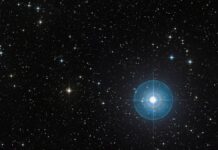
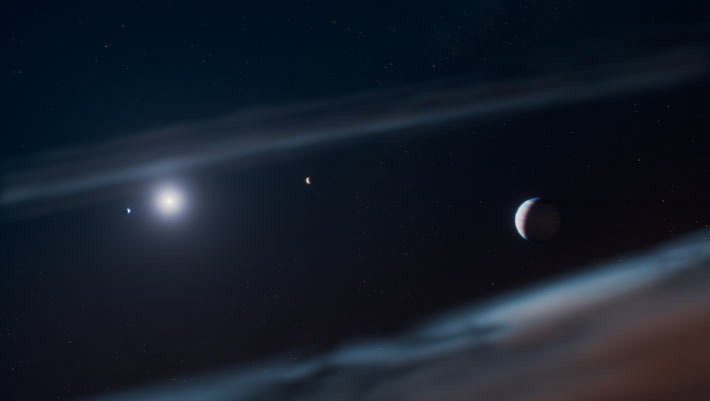
The target is Beta Pictoris, a star in Pictor roughly 63 light-years out. Young. Hot. It weighs 1.8 times our Sun but is barely 20 million years old. That is practically a newborn in stellar terms. Around it swirls a disk of gas and dust, along with comet-like bodies. And two giant planets we already knew about. Beta Pictoris b and Beta Pictoris c.
But now there is a third. They call it Beta Pictoris d.
Accidents make good astronomers
Dr. Ben Sutlieff from the University of Edinburgh didn’t even want to look for a new world.
He was studying Beta Pictoris b. Just checking how it changes over time. Routine stuff. But when he and his colleagues dug into the images, they saw something else. A faint dot separate from b. Something unexpected.
Was it real?
To prove it wasn’t just noise, the team checked the ESO archive. Past observations. Years of data. And there it was. Hiding in images going back eleven years. Once it was so dim you could barely tell it existed against the brightness of its bigger neighbor.
“Found you,” said Dr. Jayne Birkry at Oxford.
The faintest thing yet
Beta Pictoris d is a gas giant. Like Jupiter or Saturn, but with a twist.
It sits way further out than the others. Its orbit is wide. The planet itself is heavy—about 2.4 times the mass of Jupiter. That sounds big until you realize how hard it is to spot.
It is cold. Faint. Blown out by the star.
It is 100 times dimmer than Beta Pictoris b.
Dr. Markus Bonse from ESO notes that this makes it the faintest exoplanet ever imaged directly from the ground. That is no small feat. Most ground-based telescopes are lucky to see bright giants close to their stars. This one is distant and shy.
Two teams. One sky.
They caught it with ERIS on ESO’s Very Large Telescope. Clear detection.
But wait. Another team saw it too.
An independent group led by Aidan Gibbs at UC San Diego spotted the same world. They used the James Webb Space Telescope. Different tool. Same result.
Why does it matter?
Beta Pictoris is a lab. A playground for figuring out how planetary systems form. How they evolve. Adding another planet to the roster changes the narrative.
The papers just came out in the Astrophysical Journal Letters. Two studies. One story.
The system was already fascinating with two planets and a debris disk. Now it has three imaged worlds. Only the second known system with this many visible planets.
Maybe there are more out there. Just waiting.