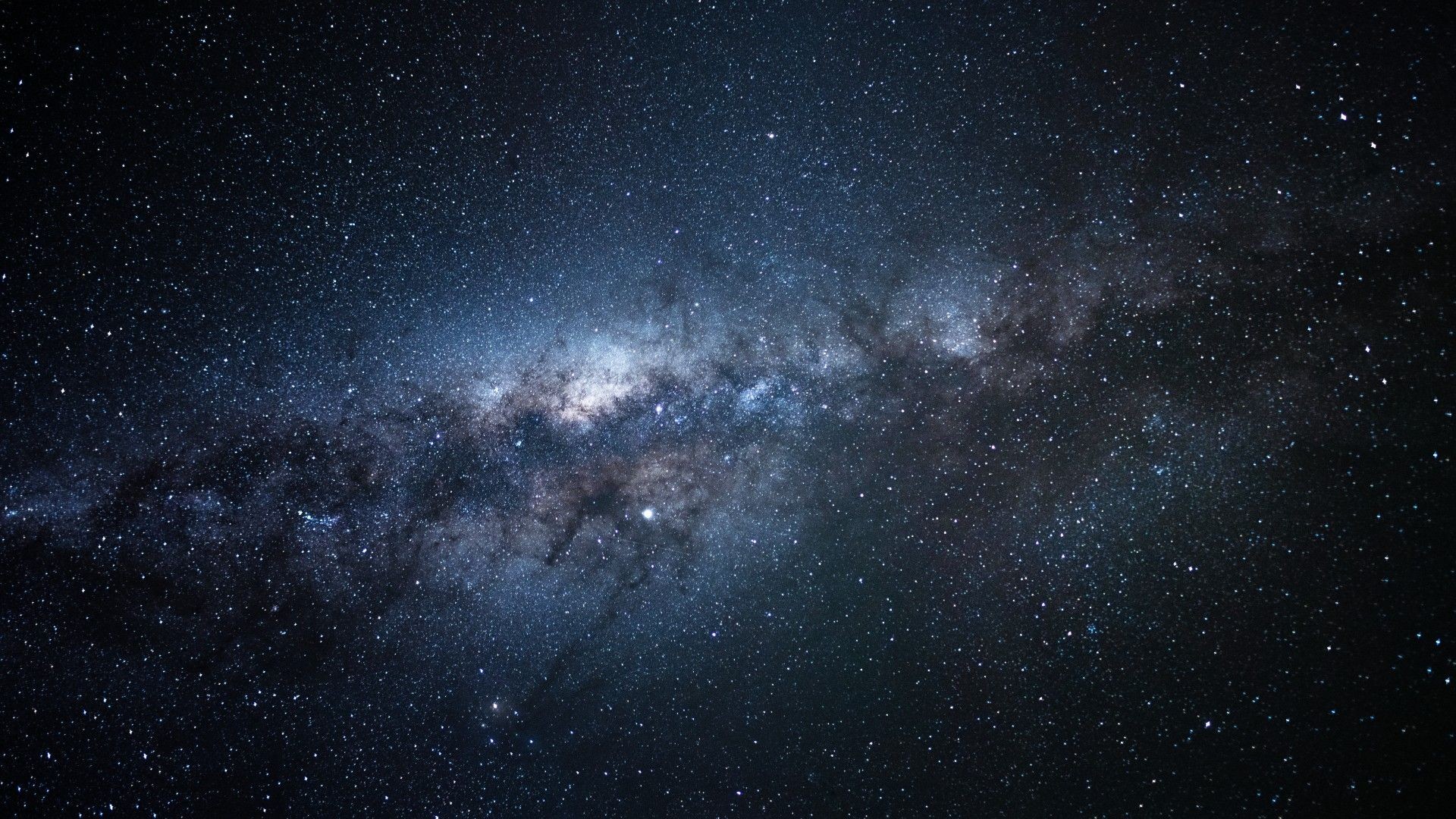
The Milky Way didn’t just appear. Not all at once, anyway. It built itself by swallowing smaller neighbors. Over billions of years it gobbled up dwarf galaxies and stitched them into its own structure.
Those victims leave traces behind.
Astronomers can spot them now. They look for stars that still share common traits from their past homes. If a group of stars has the same chemical fingerprint or orbital habit they probably grew up together before being devoured.
Federico Sestito and his team found such a group. Twenty stars. They call the remnant Loki.
“We might have detected one of the various systems that formed the Milky Way,” Sestito wrote in an email to Space.com.
This isn’t new work. Not exactly. It follows his earlier findings. But there is a difference. Before he lacked chemical data. He could only look at how the stars moved. That wasn’t enough to prove origin.
Now he has the chemistry too.
The recipe of ancient stars
Hydrogen. Helium. These were the starters for the universe’s first stars. When those stars burned they forged heavier elements. Iron. Gold. Silver. The next generation of stars used that recycled material.
Each cycle made stars richer in metals.
So early stars are “metal-poor.” They have only traces of heavy elements. That scarcity is a clue. These 20 stars in our study are old. They are also poor in metals. This suggests they came from a single small galaxy before it joined the Milky Way.
But wait. There are millions of metal-poor stars here. Why these 20?
Their orbits don’t match the usual crowd. The disk of the Milky Way is filled with younger stars. Those neighbors are rich in metals and move predictably.
The Loki stars are stuck in the disk but they act differently. Their motion is strange for this neighborhood. This odd positioning combined with their specific chemical mix points to a shared home.
Putting the puzzle together
You can’t use one tool for this job. You need many.
Sestito mixed methods. High-resolution spectroscopy. Orbital calculations. Computer simulations. He compared these 20 stars to known groups. Halo stars. Dwarf galaxies. Simulated populations.
The results told a specific story.
The chemistry shows enrichment from high-energy events. Supernovas. Hypernovas. Fast-spinning massive stars. Neutron star mergers.
What didn’t show up?
White dwarf explosions. No sign of those. This absence is key. It means Loki was likely a short-lived energetic galaxy. It burned bright and fast before it died into the larger Milky Way structure.
Finding ghosts in the machine
Why does this matter?
Because these old stars are time capsules. They show us how the Milky Way was built. They reveal the origin of elements and the nature of the very first lights in the dark universe.
Sestito thinks Loki isn’t unique.
He expects to find more hidden galaxies. Finding them at the edges of the galaxy is relatively easy. They stand out against the dark. But the disk?
The disk is a mess. Younger metal-rich stars crowd the view. Finding an ancient intruder there is like looking for a needle in a noisy room. It takes time.
Sestito doesn’t seem worried though. Better tools are coming. Facilities that can check thousands of stars for chemistry instead of dozens.
When that data arrives we will see the building blocks more clearly.
Will Loki stay a mystery? Or will we find its siblings?
We probably won’t know until the next wave of observations hits. Until then we just keep looking at the disk. Watching for something that doesn’t fit.