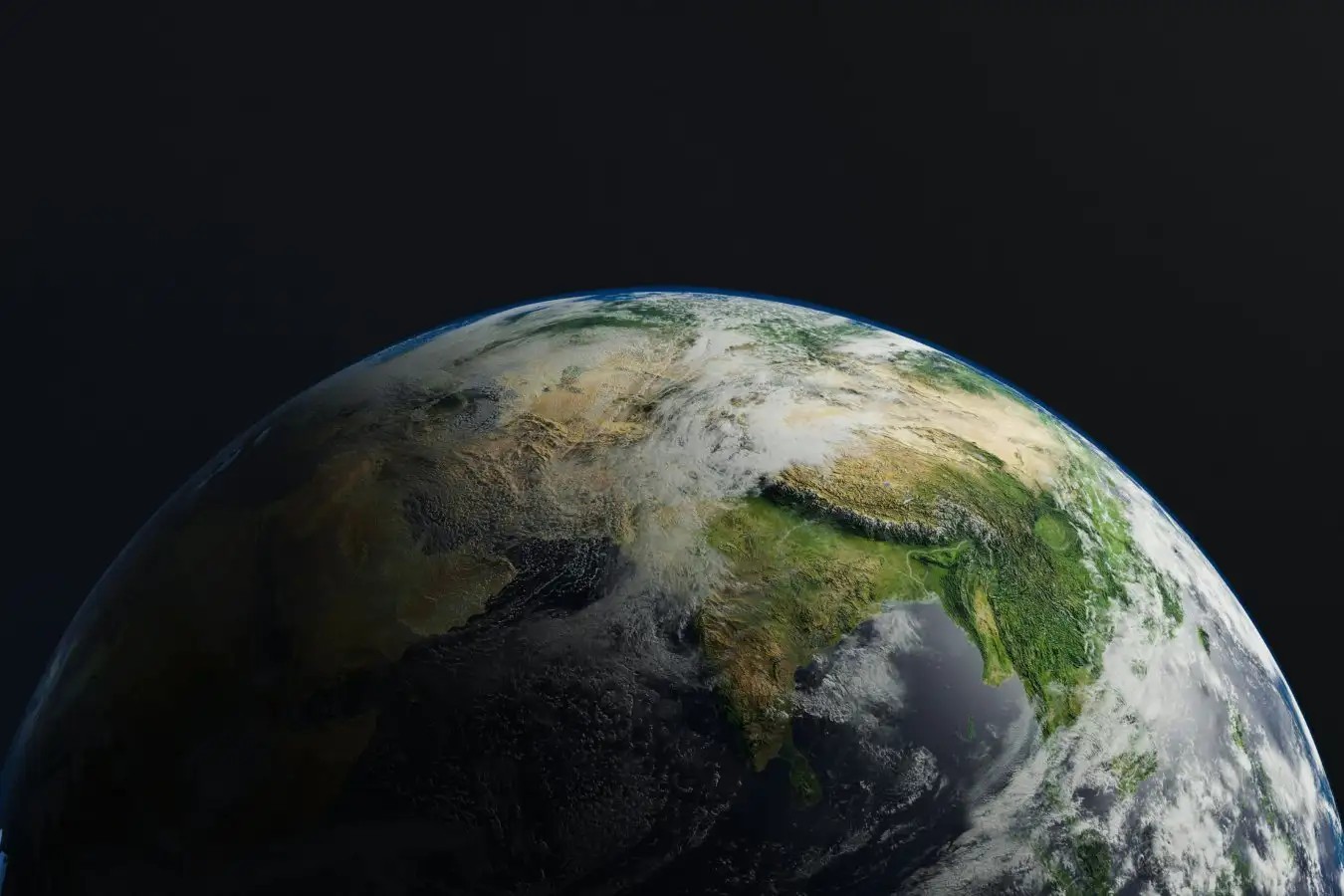
The sun is aging. It is getting hotter, bigger, more aggressive. Eventually it will boil our oceans and swallow the planet whole. Standard estimates say that’s 5 billion years away. That sounds like eternity, right? It feels like enough time to worry about dinner instead. But when do we actually stop being habitable? When does complex life say, “enough”?
Previously, we thought the end was coming sooner than you might imagine. Around 1.35 billion from now, plants were expected to choke and die. Why? Because of carbon dioxide levels dropping below the threshold needed for photosynthesis. Specifically, below 10 parts per million.
Jacob Haqq-Misra works at Blue Marble Space in DC. He has a take on the planetary thermostat. It’s the greenhouse effect. When it gets hot, rocks absorb CO2. The atmosphere cools off, sort of. This balance keeps us in a livable range, mostly.
The thermostat on the planet is the greenhouse Effect
Now, the sun is brightening. As it does, CO2 gets locked into the crust faster. Less CO2 in the air means fewer plants. No plants means no complex food web. Just microbes left in the soup. We assume those hardy little germs last much longer. But we aren’t sure exactly how long.
New simulations suggest we underestimated plant resilience. Haqq-Misra, alongside colleague Eric Wolf, ran deeper models. They didn’t just assume standard C3 photosynthesis. They included Crassulacean Acid Metabolism, or CAM. Cacti use it. Pineapples do too.
It is more efficient at grabbing that thin air. It could drop the starvation limit to just 1 ppm. Not 10. One.
That shifts the timeline massively. Instead of dying out at 1.35 billion, vegetation could hang on past 1.8 billion. An extra half-billion years. That’s 500 million extra years of leaves, forests, algae, and stuff breathing under a hostile sky.
“Life on Earth can do a lot than we thought,” Haqq-Misra said. Evolution gets time, too. Billions of years of it. Organisms might adapt to the slow burn better than our current static models assume.
Edward Schwieterman from UC Riverside finds this oddly reassuring. Some models placed us near the middle of the habitable clock. Or even the end. These new ones put us near the beginning. We have company ahead of us, literally.
Why does that matter to us now?
If Earth survives complex life this long, then the universe might be friendlier to biospheres than we fear. We might find more habitable worlds. We won’t just find barren rocks. We might look for Earth-like planets that are still thriving.
There’s a practical outcome here. We could actually see these analogs in the next twenty years. Telescopes are getting better. The search just got easier, apparently.
The end isn’t here yet. It’s not even close. The clock ticks slower than we thought.
So breathe easy. The grass is not just green, it’s persistent. And maybe, just maybe, we are looking at a future where the trees stand long after we’re dust.