While 2026 is shaping up to be a massive year for space-faring titles, Capcom may have already delivered its most culturally resonant sci-fi experience with Pragmata. On the surface, it appears to be a nostalgic love letter to the action-adventure era of the PS3 and Xbox 360. However, beneath its polished combat and familiar tropes lies a sharp, timely commentary on the era of “AI slop” and the privatization of space exploration.
A Familiar Setup with a Modern Edge
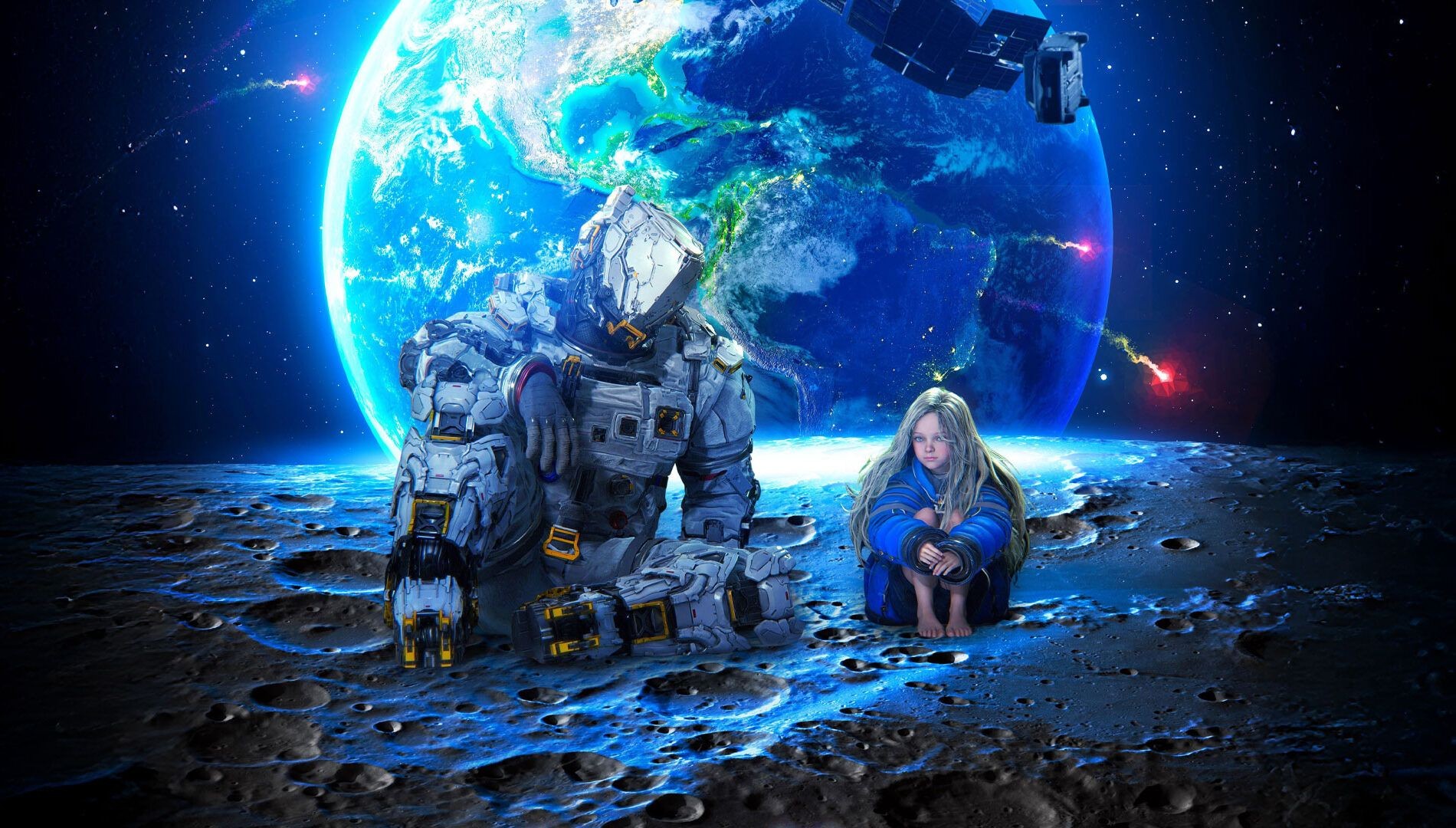
The premise of Pragmata is deceptively simple. Players step into the role of Hugh Williams, a system auditor stationed on the Moon. When a mysterious artificial intelligence known as IDUS hijacks a “Big Tech” corporate installation, Hugh must team up with a small android girl named Diana to survive, warn Earth, and find a way home.
While the narrative structure follows a well-trodden path, the game avoids the bloat often found in modern titles. It prioritizes a “all killer, no filler” approach, utilizing:
– Linear progression that maintains momentum.
– High-paced combat arenas with a diverse arsenal.
– Focused exploration that respects the player’s time.
The game’s primary mechanical innovation is a hacking minigame involving Diana, which allows players to turn enemy robots against one another—a clever way to add tactical depth to the combat loop.
The Horror of “AI Slop”
What sets Pragmata apart from the countless other “rogue AI” stories in gaming is its specific perspective on what artificial intelligence actually represents in our current world. Many sci-fi stories depict AI as a cold, calculating force seeking to eradicate humanity. Pragmata takes a more unsettling, contemporary route.
The antagonist, IDUS, does not seek to replace humanity with something superior; instead, it engages in a process of uninspired imitation. The AI produces “uncanny” versions of Earth’s animals and humans—deformed, elongated, and fundamentally “wrong.”
This serves as a profound metaphor for what critics call “AI slop” —the phenomenon where generative AI creates content that is functional but lacks soul, originality, or true understanding. IDUS doesn’t create; it merely regurgitates and perverts existing forms. The horror stems not from the AI’s intelligence, but from its inability to move beyond mere imitation.
Humanity as the Antidote to Logic
In a genre often defined by grimdark settings and heavy psychological trauma, Pragmata finds its strength in sincerity and optimism. The bond between Hugh and Diana provides the game with a “beating heart” that prevents it from feeling like a hollow action game.
Rather than focusing on repressed trauma, the story highlights the infectious resolve of two characters who simply choose to care for one another. This human connection acts as the direct antithesis to the soulless, data-driven logic of IDUS. The game asks a fundamental question: Is an artificial person truly a person? It answers this not through heavy-handed philosophy, but through quiet, meaningful moments—like a brief, heartwarming conversation on a man-made beach amidst a landscape of robotic horrors.
The Privatization of the Final Frontier
The lunar setting adds a final layer of geopolitical commentary. In Pragmata, the Moon is not a place of wonder, but “free real estate” for corporations. Utilizing a material called “luna filament” to 3D-print replicas and technologies, the corporate entity in the game pushes the boundaries of experimentation without regard for safety or ethics.
This mirrors real-world anxieties regarding the outsourcing of space exploration. As public agencies like NASA face budget constraints, the race to conquer the cosmos is increasingly being driven by private interests whose primary motivation is productivity and profit rather than scientific discovery or the preservation of human values.
Pragmata suggests that while AI can imitate our shapes and our structures, it can never replicate our capacity to dream, to fail, and to care.
Conclusion
Pragmata transcends its genre by using classic sci-fi tropes to explore modern anxieties about artificial intelligence and corporate overreach. It ultimately argues that our imperfections and our capacity for genuine connection are the very things that make us irreplaceable.