New research has revealed a stark link between land-based pollution and the decline of marine biodiversity along the British coast. Scientists have found that sewage and agricultural runoff are having an “alarming” impact on seagrass meadows—often described as the underwater forests of the ocean—significantly reducing the populations of the small invertebrates that form the base of the marine food web.
The Hidden Cost of Nutrient Pollution
While public concern often focuses on the hygiene of swimming in sewage-contaminated waters, this study highlights a deeper ecological crisis. The research, conducted by Project Seagrass and Swansea University, demonstrates that excessive nutrients entering rivers from sewage discharges, industrial wastewater, and agricultural fertilizers are fundamentally altering marine ecosystems.
These nutrients trigger a process known as eutrophication. When nitrogen and phosphorus levels rise, they cause explosive algae growth. This algal bloom smother seagrass beds, blocking the sunlight they need to survive and depleting the water of oxygen. The result is a degraded habitat that can no longer support the rich diversity of life it once held.
A 90% Drop in Marine Life
The findings were derived from an examination of 16 different coastal sites across Britain, selected to represent a gradient from highly polluted to relatively clean environments. The contrast was striking:
- Nitrogen Impact: Higher concentrations of nitrogen were consistently linked to lower animal abundance and species richness. The researchers noted that increased nitrogen levels could correspond to an approximately 90% decrease in the abundance of life per unit of habitat area.
- Phosphorus Impact: Elevated phosphorus levels were found to have a “devastating negative effect,” particularly within lagoon environments.
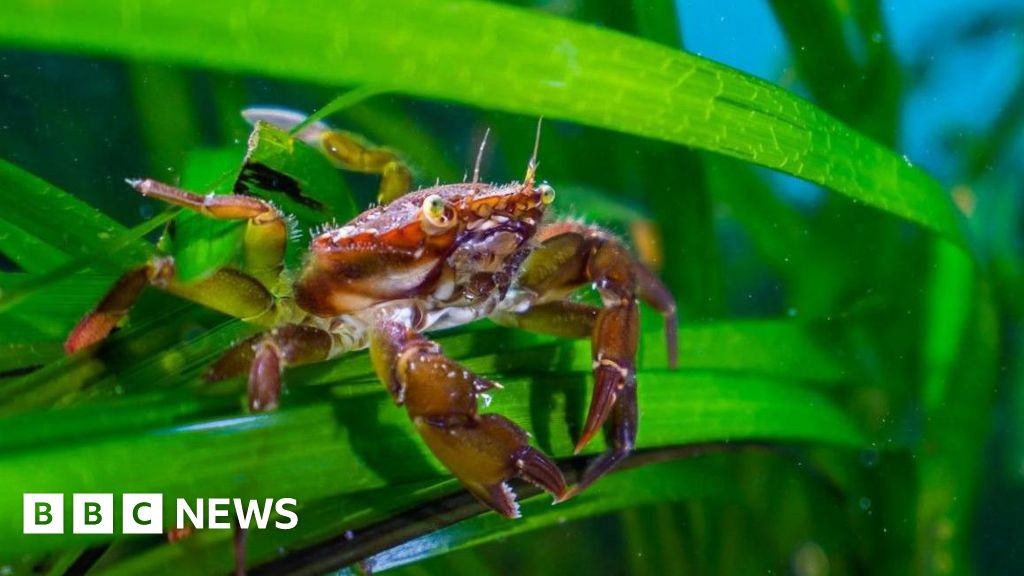
Seagrass meadows are critical habitats. A single hectare of healthy seagrass can harbor up to 100 million invertebrates, including crabs, shrimps, and snails. These creatures are the “insects” of the ocean, essential for the functioning of the marine environment and serving as a primary food source for fish and birds.
Hotspots of Decline
The study identified specific areas where the impact is most severe:
* The Thames Estuary (Essex Coast): Seagrass meadows here are heavily smothered by algae due to high nutrient loads.
* The Firth of Forth (Scotland): This east coast site also showed significant degradation.
* Skomer Island (Wales): While internationally renowned as a wildlife haven, this site faces pressure from both human impacts and natural factors like seabird guano.
In contrast, sites with healthy, clear water —such as the Isles of Scilly off Cornwall and the Orkney Islands—showed much higher levels of biodiversity and life.
The Need for Integrated Land-Sea Thinking
The research underscores a critical realization: to protect the ocean, we must manage the land.
Dr. Richard Unsworth from Swansea University emphasized that riverine inputs from poor fertilizer use and sewage are directly influencing the amount of food available for fish and birds. “We want that biodiversity, we want that productivity in our oceans,” he stated.
This has already led to some regulatory changes, including limits on housebuilding in sensitive coastal areas and restrictions on slurry storage and spreading on farmland. However, the study argues for a more holistic approach.
“If we want to protect the marine environment we need to look towards the land and there needs to be some integrated thinking—that’s a conversation that is very rarely had.”
Conclusion
The health of the UK’s underwater forests is inextricably linked to how we manage our rivers and farmland. The data confirms that nutrient pollution is not just a surface-level issue but a driver of severe biodiversity loss. Protecting these vital carbon-absorbing habitats requires coordinated action across both terrestrial and marine sectors to reduce the flow of sewage and agricultural runoff into coastal waters.