TESS sees it all now.
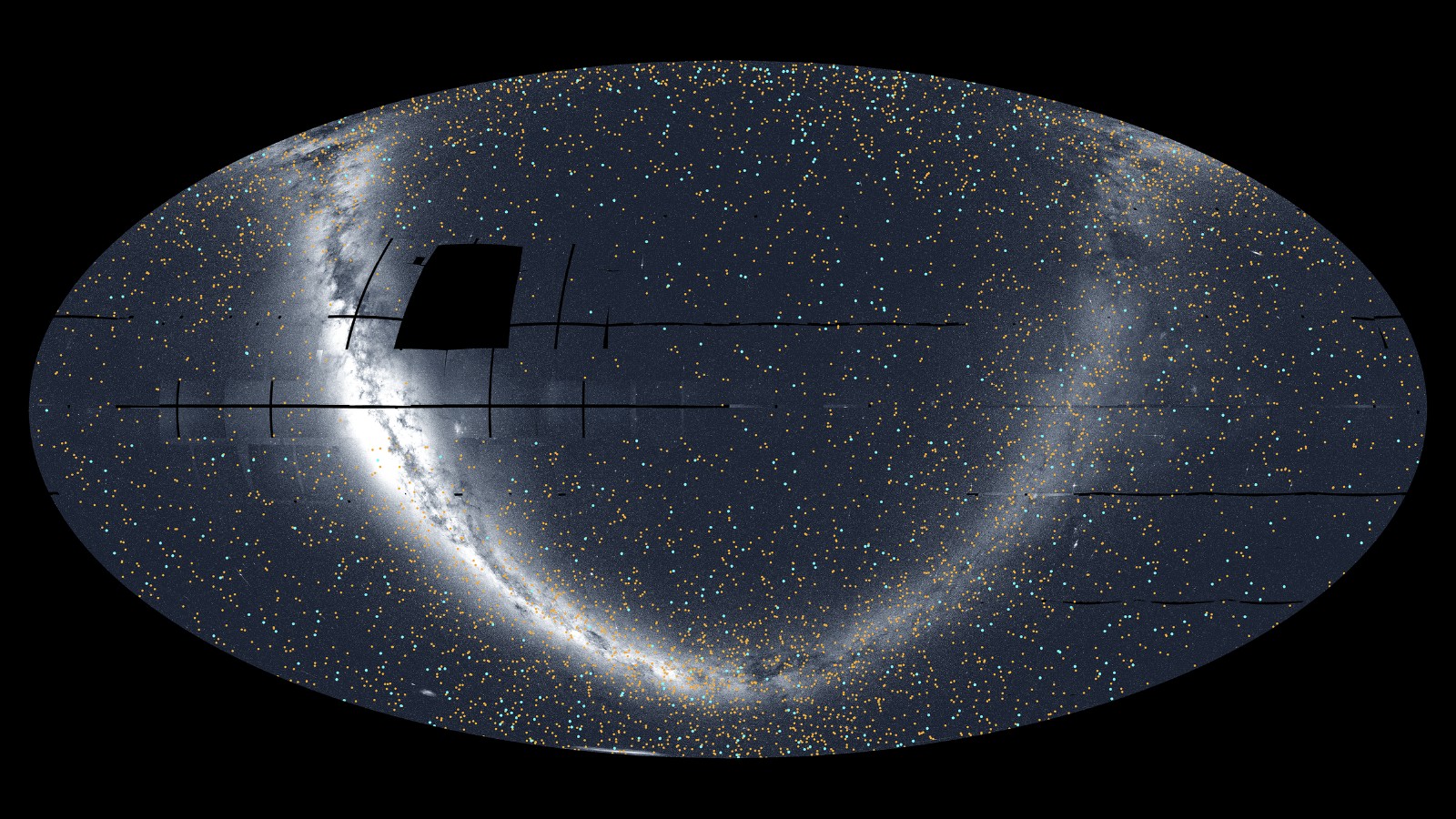
Or at least the part that looks down on Earth. NASA’s Transiting Exoplanet Survey Satellite just dropped its most complete all-sky mosaic. The map covers every inch of the celestial sphere visible to us. Six thousand potential planets sit there, waiting.
The data stops at September 2025. This date marked the end of TESS’s second mission extension. A long haul for a ship that launched back in April 2018 from Cape Canaveral. Space Launch Complex 40. It felt like yesterday.
“Over the last eight years TESS has become a fire hose.”
That’s Rebekah Hounell speaking. Associate project scientist at Goddard. She isn’t wrong. The flow is constant. Planets come out the pipe in every shape. Tiny ones. Mercury-sized specks. Massive gas giants larger than Jupiter.
Some sit in the habitable zone. Where water could pool on the surface. We look for that. Always. Life needs wet ground. Or liquid anyway.
How do they find them?
By watching shadows. When a planet crosses its star. A transit. The starlight dims. Just a little. TESS catches that dip. It divides the sky into 96 sectors. Each packed with tens of thousands of stars. Four cameras stare at a sector for a month. Then they move. Methodical. Relentless.
The new map tells the story with dots. Blue means confirmed. Around 700 worlds we are sure exist. Exotic ones included. Planets being torn apart by their stars. Worlds choked by global volcanoes.
Orange dots? Those are candidates. Suspects. Waiting for verification.
“In addition to planets TESS has helped us study rivers young stars observe dynamic galactic behavior and monitor asteroids near earth”
Allison Youngblood. Project scientist. She digs through the data with automated algorithms. She finds surprises.
The map is old news compared to this year’s finds. TESS spotted a planetary system unlike anything before. A super-Earth paired with a companion. The second one? Its orbit is highly elliptical. Tilted on an angle that shouldn’t make sense.
Also this year. Evidence of two planets smashing into each other. A debris cloud hangs in front of the parent star. Scientists study this cataclysm. Maybe it mirrors our own history. A collision billions of years ago? The event that might have birthed the Moon?
Who knows what happens next. The dataset grows. The algorithms run deeper. More of the night sky fills in with blue and orange.
No idea what is lurking in the remaining pixels.
Or maybe it already is.