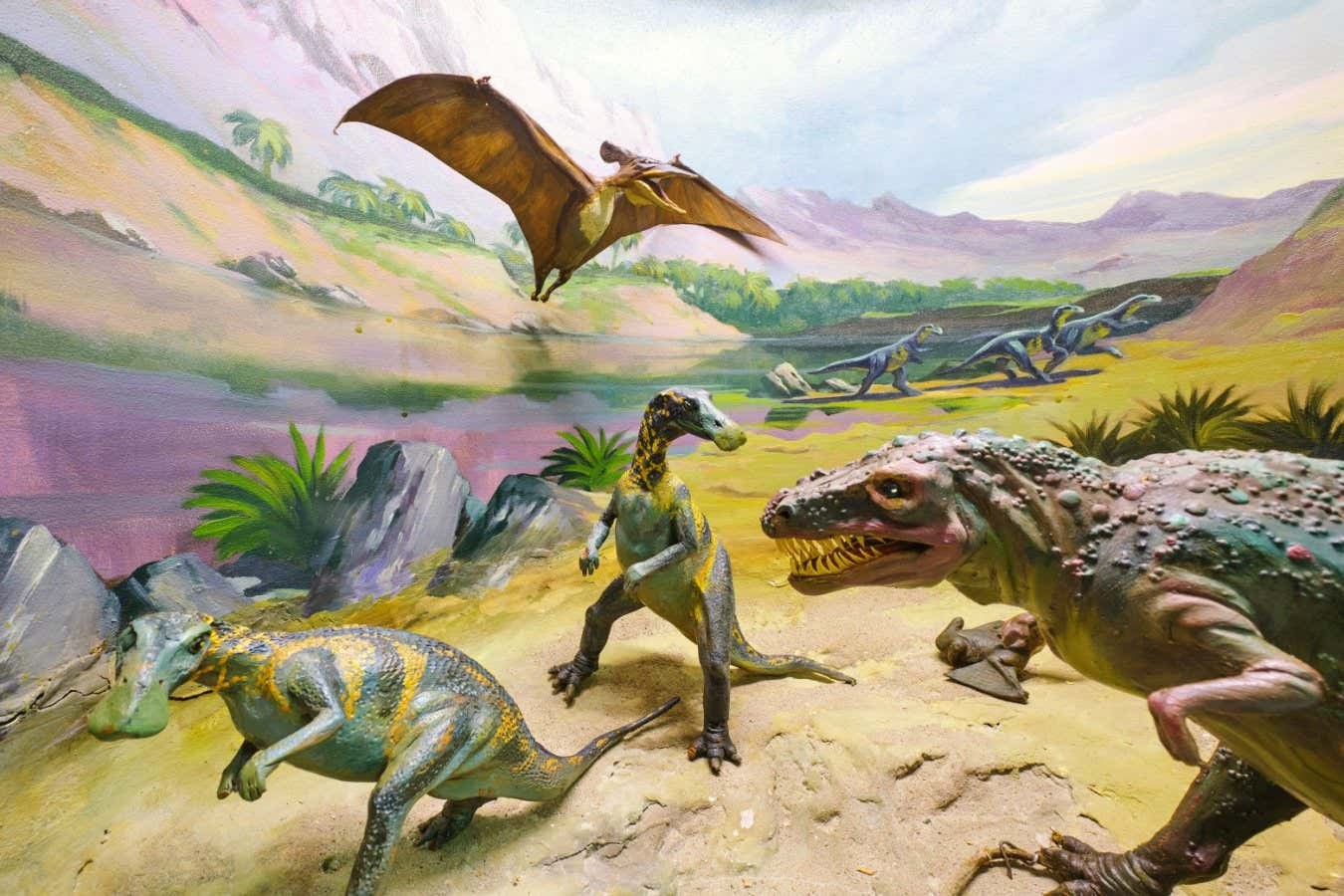
Popular culture has long painted a vivid, albeit often inaccurate, picture of dinosaurs. From Hollywood blockbusters to outdated textbooks, the public imagination is filled with pack-hunting raptors and lumbering, mindless beasts. However, paleontologist Dave Hone of Queen Mary University of London argues that these narratives are largely misconceptions. By applying modern zoological principles and analyzing fossil evidence with fresh eyes, Hone reveals a more nuanced reality: dinosaurs were complex, social, and biologically sophisticated animals whose behaviors were driven by survival, reproduction, and ecology, not just the need to fill a movie screen.
The Myth of the Pack Hunter
One of the most persistent myths is the idea that predatory dinosaurs, such as Velociraptor, hunted in coordinated packs. This notion was popularized by Jurassic Park, but fossil evidence offers little support for cooperative hunting among theropods (carnivorous dinosaurs).
While there are famous fossil sites showing multiple Deinonychus (a close relative of Velociraptor ) alongside Tenontosaurus, this does not necessarily prove a coordinated hunt. In modern ecosystems, lions often kill in groups, but other big cats do not. Applying the logic of lion packs to all predators is a flawed analogy. Furthermore, finding multiple fossils together could simply reflect mass mortality events, such as floods, rather than social hunting structures.
Key Insight: Just because animals are found together in the fossil record, it does not mean they lived or hunted together. Context is crucial for accurate interpretation.
Herds, Juveniles, and Social Structures
If carnivores weren’t pack hunters, how did herbivores behave? Fossil evidence strongly suggests that many herbivorous dinosaurs lived in large groups. However, these “herds” may not have been the massive, tightly knit social units we imagine.
A modern parallel is the wildebeest migration in the Masai Mara. While millions gather at river crossings, they typically travel in smaller, loose groups. Similarly, dinosaur fossils found in mass graves might represent temporary aggregations due to environmental pressures, such as drought or flooding, rather than permanent social structures.
Interestingly, juvenile dinosaurs are rare in the fossil record, making up only about 5% of finds. Yet, when group fossils are discovered, juveniles are often overrepresented. This suggests that young dinosaurs formed specific “crèches” or groups for protection. In a world full of predators, staying in a group increased their chances of spotting danger and surviving long enough to reach adulthood.
Combat and Competition: More Than Just Defense
The elaborate features of dinosaurs—such as the frills of Triceratops and the clubbed tails of ankylosaurs—are often assumed to be purely defensive adaptations against predators. However, recent research points to a more complex driver: intraspecific combat (fighting within the same species).
- Ankylosaurs: Their armor is exceptionally resistant to heavy impacts, suggesting it evolved to withstand blows from other ankylosaurs during fights, rather than just predator bites.
- Ceratopsians: The frills of Protoceratops and other horned dinosaurs grew rapidly upon reaching sexual maturity. This growth pattern is a classic sign of sexual selection, where traits evolve to attract mates or signal dominance, similar to deer antlers or elephant tusks.
These features were likely multifunctional, serving roles in display, competition, and defense, much like the tusks of modern elephants.
Pterosaurs: Masters of the Sky
Pterosaurs, the flying reptiles that coexisted with dinosaurs, challenge our understanding of flight and development. Contrary to the belief that they were helpless hatchlings, evidence suggests pterosaurs were precocial —meaning they were capable of flight almost immediately after hatching.
- Wing Development: Pterosaur embryos possess fully formed, strong wing bones, unlike bird embryos, which have undeveloped wings.
- Parental Care: Despite their independence in flight, pterosaurs likely received parental care. Both their closest living relatives—crocodilians and birds—exhibit strong parental investment. The idea of a mother pterosaur leading her young in flight is biologically plausible.
Why Did Pterosaurs Get So Big?
Pterosaurs achieved wingspans of up to 10 meters, a size no bird has ever matched. This disparity comes down to biomechanical efficiency :
- Launch Mechanism: Birds rely on powerful hind legs to take off, which adds significant weight when flying. Pterosaurs, however, used their massive forelimb muscles for both walking and launching. Their hind legs were slender and lightweight, reducing dead weight during flight.
- Wing Structure: Bird feathers are relatively heavy and require substantial mass to generate lift at large sizes. Pterosaurs had thin, membranous wings that were lighter and more efficient for sustaining massive wingspans.
In essence, pterosaurs were evolutionary specialists in aerial efficiency, whereas birds are generalists, balancing flight with terrestrial mobility.
Conclusion
Dinosaurs were not the mindless monsters of folklore, nor were they simply oversized lizards. They were dynamic, social animals with complex behaviors driven by the same biological imperatives as modern species: survival, reproduction, and competition. By moving beyond sensationalized narratives and examining the fossil record through the lens of modern zoology, we gain a deeper appreciation for these creatures as real, living animals that once dominated our planet.