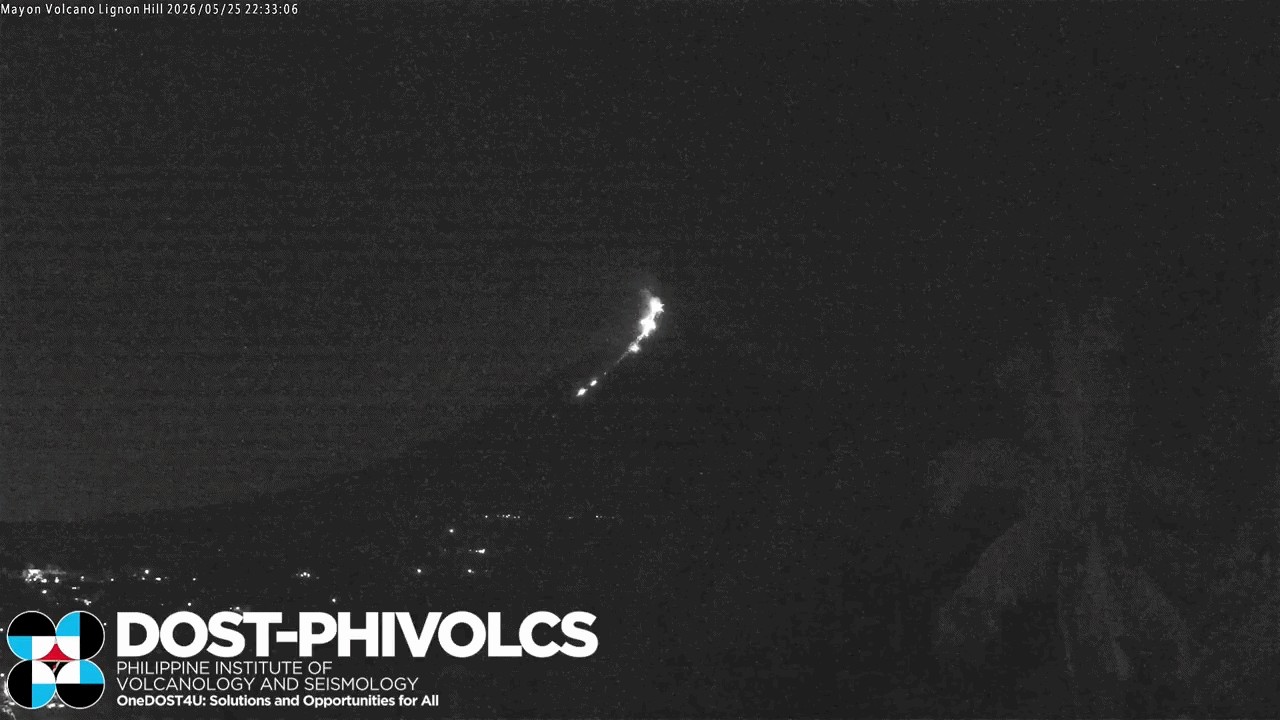
Mount Mayon is exploding. Not just burning—actively, violently throwing up magma. Then something else happens. Something bright. And green.
Sunday night, a brilliant-green fireball tore across the sky above Albay. The timing? Unlikely. The color? Unusual. Two livestreams caught it. One was black and white, stark against the volcanic glow. The other? Full color. You see the red ooze of lava below. You see the emerald streak cutting through the dark above. It lasted just over a second. Gone.
For a moment, everyone thought the meteor hit the volcano.
Social media exploded with clips suggesting impact. PHIVOLCS even posted early that the space rock struck the northern slopes. It makes for a terrifying image. Rock from space meets fire from earth. But wait. Experts looked closer.
They checked seismic sensors. They reviewed infrasound data. The answer? No impact.
The meteor broke up. High in the atmosphere. Before it could ever touch the ground.
“The meteor disintegrated while in the atmospheres and did not strike the slopes,” a later clarification read.
So close, though. If that rock had hit the mountain immediately after flashing? It would have hit with the force of 7,500 tons of dynamite. That would have shattered rock. Shaken sensors. It would have been a disaster within a disaster. Instead? Just a light show.
Why was it green?
Nickel.
Astronomers say a high nickel content usually creates that emerald hue as friction heats the air. The asteroid survives the initial dive but vaporizes fast. The heat ionizes molecules around it. Boom. Bright streak. What we call a shooting star. Usually 37 to 62 miles up. This one followed the rules.
Did any piece make it down? Probably not. But when fragments do survive, they become meteorites. Clues to the solar system’s birth. In this case? Just light. No rocks left to study. Just two violent forces passing each other in the dark. A volcano waking up. A stone burning up. Neither caring about the other.
Does the sky try to tell us things?
Or is it just chaos, beautifully coincidental? 🌌