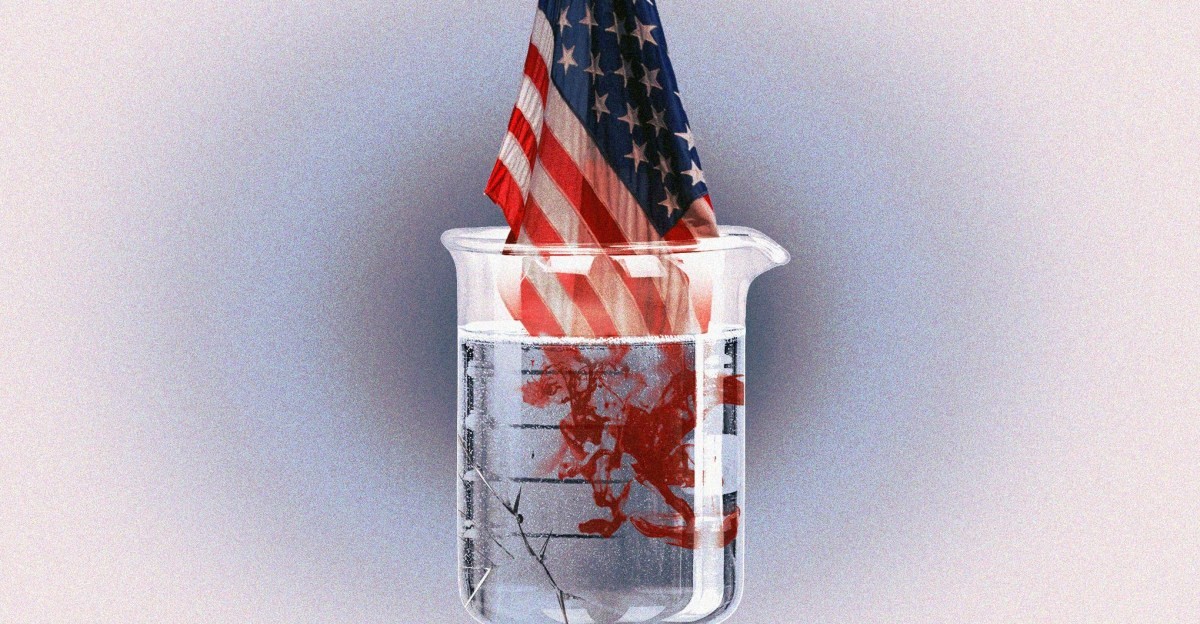
A quiet rule change. Huge potential for disaster. The kind that could vaporize American scientific research.
It happened May 29th. The Office of Management and Budget dropped a 412-page monster. A proposal to revise how the federal government spends money on assistance.
Boring title. Deadly intent.
The language mixes Trump’s signature “woke” attacks with dense, sleep-inducing bureaucratic jargon. It’s designed to make you look away. To ignore the dark stuff hiding underneath phrases about “clarifying regulatory status.”
Underneath it all is a threat. A real one. To science. To scientists’ livelihoods. To the vulnerable people who rely on discoveries born from taxpayer dollars.
“Science in the US will stop,” says Colette Delawalla. She runs Stand Up for Science. She means it. “It won’t exist anymore.”
Is it too late? Maybe not. The comment period is open until July 13. OMB has to look at the feedback. Congress can object too. But the clock is ticking.
The rules of engagement
This isn’t just about tweaking forms. It’s about imposing political oversight on more than $1 trillion in grants across 42 agencies.
Most US research happens because of these grants. From vaccines to earthquake studies. From university labs to federal institutions. If this rule passes, the game changes overnight.
Political appointees could veto any grant. Any reason. Any time.
You want to collaborate with colleagues abroad? No.
Go to a conference? Ask for pre-approval first.
Publish your findings so the world can see them? Not with government money.
Everything must align with the President’s priorities.
Mentions of “DEI”? Gone.
“Gender ideology”? Forbidden.
If you can’t dance, the rule says, don’t take the funding. Or don’t dance at all. Leave.
“Saying that the NIH… has been funding neo-Marxist… That’s nonsense.”
This sweep covers everywhere. Education. Veterans Affairs. NASA. Housing. It touches mental health care, low-income housing, Head Start. The net is wide. The trap is springing.
And we aren’t even at peak trauma yet. The first Trump administration already caused enough. Grants delayed. Enrollment down. Fear rising.
Peer review vs. Political review
How did it work before? Peer review.
Scientists submit findings. Journals ask other experts to critique them. Harsh. Honest. Fair? Mostly.
The National Institutes of Health (NIH and National Science Foundation (NSF) use this for grants too. You get the money because experts think the science is solid. Not because a politician likes the topic.
“It’s looked at by three scientists… write critiques… gets a score,” explains Jeremy Berg. He used to run the National Institute of General Medical. Now he sees the rot spreading.
High scorers win. Top 8-20%. Fierce competition. But pure.
“Basic science… wasn’t politics,” Berg notes. Except maybe embryonic stem cells. Otherwise? The science spoke.
Politics used to sit on the sidelines. Or occasionally cheerlead for cancer research. Or silence the AIDS crisis for four years while Reagan looked the other way. “Politics over science killed a lot of people,” Berg remembers.
Donna Riley agrees. At the NSF, proposals ranked on intellectual merit. “Best ideas get funded,” she says. Period.
Jacquelyn Gill, a paleoecologists in Maine, points out that trust exists. Scientists know good science. Google started as an NSF grant. Nobel laureates? Hundreds. Supported by NIH.
“The vision was… science needs to be insulated.”
Guidance to regulation
Here’s the trick. The word change.
OMB isn’t just giving advice anymore. It’s making a regulatory policy.
Joanne Padrón Carney works for the AAAS. She sees the trap. “It puts in place a whole expensive authority over agencies… procedures… priorities.”
Once it’s policy? It’s hard to undo. It cements the change into law. You’d need a formal rule-making process to reverse it. Maybe a new administration. If you’re lucky.
Why? Because 2021. Federal agencies supposedly became too focused on “woke” policy. The new rule aims to ensure grants advance the President’s goals. It backs up Executive Order 14383. “Gold Standard Science.”
Except the gold standard already exists. Peer review is the gold standard. Gill finds it ironic. And dangerous.
Dog whistles become megaphones
The rules are explicit. No DEI funding. No challenging the “sex binary.” No “transition” care research for under-19s.
This means no grants for health equity. Not for people of color. Not for LGBTQIA+ communities. Clinical trials? Already canceled.
“Why use a dog whistle?” asks Delawalla. “Scream instead.”
Grants can be canceled at whim. “Scientific misconduct” used to be the reason for cancellation. Fraud. Lies. Malfeasance.
“Not ‘I don’t like the topic’,” says Elizabeth Ginexi. She’s seen it all at NIH. For 22 years. Now the rules change. Topics don’t matter? The politics do.
Conferences need approval years in advance. “Fiscally responsible”? Maybe. But also stifling. That’s how collaborators are found. That’s where jobs are made.
And publishing? Federal money can’t pay for it. Journals charge thousands. Especially open access. Previous guidance required it. This rule kills it. Scientists choose: fewer papers? Or cheap, closed-access journals where no one sees the work?
Collaboration suffers too. The ban on “foreign adversaries” is vague.
“People,” Delawalla clarifies. “Parties.” Is it a university? A country? What if my co-author works with someone who works with China? What if we use Chinese software?
“Collaboration… severed upon passage,” she says.
Consider the satellites. US and China have offices talking every hour. Keeping debris apart. Keeping astronauts safe. Cut that line? Disaster waiting to happen.
Padrón Carney calls the wording troublingly vague. Who defines “Gold Standard”? “Anti-American”? “Good foreign collaborator”?
19% of STEM workers are international scientists. 43% of PhD holders. They are in the labs. Right now. What happens to them?
“We expected something like this,” Delawalla says. Before the midterms. Before the EO. Stand Up for Science campaigned early. People called them extremists. Loud. nuts. “This won’t happen in America,” critics said.
The cost of silence
But it’s happening. Grants cancel. Careers crumble.
“We were on the verge of a HIV cure,” Ginexi reveals. NIH wanted to fund it. Trump administration pulled the plug. Why? “Similar to mRNA tech… they don’t believe that should be done.”
A vaccine? Possibly gone. No more AIDS? Not with these rules.
Federal support dropped in 2023 for the first time since 8016. Black and Hispanic scientists hit hardest. They worked on health disparities. Those programs died first.
“Losing the future of our science pipeline,” Delawalla warns.
The pressure isn’t abstract. Grants pay salaries. Real people. Graduate students who moved cities. Technicians with new kids. When the grant dies, they get let go.
Scientists are leaving. Or staying quiet. Or quitting.
The second term isn’t over. The 412-page document is still sitting there. Waiting for comments. Waiting for action.
Or inaction.
“We’re going to lose… no longer doing much science… in the U.S. all.”