









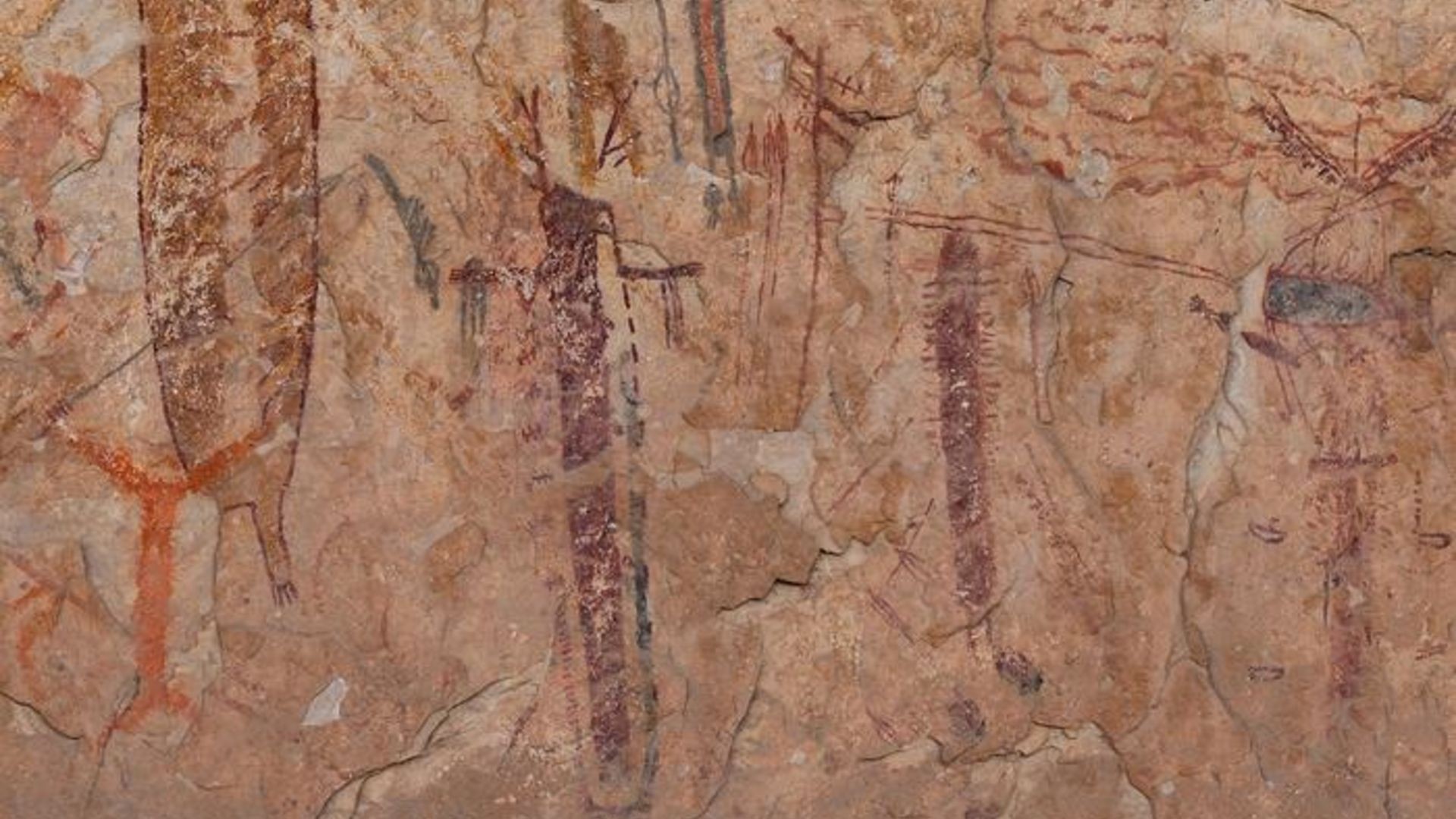
For millennia, Indigenous artists across what is now southwestern Texas and northern Mexico depicted their understanding of the universe on rock faces, leaving behind a remarkable record of consistent beliefs. A new study confirms that these “Pecos River style” (PRS) murals – spanning roughly 4,000 years – exhibit striking similarities in imagery and composition. This suggests a remarkably stable “cosmovision” – or worldview – persisted across 175 generations of hunter-gatherers.
The Longevity of Ancient Beliefs
Archaeologists have long studied rock art (petroglyphs and pictographs) as windows into the minds of ancient cultures. These images are a universal phenomenon, found on every continent except Antarctica. The Pecos Canyonlands, however, provide a unique opportunity to examine cultural continuity over an exceptional timeframe. Researchers analyzed 12 sites, finding that the murals consistently adhered to the same compositional rules, using the same imagery, and even the same painting techniques across centuries.
This consistency isn’t merely stylistic. The researchers propose that the PRS paintings weren’t just art, but a deliberate method for transmitting complex metaphysical ideas – concepts about the nature of reality – to successive generations. The team suggests that this system may have influenced later Mesoamerican belief systems. The persistence of the same symbolism over such a long period suggests that these ideas were central to the culture, reinforcing their importance over time.
Dating the Vision
Determining the age of these murals required a combination of radiocarbon and oxalate dating. Radiocarbon dating, by measuring the decay of carbon isotopes in organic materials (like deer bone marrow used as a binder in the paint), provided a baseline for when the pigments were applied. Oxalate dating, which analyzes mineral deposits above and below the paintings, corroborated these findings.
The results reveal that the consistency in imagery wasn’t limited to one era. The similarities stretched over thousands of years, meaning that the same cosmic vision was actively maintained through generations. This indicates that these societies placed high value on preserving their worldview through material culture.
Decoding Ancient Knowledge
The interpretation of ancient rock art is inherently complex; it relies on inferring meaning from symbols created by cultures long gone. However, the new study’s findings align with previous research suggesting connections between the imagery in these murals and cosmological events like solar eclipses or supernovas.
The persistence of these shared images raises fundamental questions: How did this cosmovision originate? What specific beliefs were embedded within the iconography? And how did this system influence later Mesoamerican cultures? The authors suggest that the study contributes to ongoing discussions about a widespread “pan-Mesoamerican or pan-New World cosmovision,” implying that similar beliefs may have been present across a broader geographic area.
This research underscores that ancient hunter-gatherers were capable of maintaining sophisticated belief systems, transmitting them effectively over millennia through a visual language that transcended generations.