Maui needs help. Real, physical, immediate help.
After the 2023 fires killed 102 people, the island has been left bleeding out—not just from the burns, but from the silence that followed. The mental health crisis there isn’t a risk. It is an unfolding epidemic.
“Maui does not have an infrastructure… to deal with a mental health crisis” of this scale
Justin Feinstein says it bluntly. People are drowning in grief. Self-medication is rampant. Suicide rates are surging.
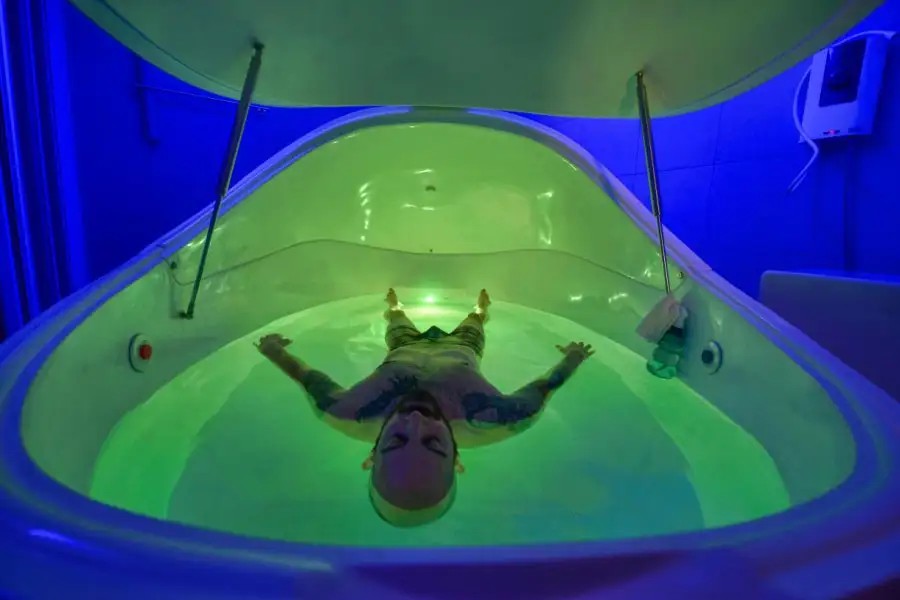
So he is sending three float tanks.
They are inside a shipping container. En route now. Free sessions for survivors. Free sessions for the firefighters who ran into the flames.
This is the Maui Calm Project. It feels almost absurd. Floating? As a response to trauma?
It sounds like a spa treatment. Epsom salts. Body-temp water. Total sensory deprivation. But it’s not about luxury. It is about biology.
The brain stops. Really stops. Heart rate drops. Blood pressure falls. The noise in the head—the replaying of the worst moments—quiets down.
It creates what experts call Float-REST. Reduced Environmental Stimulation Therapy.
Invented in the 195s, it was originally just an experiment. Do brains shut down without input? No. But they relax. Deeply.
Feinstein calls it a sedative equivalent to benzodiazepines. Without the crash. Without the pill bottle.
He has spent a decade on this data. The mechanism isn’t magic, just mechanics. You remove the input. The body settles. Safety returns.
Sarah Garfinkel at UCL agrees. She sees the problem with current PTSD treatments.
We ignore the body.
PTSD is hyperarousal. It’s the nervous system screaming danger. Floatation creates a sense of internal safety
She calls this shift “really exciting.” And why not? The current tools feel insufficient against the scale of what happened in Hawaii.
Depression and anxiety on Maui have jumped more than fifty percent. Half a decade out, the island is still shaking.
This isn’t just charity. It is research. They need proof that pop-up units can work elsewhere. If it works here, these mobile pods can go anywhere. Disaster zones. Conflict areas. Places where the standard of care collapsed weeks ago.
Can you treat trauma in a tank? Maybe. The data won’t be ready until summer. Until then, it’s just salt and silence.
The tanks will land. They will open their doors. And maybe, for a few hours, the water holds them together when nothing else can.
It is a strange thing, to be so held by water. To be so still after so much fire.