It was supposed to be called 3I/Rubin. Almost.
Astronomers dug through old images and found the giant survey telescope saw the visitor from the stars ten days before it officially arrived. Officially speaking. That’s 3I/ATLAS for you. Named after the Asteroid Terrestrial-impact last Alert system, which spotted it on July 1, 2o25. ATLAS uses a network of robotic eyes in Hawaii, Chile, and South Africa to watch for sky rocks. They did their job. But Rubin was already watching.
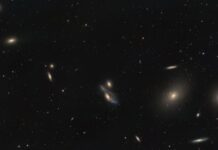
Rubin, the Vera C. Rubin observatory in Chile, had just started its “science validation” phase. Think of it as a test run before the main event. The 8.4-meter beast needed calibration. It wasn’t hunting for comets. Yet it saw one. On its very first night of practice shots. June 20.
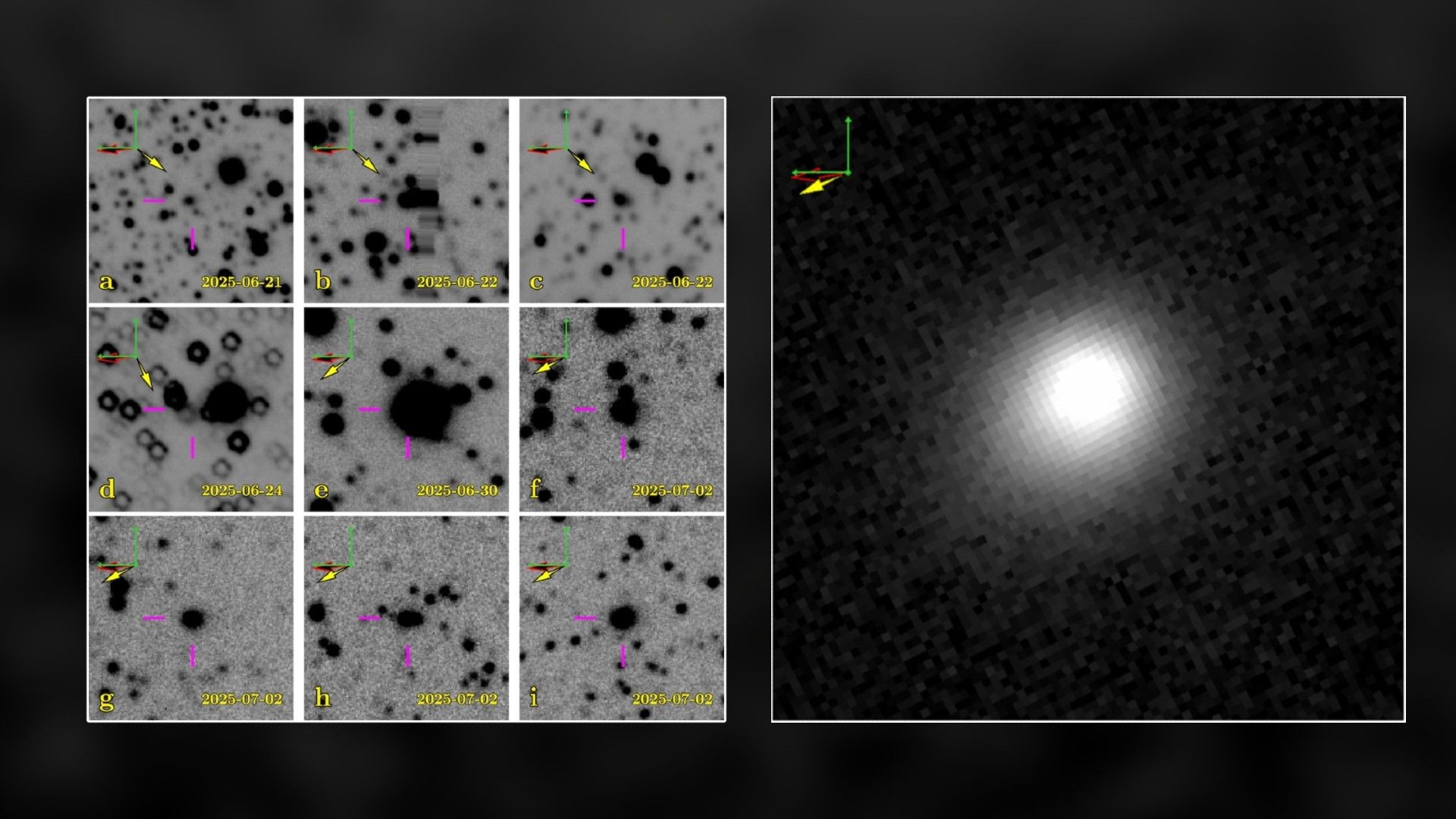
Colin Orion Chandler at the University of Washington led a team to check the footage. They knew something was off. The data wasn’t ready for easy picking. Back then, the standard data pipeline—the digital conveyor belt that turns raw pixels into science-ready plots—wasn’t working. Chandler and his crew had to build their own. From scratch. It was tedious work. But they found it. A blip. Then a blur.
Then Rubin kept looking. Nine more times between June 21and July 2. More shots between July 2 and July zo. The images tell a story ATLAS missed. The comet was waking up early. A coma—gas and dust puffing out from the nucleus—was visible weeks before the official announcement. Heat from the Sun was already cooking it.
Chandler thinks timing is everything. Had Rubin started a few weeks earlier? Maybe the pipelines would have been ready. Maybe we’d know about it sooner. Instead, we wait for the software to catch up with the sky.
This is good news, though. Rubin aims to find ten thousand comets over ten years. One interstellar visitor a year? That’s the guess. This one proved the machine can spot the aliens. Even when it’s just learning how to look.
“So while 3I/ATLAs doesn’t bear Rubin’s name… future interstellar comets likely will.”
Jupiter probes team up
It hasn’t left yet. Good thing too. Because it got hard to see from Earth.
October zo25. Perihelion. The comet swung close to the Sun. Hiding behind the solar glare from our perspective. Silent? No. Loud and bright. And two space probes happened to be passing through the neighborhood. Both en route to Jupiter. The ESA’s JUICE mission and NASA’s Europa Clipper.
Scientists at South-west Research institute coordinated them. Informally, mostly. Kurt Retherford called it “informal coordination.” JUICE saw the day side. Europa Clipper saw the night side. Same gas. Two angles. It’s like having stereoscopic vision for the sky.
They used Ultraviolet spectrographs. They broke molecules apart. Sunlight hitting escaping gas shatters it into atoms. Hydrogen. Oxygen. Carbon. The carbon count was high. Higher than any local comet. It confirmed what the James Webb Space telescope had whispered. Too much carbon dioxide. Dry ice.
Why does it matter?
“It helps us understand if the Solar system where 31/ATLAs formed is similar to ours or not.” – Philippa Molyneux at SwRI
We are comparing apples to interstellar oranges. If the ratio of water ice to dry ice differs, the birthplace differs. Our solar system has recipes. This visitor follows a different one.
What do we have now?
- Size : The nucleus is about one kilometer wide. 0.6 miles. A big chunk of rock.
- Speed : 14o,oo mph. That’s fast. 61 kilometers every second.
- Age : Old. Ancient. Maybe seven billion years. Maybe twelve. It’s older than Earth.
- History : It’s bounced around. Encounters with other stars boosted its velocity. It’s been thrown. Hard.
The comet is just a traveler. A fossil of another star system, hurled across the void. It shows its cards, then moves on. We piece it together. Piece by piece.
Was it lonely?
Maybe. But at least two spacecraft watched it pass.