Wearable health tech is booming. But there is a sticky problem. Literally.
Most skin patches trap heat. They trap sweat, too. This creates a miserable microclimate on your skin, leading to rashes and inaccurate data. Hydrogels—the gooey base of many sensors—are usually culprits. They are water-rich. That makes them comfy. It also makes them impermeable.
Engineers at MIT just fixed this. They created a hydrogel that breathes. Like your lungs.
Why current skin sensors fail under sweat
Here is the issue. Conventional hydrogels block air. When you exercise, your skin heats up. Sweat builds. A standard silicone or hydrogel patch seals that heat and moisture against your pores.
The result? Irritation. Poor adhesion. Bad sensor readings.
A 2024 study in Science Advances managed eight days of monitoring with a gas-permeable patch. It was thin—about 10 micrometers—and used a polyurethane nanomesh reinforcement. It worked. But it was a niche solution.
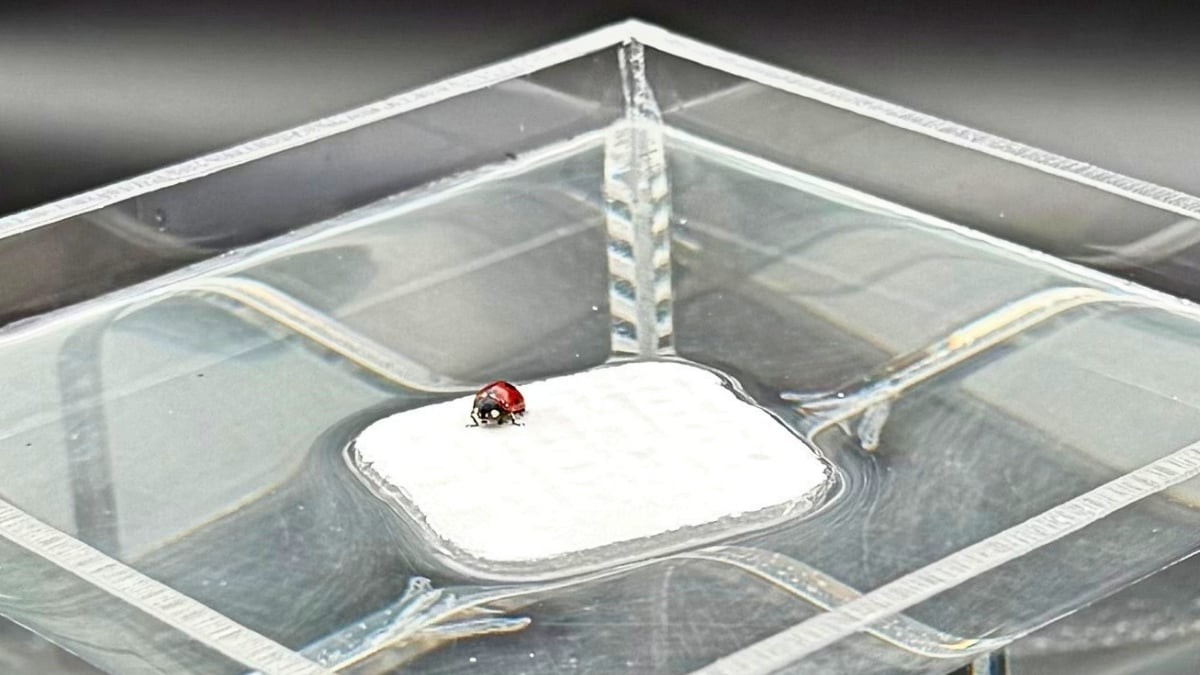
The new MIT team took a different route. Published in Nature, their approach builds air pathways directly into the bulk hydrogel. They didn’t sacrifice the water content. The material is still 70 percent water. Yet, it lets oxygen through.
“Our material overcomes this limitation while maintaining the highwater content and softness that make hydrogolds comfortable and biocompatible.” — Xuanhe Zhao, MIT
That sounds impossible. Water blocks air. Air blocks water.
Not here.
How MIT engineered a ‘lung-like’ hydrogel
The secret ingredient? Silica aerogel.
Think of silica aerogel as solid air. It is a nanoporous material. It repels water. When mixed into the standard hydrogel recipe, these particles clump together. They form a three-dimensional network.
This network creates microscopic, air-filled channels.
Water stays out of the channels. Oxygen flows right through them.
In lab tests, the material achieved an oxygen permeance of 185 barrer. For context, that is ten times better than conventional hydrogels.
It handles water vapor, too. The hydrogel transpired moisture 10 to 100faster than silicone patches. Your skin can breathe.
Durability matters for wearables. The material survived 10,000 stretch cycles. It kept 95 percent of its air flow. That is tough for something that is mostly water.
Breathable hydrogel performance in real-world tests
Lab numbers are nice. Real sweat is messy.
MIT researchers tested the patches during exercise. They compared the new hydrogel to commercial silicone patches.
The results were stark.
After a 20-minute workout, infrared cameras showed the skin under the silicone patch had heated up by 6.5 degrees Celsius. Sweat pooled underneath. It looked gross.
Under the new hydrogel? Skin temperature actually dropped by one degree. Heat escaped. Sweat didn’t accumulate. The skin looked similar to uncovered skin.
Comfort matters. Ten volunteers wore the patches on their chests for an hour of moderate exercise. No itching. No redness. No irritation.
They also tested the material as an electrode for electrocardiograms (ECG).
Standard hydrogel electrodes lose signal clarity as sweat builds up. The electrical noise increases. The new air-permeable hydrogel stayed clear. It recorded stable heart activity during cycling, walking, sleeping, and working.
Volunteers wore these patches for ten straight days. The data remained usable.
What comes next for breathable skin tech
This is promising. But it is not a clinic-ready product yet.
Xuanhe Zhao, the senior author, is clear about the hurdles. Biocompatibility over long periods needs verification. Large animal studies are required. Sterilization processes must be developed.
Manufacturing at scale? That is another beast.
Shelf life is unknown. Regulatory approval takes time.
The human tests were small. Two people for skin physiology. Three for ECG comparisons. Ten for comfort. These are proof-of-concept numbers, not clinical trial data.
Also, the material doesn’t stick to skin on its own. It needs a backing. This means it isn’t a standalone patch. It requires integration with existing wearable designs.
Each application has different needs. A wound dressing needs different properties than a heart monitor.
Is this the future of medical implants?
Maybe.
Zhao hints at bigger dreams. Tissue engineering. Implantable devices.
Engineered tissues often die because they can’t get enough oxygen. Cells starve. If this hydrogel can deliver oxygen while keeping cells hydrated, it could change implant surgery.
“Many engineered tissues and implants require efficient oxygen wearables to maintain cell viability,” Zhao noted.
But implants are high-stakes. The testing bar is much higher.
For now, look for it in wearables. Wound dressings. Skin monitors.
The tech is ready for the next step. Just not your bedside table.
It is a start. A breathable one.