Jules Verne didn’t invent the monster from thin air. He just exaggerated the rumors.
For over three centuries, sailors whispered about a beast with tentacles taller than their masts. Verne captured this fear perfectly in “20,000 Leagues under the Sea.” He described a giant squid that could entangle a 500-ton ship and drag it into the dark abyss. One squeeze from those massive arms and the vessel was gone.
It sounds like horror fiction.
But the legend has a biological root. Giant squid do exist. They are real. They are just not quite as movie-magic as Verne imagined.
These elusive creatures can grow up to 60 feet long. Their tentacles alone can stretch 30 feet. That is terrifyingly large. Yet, even these leviathans are not the most fascinating members of the squid family.
The smaller cousins are arguably more impressive. They are swift. They are agile. And they are surprisingly intelligent. Their brains are proportionally closer to mammal brains than to fish or reptiles. They process information differently.
To understand why these animals matter, we have to look past the myths. We need to look at the anatomy. And we need to see what happens when science finally meets the monster in the deep.
The Biology of Cephalopods
Squid are mollusks. This fact often confuses people who only know them as slithery sea predators.
Their relatives include snails and clams. The connection isn’t obvious. Snails have hard outer shells. Clams have two-part hinged armor.
Squid are different.
They lack a hard outer shell. Instead, they possess a soft outer body. Inside, they carry a remnant internal shell. This structure gives them support without the bulk.
They belong to the class Cephalopoda. The name translates to “head-footed.” It is a literal description of their design.
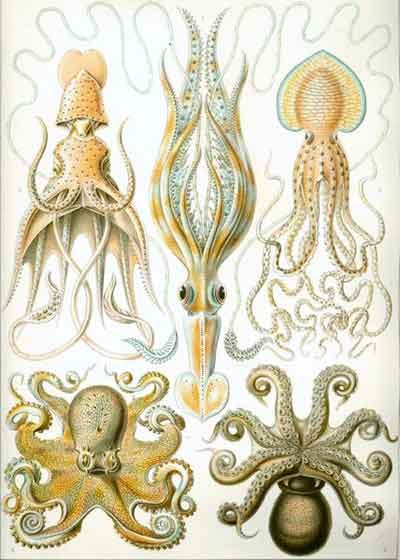
This group includes octopuses, cuttlefish, and nautiluses. The taxonomy gets specific here. Cephalopods split into two main branches based on arm count.
- Octopods : Eight-armed creatures like the octopus.
- Decapods : Ten-armed animals, which includes cuttlefish and squid.
Squid sit in that ten-armed category. They are distinct from their eight-legged cousins. But they share a common evolutionary history with all of them.
Why the Confusion?
People mix up the species. They see a squid and think “giant.” They see a story and think “fact.”
The giant squid is rare. It lives in the deep ocean. It is hard to find. It is harder to film. This scarcity feeds the imagination.
When something is unseen, it becomes anything.
But the smaller squid are everywhere. They are common. They are studied more often. They show us how smart invertebrates can be.
The gap between the myth and the reality is where the real science lives.
“Few animals have inspired as much wonder and fear as the giant squid.”
This fear is natural. The ocean is deep. The dark is absolute.
But the giant squid is not a monster.

The Predators and the Plate
Squid are high up on the food chain, which means they are high up on someone else’s menu. The ocean is full of creatures that view a squid not as a complex animal, but as a moving meal. Sperm whales dive deep for them. Grey-headed albatrosses snatch them from the surface. Tuna, marlin, and sharks chase them down in the open water. Even seals and penguins find them an easy catch.
Because fish are so obsessed with chasing squid, humans figured out a shortcut. You don’t need to catch the tuna. You just need the bait. Squid make some of the best fishing lure available. They work because the predators are hardwired to hunt them.
Humans are also in the business of eating squid. We have two main ways of preparing them. The most famous is calamari, which is squid meat that has been breaded and deep-fried until crunchy. It is the standard appetizer in Italian restaurants worldwide. Then there is the boiled method. This turns the texture softer and is used in stews and soups across various cuisines.
The geography of squid consumption tells a story about trade and tradition. You will find squid on menus in countries bordering the Mediterranean Sea. Spain and Italy have long histories with the catch. Japan is another major consumer. The preference isn’t random. It comes down to proximity to the fishing grounds and local culinary habits.


The Ancient Origins of Squid
Squid aren’t exactly new to the planet. They showed up during the Cambrian explosion, a massive burst of biological creativity about 500 million years ago. Back then, thousands of cephalopod species roamed the oceans.
Today, the family tree has pruned itself down significantly. Only four groups remain: squid, cuttlefish, octopuses, and nautiluses.
The first squid were likely slow movers. They stuck to shallow waters, far from the dangers of the open ocean. Modern squid have evolved past that limitation. They thrive in nearly every marine environment, from the sunlit coastal surface to the crushing darkness of the deep sea.
How Big Can Squid Get?
Size varies wildly depending on which species you look at. Some are barely an inch long. Others stretch past 65 feet. That’s a massive range.
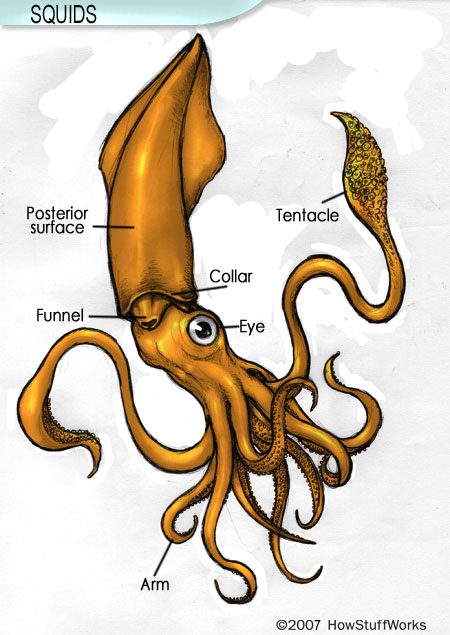
Most share a common blueprint. They have a long, tube-shaped body with a small head. Their most noticeable features are their ten arms. Two of these arms are significantly longer than the rest, specialized for snatching prey.
These arms are lined with suction cups. Some varieties also sport claw-like hooks for extra grip.
The squid’s eyes are large and set into the sides of its head.
At the center of this arm cluster sits a mouth. It contains a parrot-shaped beak and a sharp, bony tongue called the radula. It’s a design built for efficiency.
Why This Matters Now
We often see fried calamari on menus without thinking about the biology behind the dish. But understanding squid anatomy helps explain why they are such successful predators. Their ability to adapt to different depths and sizes has kept them alive for half a billion years.
Their eyes, positioned on the sides of their heads, give them a wide field of view. This allows them to spot prey and predators simultaneously. In the wild, that vision is not just nice to have. It’s survival.
The diversity of forms—from the tiny to the leviathan—shows how flexible the squid body plan really is. They aren’t just one thing. They are many things, adapted to many places. And they’ve been doing it since long before humans walked the earth.

Squids hold a specific title in the animal kingdom. They are the smartest invertebrates. That means animals without backbones. Their brains are surprisingly complex. In fact, relative to body size, a squid’s brain is larger than most fish or reptiles. This isn’t just about being clever. It points to a sophisticated nervous system built for rapid processing.
Breathing Through the Mantle
The body structure is designed for efficiency. A muscular cavity called the mantle encloses the squid’s vital organs. It sits directly behind the head. Water flows into this chamber. As it passes over the gills, oxygen is absorbed. The process is simple but effective.
“Squids are the most intelligent of the invertebrates, with a brain well-developed and larger in proportion to the animal’s body than that of most fish and reptiles.”
The Funnel: A Multi-Purpose Tool
Beneath the head lies a tube known as the funnel. It serves several critical functions. It is the exit point for waste. It also discharges the squid’s famous defensive ink. But the funnel does more than just clean house or distract predators. We will explore how squids use it for propulsion and daily survival in the next section.
The Life of a Squid
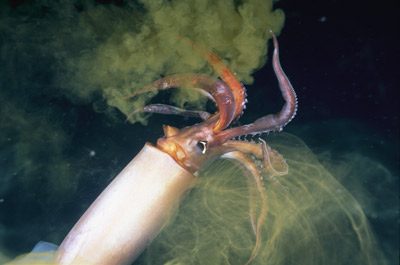

The image of a jumbo squid fleeing a diver is chaotic. Angry eye visible, ink cloud puffy and dark, the creature retreats. It’s not just running. It’s jet-propelling.
The squid’s funnel operates like a biological jet engine. Muscles expand the mantle cavity, drawing water in. Then the muscles contract. The mantle stretches like a rubber band before snapping back, forcing water out the funnel. The squid shoots backward. Tail first.
When a predator closes in, the speed is terrifying. They can move 25 body lengths per second. That is fast. But soft bodies are vulnerable. Speed is only half the defense.
The other half is the cloud of sepia. Released before the flee, this inky substance confuses the attacker for just long enough. It buys seconds. Seconds that mean survival.
The Art of Invisible Skin
Before the ink drops, the squid tries to disappear. Thousands of pigment cells called chromatophores dot their arms. These are attached to tiny muscles. The muscles expand or contract the cells. The color changes. The pattern shifts. They match the background.
It’s not just color. Texture matters too. Little flaps and bumps raise up on the skin. The surface mimics the surrounding rocks or coral. These cells also help attract mates. They help communicate. But right now? They help hide.
The Hunger Engine
Squid are carnivores. Their diet is simple. Small fish. Crabs. Shrimp. Other squid.
They stalk. They hide out of sight. They wait. When prey is in range, the arms shoot out. The food is ensnared. Pulled to the mouth.
The beak is sharp. Parrot-like. It tears off pieces. The radula, a tongue-like structure with sharp teeth, grinds the food. It pushes it down the throat. Efficient. Brutal.
The Climate Question: Are We in for an Abundance of Calamari?
Scientists worry about global warming. It’s often bad for animal species. For squid? It might be a blessing.
Research shows squid digestive juices are more productive in warmer waters. Heat accelerates their metabolism. They grow larger. They become more plentiful as temperatures rise.
Fishermen off New Zealand and Australia report catching greater numbers of squid in recent years. This isn’t just anecdote. It’s a trend.
However, not all squid benefit. Those living in colder depths may not survive balmier waters. The ecosystem is shifting. Winners and losers are emerging.
Life, Death, and the Next Generation
Reproduction is sexual. It’s efficient. A female produces thousands of eggs. She stores them in her ovary.
Males produce sperm in the testis. It’s stored in a sac. Mating involves a special arm. The male transfers packets of sperm into the female’s mantle cavity or around her mouth. The eggs are waiting there.
She ejects the gelatinous mass. She hides them. Under rocks. In holes.
Four to eight weeks pass. Baby squid hatch. They look like tiny adults. They feed on plankton. Tiny creatures. They grow to adulthood.
Many squid live fast. They die young. Their entire life cycle takes one year. Mate, die. It’s a race against time.
Deep-water squid are different. Less is known about their cycles. They may live considerably longer. The ocean’s depths hold secrets even scientists haven’t unlocked.
Classifying the Cephalopods
There are about 300 different species of squid. They fall into two main suborders. Myopsida and oegopsida.
Myopsida members live in relatively shallow waters. Their eyes are covered by a transparent membrane. They have suckers on their tentacles, not hooks.
Here are a few common members of this suborder:
-
California market squid ( Loligo opalescens ) – Found in shallow waters of the eastern Pacific. From Mexico north to Alaska. Monterey Bay, California, is a hotspot. Fishermen have harvested them since the 1800s. They are plentiful.
-
Common European squid ( Loligo vulgaris ) – Lives in the Mediterranean Sea and eastern Atlantic Ocean. Depths range from 65 to 850 feet. They are smaller. About 3.3 pounds. 16 inches long.
-
Caribbean reef squid ( Sepioteuthis sepioidea ) – Native to the Caribbean Sea and off the Florida coast. Torpedo-shaped. They resemble cuttlefish more than other squid. Wider. Larger fins.
The diversity is staggering. Each species adapted to its niche. Some thrive in the heat. Some retreat to the cold. The ocean is changing. The squid are adapting. Or they aren’t. The line between abundance and extinction is thin.
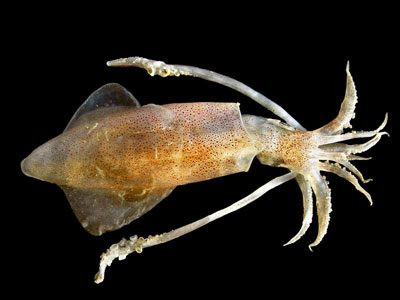

Why the “Big-Eyed” Squid Rule the Deep
If you think you know squid, you probably only know the ones on your sushi plate or in a fish tank. The real heavy hitters of the cephalopod world are hiding in the dark. We are talking about the Oegopsida suborder. These aren’t your shallow-water party animals. They live out in the open ocean and plunge into the deepest trenches where sunlight gives up the ghost. 🌊
The most striking difference? Their eyes.
Unlike their landlocked cousins or those swimming in coastal shallows, Oegopsida squid lack a cornea. That protective clear layer? Gone. Their eyes are naked. It sounds reckless until you realize it’s a high-stakes evolutionary gamble. Without that cornea, they can focus much faster. In the pitch black of the deep sea, prey doesn’t wait. You spot it, or it eats you. Speed matters more than perfect clarity. It’s a trade-off: raw reaction time for structural protection.
Then there is the weaponry. Look at their tentacles. They aren’t just sticky arms designed to snag a passing crab. They are lined with suckers, yes, but also hooks. Sharp, keratinous hooks that dig in and hold on. This isn’t fishing. This is grappling. When a Oegopsid squid catches its meal, it doesn’t let go. It secures it.
Here is a look at the varieties that make up this deep-sea gang:
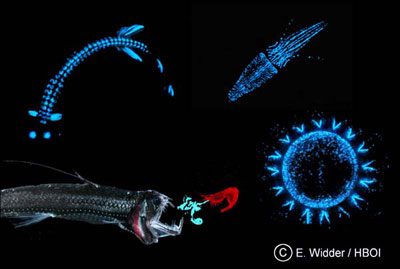

The ocean floor below 1,640 feet (500 meters) is not just dark. It is a landscape defined by the absence of sun. In that crushing pressure and eternal night, life doesn’t just survive. It invents its own illumination.
We are looking at three specific species that have mastered this environment. They prove that evolution is a ruthless engineer. It builds light into the flesh of animals that live where no human eye can see.
The Long-Distance Commuters
Shortfin squid (Illex illecebrosus ) don’t just swim. They migrate.
These creatures inhabit the Atlantic Ocean. Their range stretches from Florida up to Newfoundland. But their behavior is what sets them apart. They have a longer-than-normal migratory period compared to other cephalopods.
Why do they travel so far? To place their eggs in warmer waters.
It’s a survival strategy. Warmer temperatures mean better odds for the next generation. But the journey itself is the story. These squid are built for endurance. They move through vast stretches of open water. They are not stationary. They are constantly on the move, driven by the need for heat and safety.
The Self-Illuminating Hunter
If you want to understand bioluminescent squid, you have to look at Taningia danae.
This deep-sea luminescent squid lives in depths of up to 3,000 feet. The North Atlantic is a primary hunting ground. But they are also found off the coasts of Bermuda, Hawaii, Japan, Australia, and New Zealand.
How does it function in pitch-dark surroundings? It creates its own light.
“The Taningia danae gets its name from the Danish research ship, Dana, which in 1931 caught one of these squid off the coast of the Cape Verde Islands.”
The mechanism is simple. Specialized organs called photophores generate the glow. This isn’t for decoration. It is a tool for survival. In the deep, light is a language. It can lure prey. It can confuse predators. It can signal mates.
The history of this discovery is tied to human curiosity. The Danish ship Dana brought one of these creatures to the surface in 1931. That catch gave us the name. It gave us a glimpse into a world we cannot naturally see.
The Red Devil of the Pacific
Humboldt squid (Dosidicus gigas ) tell a different story.
They live in the eastern Pacific. They are enormous. And they are terrifying.
They have earned the nickname “red devil.” The name comes from their red skin. But also from the ferocity of their attacks. They are merciless with their prey.
“They are merciless with their prey, and have even been known to go after sharks.”
This is not an exaggeration. Humboldts are aggressive. They do not shy away from larger predators. They will hunt sharks if the opportunity arises.
Their growth rate is staggering. By adulthood, they reach 7 to 15 feet in length. They can weigh as much as 100 pounds. That is a massive amount of muscle and speed in a single body.
What This Means for Us
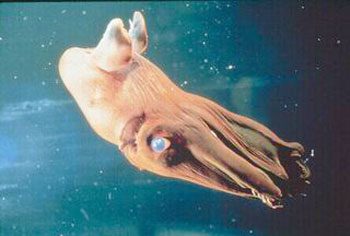

Vampire squid
Deep in the Atlantic and Pacific, red eyes glow in the dark. They belong to Vampyroteuthis infernalis. This is the vampire squid. It has its own order: Vampyromorpha . The name sounds scary. It looks like Dracula. Black body. Red eyes. Webbed arms that look like a cape.
But it is not a monster. It is docile. It floats still. It waits for food. Then it catches prey with its webbed arms.
Next, we tackle the real giants.
Monsters of the Deep: Giant and Colossal Squid
Legends of sea monsters last for millennia. Homer wrote about Scylla in “The Odyssey.” Odysseus had to steer clear of the many-headed beast. Jules Verne later imagined giant squid attacking the Nautilus in “20,000 Leagues under the Sea.”
These stories likely came from real sightings. The giant squid (Architeuthis ) is the largest invertebrate on Earth. It is the biggest member of its species.
They live deep in the Atlantic. They grow huge. Lengths reach 60 feet. Weight hits nearly 1,000 pounds.
The giant squid is the world’s largest invertebrate.
Their eyes are soccer ball-sized. Their tentacles stretch 35 feet long. The suckers on those tentacles are two inches in diameter.
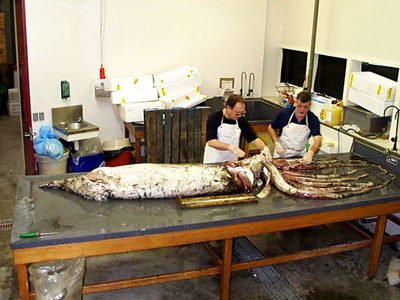
For decades, Architeuthis dux was less a known animal and more a marine legend. You couldn’t just go diving and spot one. They live in the crushing dark of the deep ocean, hiding from the sun and the surface world. Before 2005, the only proof scientists had that these creatures were real came from the most brutal of sources: the stomachs of sperm whales.
Whales are the only natural predators of the giant squid. When researchers examined dead whales, they didn’t find whole squids. They found evidence of the fight. Sucker-shaped scars mapped across the jaws and lips of the whales told a story of violent, deep-sea battles. It was indirect evidence. Real evidence.
That changed in 2005.
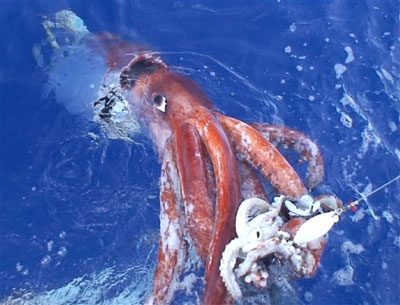
A team of Japanese marine biologists broke the barrier. They captured the first photographs of a live giant squid swimming in the Pacific Ocean. It wasn’t luck. It took three years of work to pull it off. The strategy was simple in theory but difficult in practice. They stopped looking for squid. They started following sperm whales.
By tracking the migratory patterns of the whales, the biologists knew where to look. The whales were diving for food. The squid was there.
The moment of contact happened when a squid attacked bait on a line. It didn’t just touch the bait. It grabbed it. The creature became entangled in the fishing line. What followed was a four-hour struggle. The giant squid pulled, twisted, and thrashed to free itself from the tether.
“It took three years for the scientists to locate the squid, which they accomplished by following the migratory patterns of sperm whales.”
The struggle had a cost. In the chaos of escaping, the squid lost one of its tentacles. The scientists didn’t just take photos. They recovered the lost limb. It measured 18 feet in length. A massive piece of the animal, retrieved from the deep, confirmed the scale of the beast.
This was the first time anyone had seen one alive. Not a drawing. Not a fragment. A living, moving giant.
The photos proved the existence of the animal in its natural habitat. But the images were just the beginning. The team persisted. They kept the lines in the water. They kept watching.
A year after the photos, they succeeded again. This time, they didn’t just photograph it. They actually captured a giant squid. The elusive creature, previously known only by scars on whales and rumors in fishing nets, was finally brought into the light.

The Antarctic Encounter That Defined the Colossal Squid
The giant squid isn’t the only monster lurking in the deep. Scientists have also learned more about its equally intimidating relative, the colossal squid (Mesonychoteuthis hamiltoni ).
In 2007, a New Zealand boat was on a fishing expedition in Antarctic waters when its lines snagged something much larger than fish. The fisherman struggled for nearly two hours to pull the colossal squid onto the boat. It weighed 990 pounds, and, according to news records of the event, had the squid been cooked, it would have produced calamari “the size of tractor tires.” The colossal squid was frozen and taken to New Zealand’s national museum for further study.