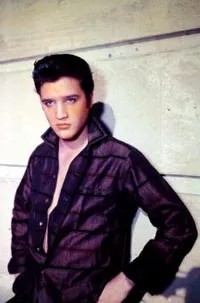
The story begins in Memphis in 1953. At the age of 18, Elvis Presley walked into the Memphis Recording Service in Memphis. He was skinny, hair slicked back and was looking for owner, Sam Phillips. Phillips was not there. Finally Elvis spoke with secretary Marion Kiesker. She asked what kind of music he played. His answer was straightforward: “I don’t sound like nobody.”
The cost of that session was $4. This is a personal recording, not a commercial release. Most people have probably never heard of it. But that moment changed music history. Elvis used this unique style to achieve worldwide fame. Sam Phillips and the studio, later known as Sun Studio, played a key role.
Sun Studio is not just about Elvis. It is also the home to Johnny Cash. Roy Orbison recorded there. Jerry Lee Lewis laid down tracks there. Blues legend B.B. King also walked into the room. These artists helped define rock and roll and country music.
When people think of recording studios, they usually think of Sun Studio. It’s like Abbey Road in London the Beatles’. Or Chicago’s Chess Records. Artists such as Muddy Waters and Chuck Berry have recorded with Chess. Buddy Guy also played there. This scene also features Bo Diddley and Aretha Franklin. These studios introduced blues, jazz, and gospel music to listeners far beyond the Mississippi Delta.
Now the process is different. Artists still need a place to cut and mix their music. However, with the digital age, things have become simpler. Large studios still exists. They offer advanced, high-quality services. However, many musicians have switched to smaller setups. They use computers and digital audio equipment. This change gives independent artists access to more affordable recording studio options.
Now the question is, how did we get here? What does it take to build a recording studio setup from scratch? How did these spaces evolve from analog tapes to digital workstations? The history of music production is a journey from large spaces to portable digital powerhouses. Let’s look at the origins and mechanics behind the magic.
The story of a recording studio doesn’t start with microphones and mixers. It started in the 19th century with Thomas Alva Edison and his phonograph. He wasn’t trying to make a hit. He wanted to improve the phone. But in 1877, the patent for a “talking machine” using a foil cylinder changed everything. It created a tangible way to record sound.
Ten years later Emile Berliner changed the paradigm. He invented a way to carve sound grooves on a horizontal plate instead of a cylinder. This was a revolutionary invention that made mass production possible. By 1889, coin-operated phonographs were playing in arcades. The New York Phonograph Company opened the first full-scale recording studio in 1890.
By 1902, thick wax disks became the norm. Opera giant Enrico Caruso made his first recordings during this period. But the technology is clumsy. The performers had to huddle inches from the horn’s bell. A full orchestra would be crammed into a small space, which would make it difficult to balance the volume. When the sound waves hit the membrane, the needle vibrates and goes straight into the wax. It’s raw. It was unbalanced.
Then came Lee de Forest. His invention of the triode in 1904 marked the end of the hand-cranked phonograph. This points to a future where music is not only recorded mechanically, but also electronically.
The electronic revolution
The real breakthrough came in 1925. Western Electric introduced electronic recording. Suddenly, microphones and amplifiers replaced giant horn. Musicians can sit in a natural position. Volume could be managed electronically. But there’s a problem. To achieve a natural sound, recording studios require spacious halls with special acoustics. You can’t just shrink the space.
Editing is not yet possible. Records were cut directly to disk and then pressed into metal masters for copying. One take. One chance.
This limitation continued until the advent of magnetic tape. I.G. Farben, a German company perfected the coating process in the 1930s. However, during World War II, the technology kept the tech out of Allied hands. After the war, the American recording industry got its hands on it. Editing of the tape is allowed. It allowed for mistakes to be cut out.
Multitrack and digital transformation
In the 1950s, the multitrack tape recorder was introduced. Engineers can record separate instruments on different tracks and mix them later. This is a game changer. Not everyone in the room needs to be there at the same time. You can build your piece layer by layer.
In the late 1960s, stereo became the norm. Two-channel mixing allows engineers play with echo, reverb, and panning. Sound became spatial.
In the 1970s, long-playing (LP) vinyl competed with cassette tapes. The tape is portable. They introduced Dolby B noise reduction for quiet listening without hiss. However, by the mid-1990s, compact disc (CD) and digital recorders had largely replaced cassette recorders. With digital tape, recording studios can convert analog recordings into digital format and burned onto master laser discs. aluminum-coated plastic CDs were pressed.
Modern home studio
Digital technology isn’t just changing the way music is distributed; Its manufacturing method has changed. Musicians these days don’t need multi-million dollar equipment. A computer and some digital devices are usually sufficient for composing, performing, recording and mixing. The barriers to entry have collapsed.
Are you considering setting up your own space? Let’s see what you really need to get started.
Build a recording studio
You’re ready to build a studio. The gear list is long. First, you need the digital tools to record, edit, and mix. It’s all about the signal flow. But hardware is only half the battle.
Acoustics matter just as much. You need soundproofing. Then there’s the room itself. Construction or remodeling might be on the table.
The Anatomy of a Pro Space
A pro studio isn’t just one big box. It’s a ecosystem.
There’s the live room. Musicians play here. Sometimes, the whole place is called the studio. Then there’s the control room. This is where the gear lives. Recording, editing, mixing — it all happens here.
Some setups include a machine room. Smaller isolation booths are common too. High-volume instruments like drums go there. You want to separate their sound from the mics in the main room. It’s about cleanliness.
These rooms are engineered. Not just built. Designed.
Sound quality has been the holy grail for decades. Look at Chess Studios in Chicago. In the 1950s, they broke the rules. Four walls? None parallel. Several clipped at angles. Why? To control vibrations. They wanted the sound to behave, not bounce back and forth.
Soundproofing and Zoning
You need to think about subdivision. How do you split the space? Soundproofing is non-negotiable.
Performers need a quiet zone. Separate from the control room. You can’t have bleed.
Check local laws. Zoning ordinances matter. Anti-noise provisions exist for a reason. Don’t ignore them.
Budgeting Your Setup
Home studios don’t need a fortune. You can start small.
Here are two paths. One under $1,000. One around $4,000. Both work. Both get the job done.
$950 Basic Digital Studio
This is entry-level. It’s functional.
- Computer: Mac-mini with memory and hard-drive upgrades. $675.
- Interface: M-Audio Fast Track USB ($100) or M-Audio Mobile Pre ($150).
- Microphone: Shure SM58 style or a budget Chinese condenser. $100.
- Cables: Connecting cables and adapters. $25.
- Controller: USB MIDI Keyboard. $100.
Total: roughly $950.
$4,000 Digital Studio
This setup scales up. More power. More channels.
- Computer: 2.8-GHz Windows PC or 1.6-GHz Apple Mac. 1 GB RAM. 100 GB hard drive.
- PC build: ~$1,500.
- Mac build: ~$2,500.
- Monitors: Upgrade speakers. Behringer MS16, Harman Kardon Duet, or Sony SRS-Z510. $30 to $80.
- Software: DAW is essential. Cubase SL (PC/Mac), Sonar Studio (PC only), or Logic Express (Mac only). ~$300.
- Microphone: Shure SM58, SM86, Behringer B-1/B-2, or Blue 8-Ball. $100 to $200. Add $60 for cable, stand, and boom.
- Interface: PreSonus Firepod, MOTU 828mkII, or Yamaha O1X. $600 to $1,000. This handles eight simultaneous inputs.
Types of Recording Studios
Home studios are just the start. What else is out there?
Let’s look at the other categories next.
Sound-Recording Vocabulary
You’ll hear these terms. Know what they mean.
DAW
Digital Audio Workstation. The software or electronic rig running the show.
MIDI
Musical Instrument Digital Interface. Data between keyboards and computers. Notes written on screen play on the keyboard. Notes played on the keyboard write notation on screen. Two-way street.
Multi-track Recorder
Records audio on multiple tracks. Then mixes them into a stereo master. It doesn’t handle MIDI data.
Sequencer
Software. Records digital audio and MIDI. Mixes the sounds together.
“Sequencers allow you to arrange and edit both audio and MIDI data, giving you total control over the final mix.”
Ready to explore the different studio types? Let’s dive in.
Recording studios are not one category. They vary greatly in size and price. Some are just temporary setups in the corners of the basement, while others are huge state-of-the-art music recording studios. Right in between is project studios. These are the workhorses of the industry and are often used for voice work and small productions.
Barriers to entry have been lowered. Cheap digital recording devices and affordable music software have democratized audio recording. Now anyone can press record. All you need is a desk, digital recorder or computer with a MIDI setup. If you are unfamiliar with this term, see How MIDI Works. For many, a home studio is just a hobby. Some equipment can be very basic, while others can be advanced enough to compete with professional recording studios, depending on the skills and budget of the owner. Because of this, the quality of the recordings varies greatly.
More sophisticated home studios are usually located in the homes of producers and engineers. These facilities form the middle layer of the recording infrastructure. We call them project studios. They’re not just for voice actors. Bands use them to record a demo album for potential producers. Advertising agencies use these for commercial jingles. Filmmakers use these to create sound effects.
At the top of the hierarchy is a state-of-the-art recording studio. These are designed for serious music production. price tag? Usually over $100 an hour. The equipment is worth the price. A sound control room is available. You get several different performance areas. You get quality equipment that cannot be replicated at home. Recording there allows performers to mix different instruments with professional microphones, synthesizers and mixers.
Every working studio, regardless of level, has a core mission. You have to capture, record, combine, re-record and edit sounds. A well-protected environment must be maintained to prevent bleeding. Engineers and musicians must be able to clearly observe the playback.
Rent a recording studio
Not ready to invest in your own equipment? You can rent space. So what should you pay attention to when renting a studio? On the next page, we explain the things you should know before signing the contract.
Finding the right studio for your project is harder than you think. You’re not just paying for a room with a microphone. The market is divided into several levels. On the top floor, there are state-of-the-art facilities built for big label artists who demand perfection. In the middle is a studio for voice-over artists and independent musicians who want clean sound but don’t need a Grammy-winning setup. Next up are some budget options for amateurs who just want to capture a demo.
You don’t have to pay $4 for your first lesson with Elvis. Those days are gone. However, you can find a place that suits your wallet and purpose. The real question is not “How much does it cost?” It’s “What do we really need?”
Cost trap
The price tags vary greatly. Premium studios usually charge more than $100 an hour. Mid-range seats can cost between $45 and $65. However, it is a mistake to focus only on hourly wages. This is a trap.
If the engineer is slow to respond or the sound quality is poor, even if the hourly rate is low, it could cost you more in the long run. Time is money, especially when time is busy. You should look past the sticker price.
Why engineers matter the most
Brian Kozelman, owner of Back at the Ranch Studio near Waco, Texas, puts it bluntly. The sound technician is the most important element.
Experience is more than just knowing what knobs to turn. It’s all about speed. Professional engineers predict problems before they occur. They know how to get the best sound out of a band quickly. This saves time. Hours cost cash.
Make sure the engineer has specific experience in your genre and format. If you’re recording a solo acoustic ballad, you don’t need an engineer who can only do heavy metal. Match the skill to the job.
Equipment: less is more
Don’t let the long equipment list fool you. Marketing teams are happy to fill in the information. The quality of the signal chain is important.
Look for high-end microphone preamps. They color the sound and add warmth. You need a studio with a selection of well-known mics, not just one cheap condenser mic. A classic outboard can give your track character. Modern plug-ins are useful, but analog hardware often adds depth to the listener’s perception.
Acoustics and room size
The sound is determined by the room. This is physics.
If you’re recording an orchestra, you need a large live room. The sound needs space to breathe. Solo artists or small quartets can sound distant in a large room. You want a smaller, tighter space to capture intimacy.
Also check the monitoring system of the control room. If the speakers in the control room lie, the final mix is wrong. Music sounds different on your phone than it does in the studio.
Also ask about isolation. If you record drums, you need a separate room or a well-treated live room. You don’t want the sound of the snare drum to overpowering the vocal mic.
Previous work and references
Ask for a portfolio. Don’t just look at who recorded it. Look at who they’ve recorded that sounds like you.
Get references. Call previous clients who have similar needs to yours. Ask them what went wrong. Ask if the engineer was patient. Ask if they meet deadlines. A studio may look good online, but the real test is your working relationship.
Negotiate project fees
Here are some pro tips: Try to set a project price instead of an hourly rate.
The speed of studio workflows varies. The studio is so efficient that sometimes we finish a song in two hours. It can take up to 6 hours because it requires attention and time. If you’re charging by the hour, slower studios may seem cheaper, but more expensive overall.
Project fees confirm costs. It’s a combination of studio incentives and the goal of getting the song right. Discuss the scope of your project in advance. Agree on the deliverables. After that, you sign a contract for a fixed price.
To learn more about the industry, check out our related articles on cutting a CD, how MIDI is changing music production, how record labels work, and more. If you’re feeling ambitious, you can also watch step-by-step videos on building your own studio or installing computer-based equipment. But until then, trust the experts.