An organ is more than just a piece of tissue. It is a biological machine.
Technically speaking, it is a functional unit made up of different types of tissues and cells working in synchrony. These components are not only related to each other. They work together to complete specific, important tasks. Organs are not found in unicellular organisms. This structure exists only in multicellular organisms – both animals and plants.
Why do we need them?
Simple. Survival.
Organs are the reason complex life exists. With them, the organism can maintain its internal balance, grow, develop and eventually reproduce. Without them, the cycle of life would stop. An organ is basically a special tool in the body’s toolbox.
An organ is a functional unit made up of several tissues and cells that work together to perform vital functions in an organism.
Think of the heart. It’s not just muscles. They are tissues, nerves and blood vessels woven into the structure and designed for pumping. Or plant leaves. It takes light, air and water and turns them into food. Everyone has their own role. Together they keep the whole system running.
This division of labor separates complex life from simple colonies. One cell cannot do everything. Therefore, groups of cells become specialized. They form tissue. Tissues group together to form organs. And the organs work together to keep the organism alive.
It is a hierarchy of efficiency.
But what does this look like in real life? Think about digestion. You don’t just “eat”. Your stomach, intestines, liver and pancreas coordinate. They break down food, absorb nutrients and filter toxins. No single tissue could do this alone. It requires an organ system.
The result is the ability to sustain life for a long time.
Growth depends on it. Development depends on it. Without them reproduction is not possible. These are not just biological abstractions. They are mechanisms that allow a person to live for decades or a tree to last for centuries.
So when you look at your body, remember: you are not just a collection of parts. You’re a collection of cooperating systems. Each organ is a team. Each team has a task. And this job keeps you here.
Is it perfect? No
But it works. And that’s the point.
Think about your own chest. It rises. It falls. Beneath this ribcage sits the heart, a muscular pump that works tirelessly to deliver oxygen and nutrients to every cell in your body. Without it, these cells starve. They shut down. It is the engine of existence.
But life doesn’t always look like a beating heart. Look at a tree. Deep underground, hidden from view, are the roots. They stick to dirt and pulling up water and minerals. No roots? No survival for the plant. Whether these structures pump blood or absorb moisture, they share a common biological identity.
What exactly is an organ?
Here’s the catch: You don’t find organs in single-celled organisms. Organs are only found in multicellular eukaryotes. A bacterium is a champion of independence. It does what it needs to do on its own. Organ? It’s a complex hierarchy. It requires the cooperation of millions of cells. It consists of tissues that are specialized for a specific task.
Structure is important. Most organs have a clear, recognizable shape. Try describing the human heart or lungs to someone blindfolded. You may know the general area, but the unique structure and shape define it. This is not just aesthetic. Form often determines function.
These structures do not work in isolation. Organ groups combine to form systems. Take the digestive tract. It’s not just the stomach. The stomach, intestines and liver work together to break down food and extract nutrients. One part fails, the whole system has problems.
If you dig deeper, you will find that the internal architecture of each organ is based on two main tissue types: parenchyma and stroma. Parenchyma is a worker. It is the tissue that actually performs a specific function of the organ – for example, the blood-filtering part of the kidney. Stroma is a support team. It provides the structural framework and holds everything together so workers can do their jobs without the building collapsing.
Not all organs are the same. Some are necessary. You cannot live without your heart and brain. Others? They’re optional extras. Human appendix? It doesn’t seem to do much anymore and we get by pretty well without it. You can live a normal life with one kidney or one lung. Nature is efficient, but it also carries baggage.
Then there’s multitasking. The pancreas is a good example. It is not only part of the digestive system that produces enzymes to break down food. It also plays an important role in the endocrine system by producing insulin and glucagon to regulate blood sugar. One organ. Two major systems.
Biological Toolkit: Organs of Animals and Plants
The diversity of the organs of multicellular life is breathtaking. However, similar solutions to the same problems are often seen in different species.
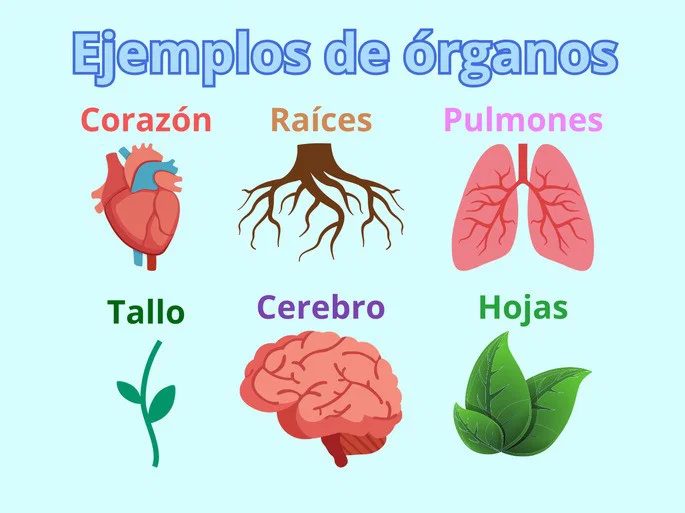
The list is well known in the animal kingdom. We have a heart, a relentless pump. The lungs of mammals, birds and even marine mammals like whales work to remove oxygen from the air. stomach, where food is first broken down. The kidneys act as a filter that removes waste from the blood and produces urine.
Don’t forget the skin. It is an organ that is often overlooked because it covers everything. It acts as a barrier and protects the soft interior from the harsh outside world. The brain is a command center that receives and sends nerve signals faster than thought. The intestines finish the digestion job and pack away the waste. And the gonads which are necessary for the reproduction and continuation of the species.
However, plants play a different game. You don’t need a heart to pump fluid; they rely on pressure and capillary action. Their organs are adapted for stationary life.
The stem is the skeleton and the highway. It holds the plant upright and contains vascular channels that transport nutrients. Roots anchor the plant and absorb water and minerals from the soil. Leaves are solar panels that capture light for photosynthesis. Flowers are critical reproductive engines for seed dispersal. And fruit? They are protective containers for these seeds that are destined to eventually sprout into new plants.
It is a complex dance of tissue and function. From the deepest root to the fastest heartbeat, organs are specialized tools evolution has forged to keep life going. But on closer inspection, the boundaries between the systems become blurred. The pancreas connects digestion to hormones. The skin combines protection with feeling. Is the organ ever just one thing? Probably not. Life rarely stays simple.