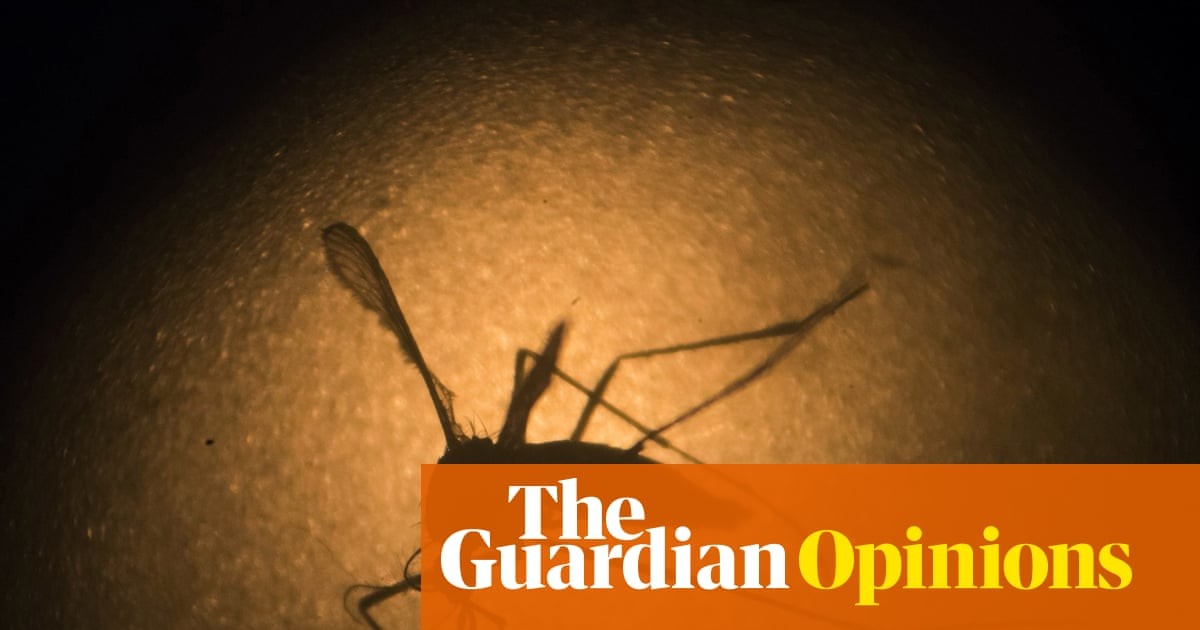
Google’s parent company, Alphabet, is asking permission to unleash 32 million sterile male mosquitoes on American cities. Specifically, California and Florida.
The logic is coldly efficient. Male mosquitoes don’t bite. They don’t spread dengue, Zika, or chikungunya. If you release millions of them into the wild, they mate with the disease-carrying females. The eggs won’t hatch. The population collapses.
It sounds simple. The US public isn’t so sure. They are asking if it’s safe. They are asking if it actually works on a city-wide scale. And what happens when the machines stop humming?
To answer these questions, we should look at what happened in Queensland, Australia. Over a decade ago, I led a trial with Verily (then Google Life Sciences). We didn’t release 32 million. We released three million. And the results were striking.
The Biology of Reproductive Incompatibility
This isn’t science fiction. It’s microbiology.
The target is Aedes aegypti. The mosquito. It arrived in Queensland in the late 19th century. Unlike native species, it is highly domesticated. It lives with humans. It feeds on humans. It is a perfect vector for deadly arboviruses.
Our strategy relied on Wolbachia. A naturally occurring bacterium inside many insects. Certain strains cause reproductive incompatibility. If a female carries Wolbachia and mates with a male who doesn’t, or vice versa, the embryos fail to develop.
The released males carried the bacteria. The wild females did not. When they mated, the population didn’t just slow down. It stalled.
We needed the males to be good at their job. Male Aedes aegypti have bushy antennae. They act as super-radars, detecting pheromones from females over distance. Evolutionarily, they are built to find mates. We just had to weaponize their mating calls.
North Queensland as a Laboratory
Why Australia? Why now?
The Cassowary Coast in far north Queensland offered ideal conditions. Towns here had high densities of Aedes aegypti. Agricultural land surrounded these towns, limiting mosquito movement between communities. Isolation helped containment.
But infrastructure wasn’t the hardest part. Community buy-in was.
Before releasing a single insect, our team spent two years on the ground. We held meetings. We talked to households. We sat with local councils and First Nations leaders. We answered hard questions. We needed regulatory approval from multiple authorities. The project, dubbed “Debug Innisfail,” earned its social license.
Without that trust, the release fails. Period.
The Release: Three Million Males
In 2018, during a 20-week window, we released approximately three million Wolbachia -carrying males into three treatment towns.
We didn’t just dump them out of trucks. Verily’s engineering team developed bespoke separation technologies. Machine-learning systems identified and separated male and female mosquitoes at scale. Crucial detail: only males went into the wild. If a female slipped through, the entire premise collapses.
We monitored these towns closely. We also monitored “control towns” where no mosquitoes were released. The comparison was stark.
Within four weeks, mosquito numbers in the treatment towns began to plummet.
The findings demonstrated that incompatible male mosquito releases could achieve strong population suppression.
By the twelfth month, one treatment town had monitored only a handful of Aedes aegypti. That represents a 95% suppression rate. The effect persisted into the following year.
Addressing US Concerns
The US is considering releasing 16 million males per year for two years. That’s 32 million total. Skepticism is healthy. Here is what the Australian data suggests about those concerns.
Is it safe ecologically?
Probably not harmful. Aedes aegypti is an invasive species. It doesn’t feed on native wildlife. It feeds on us. Removing it from urban environments has minimal downstream ecological impact. We are removing a pest, not a keystone species.
Can it work at scale?
Yes. Adult mosquitoes live only a few days. You can’t just release them once. You need continuous, high-volume releases of highly competitive males. But our trial showed it works across entire towns, not just in controlled enclosures.
What happens when releases stop?
This is the tricky part. The suppression effect didn’t vanish immediately when the releases ceased in some areas. The drop carried over. However, mosquito biology is complex. Local ecology, wind patterns, and community participation all matter. The technology alone is insufficient. If the community resists, or if wild mosquitoes migrate in from outside the treatment zone, the gains erode.
A Blueprint for Collaboration
The most valuable output of the Debug Innisfail project wasn’t the data. It was the model.
We combined Verily’s industrial engineering capabilities with academic rigor. Six universities. Government regulators. Community leaders. The speed of translation from lab concept to field trial was unprecedented.
We are still refining the methods. Better mechanical and biological separators for males are needed, particularly for use in developing nations where resources are scarcer. But the core concept holds.
Insecticides are failing. Aedes aegypti is expanding its range. Climate change is pushing these mosquitoes further north.
The US trials may be the next step. Or the next major failure if handled poorly. The Australian experience offers a blueprint. But only if the Americans are willing to listen to the people living in the test zones.
Science gives us the tool. Community makes it work.
The mosquitoes are ready. Are the cities?