For centuries, humanity has looked at the stars and wondered about our place in the cosmos. Traditionally, we have viewed the universe —the entirety of all existence across space and time—as a single, unique entity. However, modern physics is increasingly challenging this “one-universe” model, introducing the provocative concept of the multiverse.
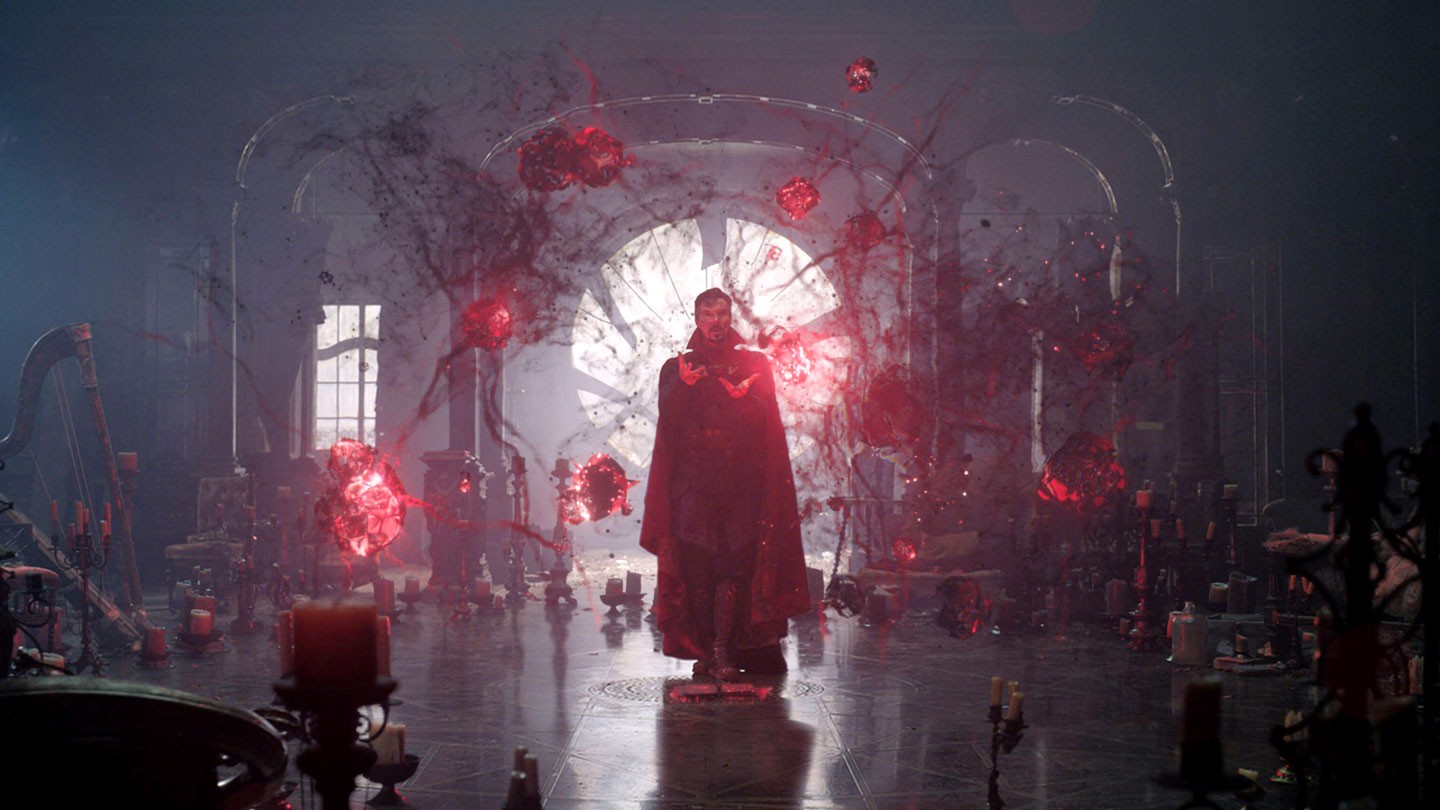
The multiverse theory suggests that our universe may not be the only one. Instead, it proposes that we might exist within a vast collection of alternative universes, potentially numbering in the infinite, where different physical laws or historical events play out.
The Foundations of Cosmic Theory
To understand how scientists arrive at such a radical idea, we must look at the fundamental building blocks of our reality:
- The Big Bang and Spacetime: Our current understanding of the universe begins with the Big Bang, a rapid expansion of dense matter and space-time approximately 13.8 billion years ago. This event set the stage for the formation of galaxies, stars, and the complex structures we observe today.
- Gravity and Mass: The movement of everything from tiny particles to massive celestial bodies is governed by gravity, the force attracted by mass. This force dictates the “fabric” of our reality, holding galaxies together and shaping the curvature of space.
- Quantum Mechanics: At the microscopic level, the rules of the universe change. Quantum mechanics describes how subatomic particles, such as electrons, behave in ways that defy classical logic.
Why the Multiverse is a Scientific Consideration
The shift from a single universe to a multiverse isn’t just science fiction; it arises from serious mathematical and physical challenges. Two key concepts drive this discussion:
1. The Weirdness of Quantum Superposition
In the quantum realm, particles exhibit a phenomenon called superposition. This is the ability of a minute particle to exist in multiple states or locations simultaneously until it is observed. If particles can exist in multiple states at once, some theorists suggest this could scale up to entire realities, where every possible outcome of a quantum event exists in a different “branch” of reality.
2. Fluctuations in the Fabric of Space
Cosmologists study the fluctuations —irregular changes or patterns—within the cosmic fabric. Some theories suggest that the rapid expansion following the Big Bang could have created “bubbles” of space. In this scenario, each bubble would expand to become its own self-contained universe, complete with its own unique physical constants and laws.
The Challenge of Proof
While the multiverse is a compelling theory —a structured explanation based on mathematical reasoning and observations—it remains largely theoretical.
The primary difficulty lies in the fact that these other universes, by definition, exist outside our observable reach. Unlike a telescope that can bring distant stars into view, we currently lack a way to observe or interact with a reality that is not part of our own spacetime. This creates a gap between mathematical possibility and empirical, “tangible” evidence.
The multiverse represents the ultimate frontier of cosmology : a transition from studying what we can see to theorizing about what we may never be able to touch.
Conclusion
The concept of a multiverse shifts our perspective from living in a unique, solitary cosmos to being part of a potentially infinite sea of realities. While it remains unproven, the theory continues to push the boundaries of physics, forcing us to rethink the very nature of existence.