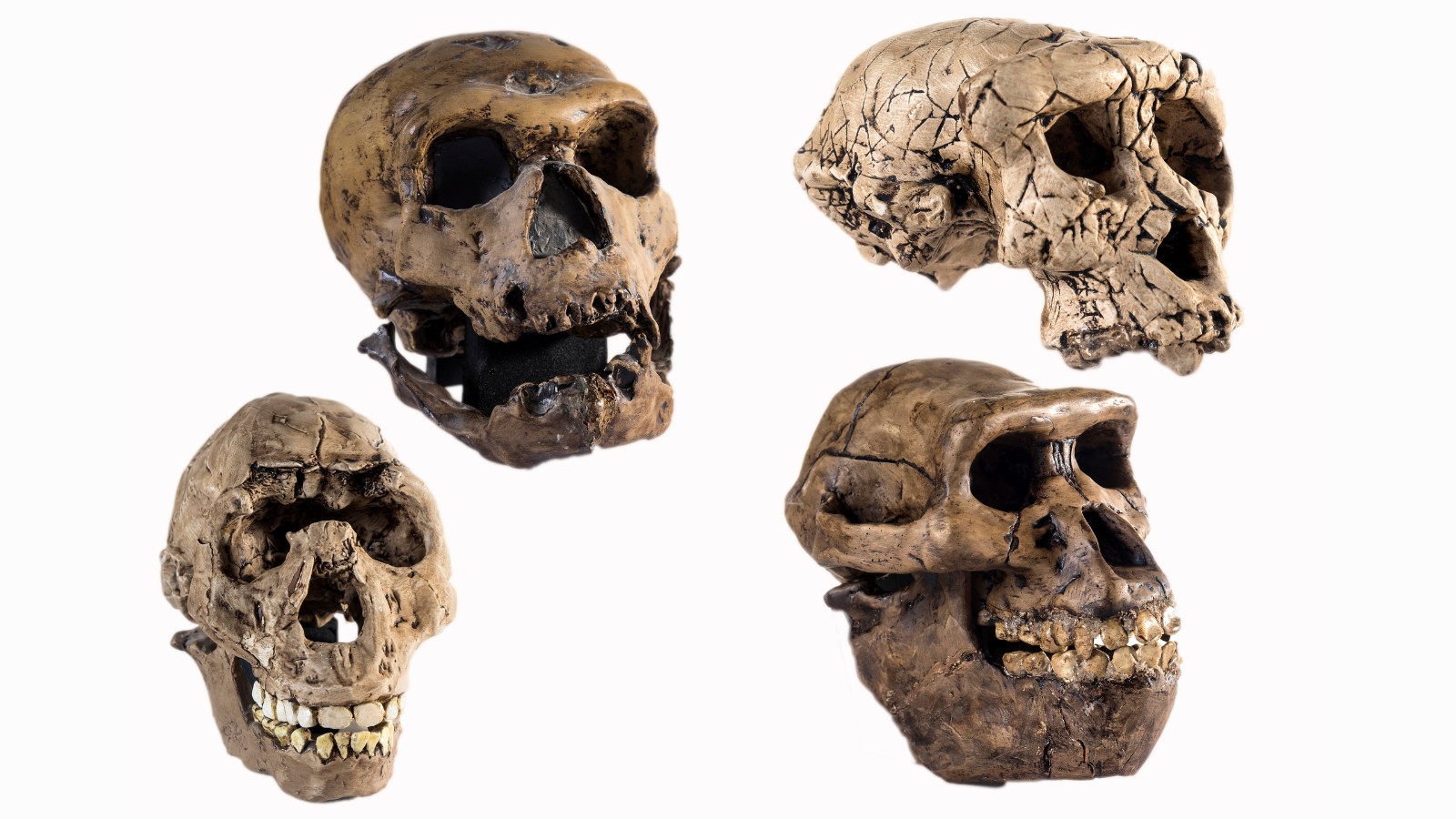
For decades, the 3.2-million-year-old Australopithecus afarensis fossil, famously known as “Lucy,” has been widely considered a prime candidate for humanity’s direct ancestor. However, recent discoveries and intensifying debate among paleoanthropologists are challenging this long-held assumption. New evidence suggests that an older species, Australopithecus anamensis, may actually be the one from which humans descended, stirring controversy within the field.
The Rise and Fall of Lucy’s Reign
The story began in 1974 with the discovery of Lucy in Ethiopia. Her upright posture combined with a relatively small, chimpanzee-sized brain positioned her as a crucial intermediate between our ape-like ancestors and modern Homo sapiens. For years, the consensus held that Lucy’s species led directly to the emergence of the Homo genus. This view was strengthened in 1979, when analysis suggested A. afarensis was the clear predecessor to all later hominins.
However, the more fossils unearthed, the more complex the picture became. The hominin family tree resembles a tangled bush rather than a straight line, making it difficult to pinpoint a single direct ancestor. The latest challenge comes from a recent study published in Nature, which re-examines previously enigmatic fossil fragments and links them to a species called Australopithecus deyiremeda.
The New Contender: Australopithecus anamensis
The Nature paper suggests that A. deyiremeda and the South African Australopithecus africanus were more closely related to each other than either was to Lucy’s species. This implies that A. africanus did not descend from Lucy but was instead her cousin. If true, the more ancient Australopithecus anamensis, which lived between 4.2 and 3.8 million years ago, could be the true ancestor of both A. deyiremeda and A. africanus, and ultimately, of humans.
This idea is championed by some researchers, like Fred Spoor of University College London, who believe Lucy’s iconic status as a direct ancestor is now untenable. Spoor argues that if A. anamensis is the root, Lucy’s species will be demoted to a more distant relative.
Fierce Disagreements and Uncertainties
However, the scientific community is far from unified. Some anthropologists dismiss the new findings as “far-fetched,” while others maintain that the East African fossil record still supports Lucy as the most likely candidate. Carol Ward of the University of Missouri points out that the oldest known Homo fossils originate from East Africa, suggesting the genus likely emerged there, supporting Lucy’s continued ancestral role.
The debate extends even to the authors of the Nature study itself. Lead author Yohannes Haile-Selassie insists that Lucy’s species remains the best candidate, citing her more human-like foot structure as evidence. Co-author Thomas Cody Prang, however, proposes that Lucy may have evolved human-like traits independently, similar to how bats and birds both developed wings.
The Elusive Ancestor
The core problem is the incompleteness of the fossil record. The further back in time we go, the fewer specimens we find, making definitive conclusions impossible. According to Lauren Schroeder of the University of Toronto Mississauga, early Homo likely emerged from a complex “braided stream” of intermingling hominin species across Africa.
Ultimately, the identity of our direct ancestor may remain forever elusive. As Ward succinctly puts it, “We will almost certainly never know who our direct ancestor is.” Despite this uncertainty, continued research will undoubtedly shed more light on our evolutionary past, even if it never reveals a single, definitive answer.
The question of our origins is a reminder of how much we still don’t know about human evolution. The debate over Lucy underscores the need for further discoveries and refined analyses to piece together the complex puzzle of our past.