This week’s headlines in science spanned from urgent medical evacuations in space to long-awaited breakthroughs in paleontology. The rapid pace of discoveries and challenges highlights how quickly our understanding of the universe, and our place within it, is evolving.
Emergency on the ISS and Artemis’s Progress
The International Space Station (ISS) experienced its first-ever emergency crew return this week when an astronaut suffered an undisclosed medical issue. The Crew-11 mission cut short, leaving just four astronauts aboard until the arrival of Crew-12 next month. This incident underscores the inherent risks of long-duration spaceflight and the importance of rapid-response protocols.
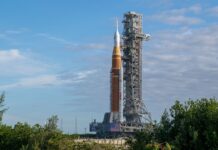
Meanwhile, NASA’s Artemis program continues forward momentum. The agency is preparing to roll out its mega moon rocket, Artemis 2, with a launch slated for early February. The program, despite past budget threats, remains a priority for returning American astronauts to the lunar surface. Additionally, NASA’s Roman Space Telescope—previously at risk of cancellation—will now work in tandem with Hubble and James Webb to search for exoplanets.
Mars Sample Return Scrapped: China Takes the Lead
A major setback this week was the official cancellation of NASA’s Mars sample return mission. The mission, intended to retrieve rocks collected by the Perseverance rover, lost funding, leaving the door open for China to become the first nation to bring Martian samples back to Earth. These samples could hold crucial evidence of past or present life on the Red Planet, making this a significant geopolitical shift in space exploration.
Earth’s Sinking Deltas: A Growing Crisis
Beyond space, Earth’s own environment is facing escalating threats. A new study reveals that 18 of the world’s largest river deltas, including the Nile and Amazon, are sinking faster than sea levels are rising. The primary driver is groundwater pumping combined with reduced sediment flow, exacerbating the risk of catastrophic flooding in major cities. This underscores how human activity can outpace natural processes, creating acute environmental vulnerabilities.
Ancient Insights: From Extinct Rhinos to Early Humans
Paleontology also delivered striking news this week. Scientists extracted a piece of woolly rhino flesh from the stomach of a 14,400-year-old wolf pup found in Siberian permafrost. Genomic analysis suggests the rhino population was genetically uniform, potentially hindering its ability to adapt to climate change. This marks the first time DNA has been recovered from an ice age animal via another creature’s digestive tract.
Elsewhere, a remarkably complete Homo habilis skeleton dating back over 2 million years was discovered, retaining features similar to the famous “Lucy” fossil. This finding provides further insight into the early stages of human evolution.
The Bigger Picture
The week’s news paints a stark picture: progress in space exploration is not without risk, and terrestrial challenges are escalating. The race to understand our universe is intertwined with the urgent need to protect our own planet. As scientific endeavors advance, so too must global cooperation and responsible stewardship of Earth’s resources.