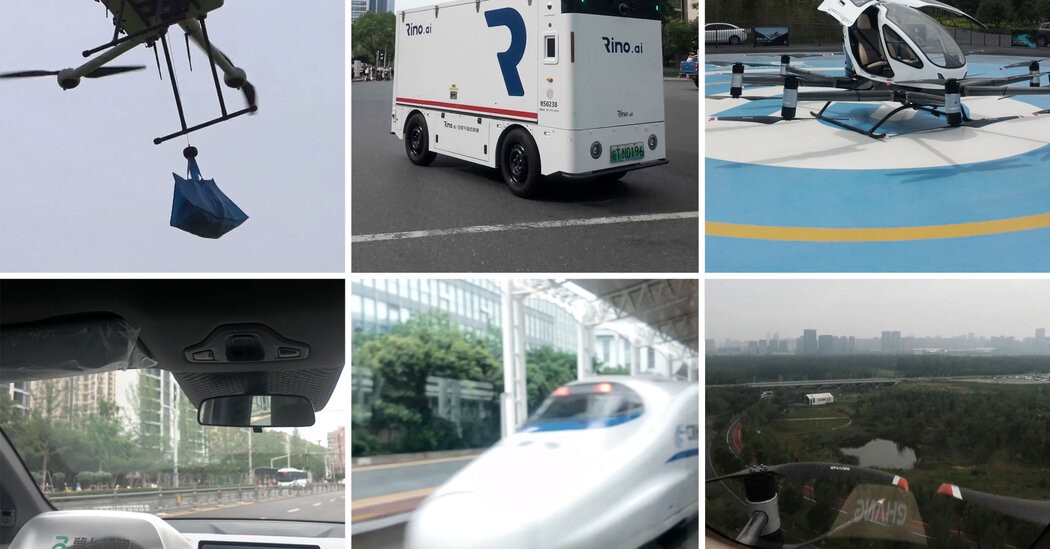
China is no longer just adopting cutting-edge technologies like drones, robots, and self-driving vehicles – it’s actively deploying them at scale, reshaping urban life and aiming to dominate the global clean energy landscape. From autonomous delivery fleets to experimental flying cars and rapid battery-swapping robots, the country has moved beyond experimentation into real-world implementation, backed by massive state investment and a uniquely ambitious industrial policy.
The Scale of Transformation
Over the past decade, China has invested trillions into a vision where clean electricity powers not just electric vehicles (EVs) but entirely new systems of transportation and logistics. EV sales now consistently exceed 50% of new car purchases, with models available for as little as $9,000. The infrastructure supports this shift: over 18.6 million public charging stations are already installed, eliminating “range anxiety” that slows EV adoption elsewhere. Cars themselves are becoming fully integrated digital platforms, some even featuring built-in karaoke for passengers.
This isn’t just about cars. China is prototyping and deploying technologies at a speed unmatched by other nations. The goal is clear: to become the world’s leading provider of clean energy solutions, not just components, but complete systems. This ambition is fueled by state-planned economies and massive debt.
Real-World Testing: Hefei and Beyond
Cities like Hefei, roughly the size of Chicago, serve as testing grounds. Flying taxis (without pilots), autonomous delivery trucks, and drone-delivered meals are no longer concepts but functioning prototypes. While not without hiccups, the sheer scale of experimentation is unprecedented.
Drone delivery, for instance, is being used in hospitals to transport emergency supplies like blood, demonstrating a practical application beyond consumer convenience. Retailers envision reduced traffic congestion through drone networks, even if current consumer trials are unreliable – as evidenced by a restaurant sign bluntly stating, “Don’t order, it won’t deliver.”
High-Speed Rail and the Infrastructure Push
China’s high-speed rail network, spanning over 30,000 miles, exemplifies its infrastructure ambitions. The system moves passengers at speeds exceeding 220 mph, but its construction came at a cost: nearly $900 billion in debt, partially due to artificially low ticket prices. Despite the financial strain, the rail network is significantly less polluting than alternative transportation methods and facilitates rapid intercity travel.
Autonomous Systems and Urban Integration
Wuhan, another major city, is deploying hundreds of driverless taxis, though their operation remains restricted in congested areas like train stations. Automakers are still required to conduct extensive testing before fully autonomous driving is permitted, but the progress is evident. Robot delivery trucks are already in operation, even in rural areas, navigating alongside livestock on roads.
Cities are also investing heavily in subway infrastructure, using automated tunnel-boring machines and prefabricated stations to build networks faster and cheaper than ever before. Nearly 50 Chinese cities now have subway systems, compared to just a dozen in the U.S.
The Trade-Offs and Global Implications
China’s willingness to take risks – including operating autonomous vehicles despite occasional accidents – sets it apart. While a fatal incident involving a self-driving car in San Francisco damaged public perception, China maintains tighter control over information, allowing for rapid iteration and deployment.
The success of Chinese-built high-speed rail in other countries has been mixed, highlighting the challenges of exporting these systems to different regulatory and logistical environments. However, the country’s aggressive investment and willingness to experiment position it as a global leader in automated technologies, whether they work flawlessly or not.
China’s relentless push into automated futures may not be universally applicable, but its scale and speed are reshaping the global landscape, forcing other nations to adapt or fall behind.