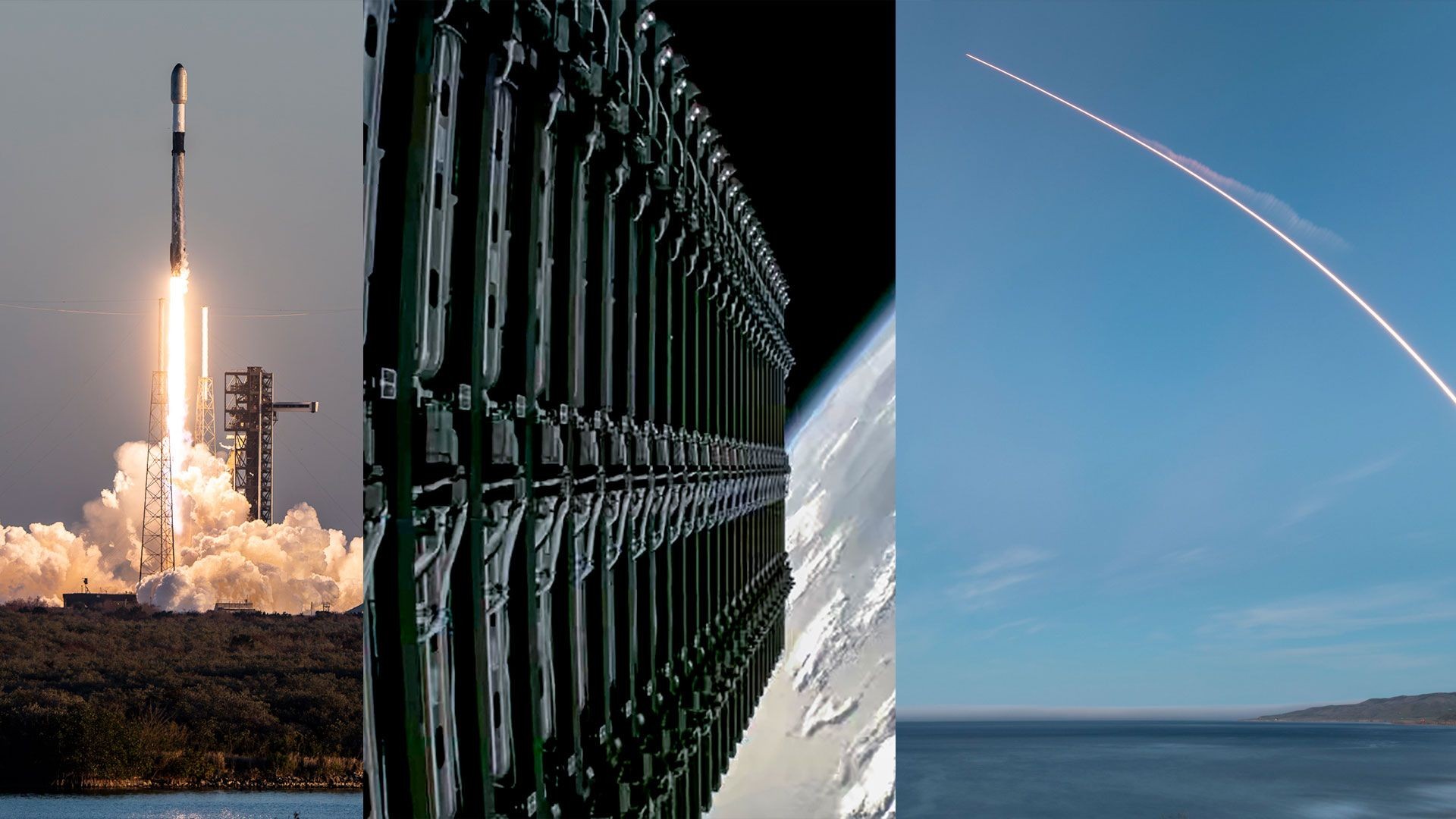
SpaceX finished February 2026 with a flurry of activity, deploying 83 additional Starlink satellites across three separate Falcon 9 launches this week. These launches underscore SpaceX’s aggressive expansion of its broadband internet constellation, bringing the total number of satellites in orbit to over 9,850.
Launch Details: A Week of Consistent Deployment
The launches took place from both coasts of the United States, showcasing SpaceX’s operational flexibility.
- On Tuesday, February 24th, a Falcon 9 rocket launched 29 satellites from Cape Canaveral Space Force Station in Florida at 6:04 p.m. EST.
- The following day, February 25th, another Falcon 9 carried 25 satellites into orbit from Vandenberg Space Force Base in California at 9:17 a.m. EST.
- SpaceX concluded the week on February 27th with a third launch from Florida, deploying an additional 29 satellites at 7:16 a.m. EST.
All three missions successfully placed their payloads (Groups 6-110, 17-26 and 6-108) into their intended low Earth orbit, as confirmed by SpaceX.
Reusable Rockets: Driving Efficiency
Notably, all three Falcon 9 first stages were recovered for reuse. Booster B1092 completed its 10th mission, landing on the Just Read the Instructions droneship in the Atlantic Ocean. B1093 concluded its 11th flight by landing on Of Course I Still Love You in the Pacific Ocean, while B1069 reached a remarkable 30th launch and return on A Shortfall of Gravitas in the Atlantic. This highlights SpaceX’s continued progress in lowering the cost of space access through rapid reusability.
The Expanding Starlink Network: Impact and Growth
The Starlink network has become increasingly vital in providing internet access to underserved regions around the globe. It now supports cellular-to-satellite connectivity on select carriers and in-flight Wi-Fi on some airlines, demonstrating its growing utility beyond basic broadband. With 25 Falcon 9 missions completed in 2026 alone, SpaceX maintains its position as the dominant force in commercial space launches.
The rapid deployment of Starlink satellites suggests SpaceX is aggressively working towards full constellation coverage, further solidifying its role as a key provider of global internet connectivity. The increasing number of re-flown boosters reinforces the company’s commitment to sustainable and cost-effective space travel.