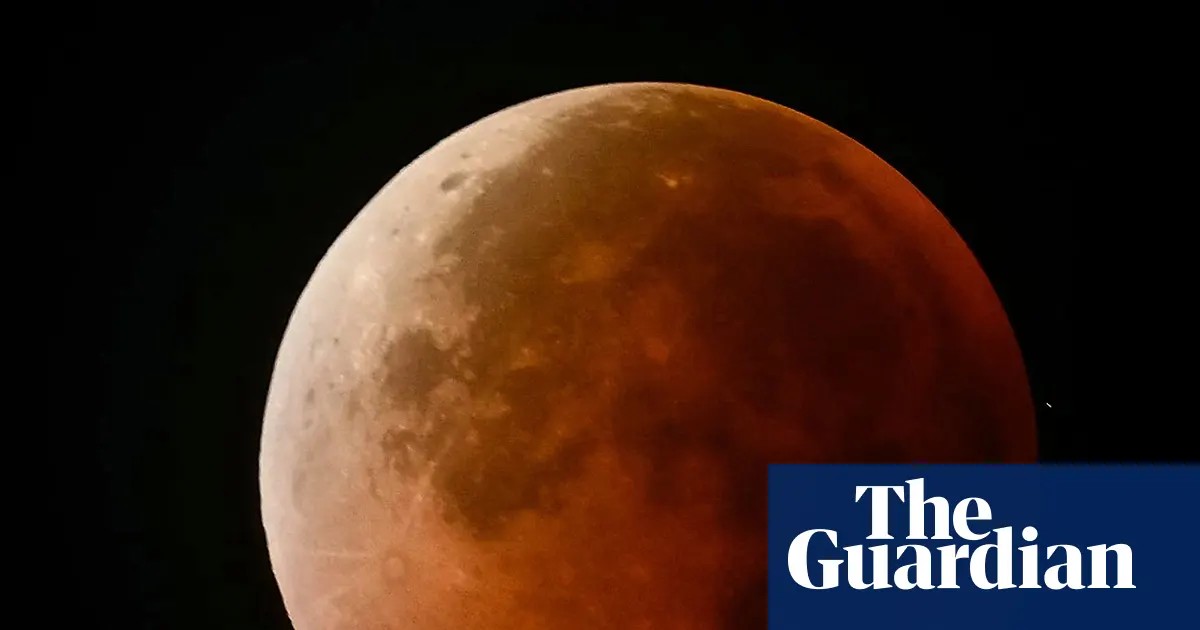
A striking total lunar eclipse, often called a “blood moon” due to the deep red hue the moon takes on during totality, will be visible across North America, Australia, and New Zealand on Tuesday. This event marks the last opportunity for observers in these regions to witness such a spectacle for nearly three years, making it a noteworthy celestial event.
What Causes a Blood Moon?
The phenomenon occurs when Earth passes directly between the sun and moon, casting a shadow upon the lunar surface. While complete darkness might be expected, some sunlight bends through Earth’s atmosphere during the eclipse, bathing the moon in a coppery-red glow.
As astrophysicist Dr. Rebecca Allen of Swinburne University explains, this light is filtered and refracted by our atmosphere, creating the distinct crimson colour. The effect is similar to the red tones seen during sunrises and sunsets – but projected onto the moon.
Viewing Times by Region
To maximize viewing, experts recommend finding a dark location away from city lights and allowing eyes to adjust for 10 to 15 minutes. The eclipse will be accompanied by the visibility of Jupiter, creating an ideal pairing in the night sky. Here are the approximate viewing windows:
- Australia: Sydney/Melbourne/Canberra/Hobart – 10:04 PM to 11:02 PM; Brisbane – 9:04 PM to 10:02 PM; Adelaide – 9:34 PM to 10:32 PM; Darwin – 8:34 PM to 9:32 PM; Perth – 7:04 PM to 8:02 PM
- New Zealand: Eclipse will be visible throughout the country, peaking shortly after midnight.
- North America: New York/Washington DC – 3:44 AM to 6:30 AM; Detroit – 3:44 AM to 7:06 AM; New Orleans/Chicago – 2:44 AM to 6:24 AM; San Francisco/Los Angeles – 12:44 AM to 6:23 AM
Other major cities will also have visibility, including Tokyo, Beijing, Manila, and Jakarta.
Future Lunar Eclipses
Total lunar eclipses typically occur every 18 months to three years. The next total eclipse visible globally will be on New Year’s Eve 2028, though it won’t be visible from the Americas. North America’s next opportunity will be in June 2029. A partial eclipse is scheduled for August 2026, with optimal viewing in the Americas and Africa.
Historical and Modern Significance
While the blood moon is now understood as a natural astronomical event, its appearance has carried cultural and superstitious weight throughout history. Ancient civilizations, such as the Inca and Mesopotamians, interpreted such eclipses as ominous signs – a jaguar attacking the moon, or a threat to the king.
More recently, interpretations have ranged from apocalyptic prophecies to simply a reminder of our planet’s place in a vast universe. As Dr. Allen puts it, “[They are] a breathtaking reminder that we are living on a moving planet, in a dynamic solar system.”
The upcoming eclipse serves as a compelling reminder of the beauty and wonder of the cosmos, inviting observers to look up and experience the night sky firsthand.