A medical breakthrough is redefining the treatment landscape for autoimmune diseases. A patient, once bedridden and reliant on constant blood transfusions, has seen a near-total recovery after undergoing a pioneering CAR T-cell therapy —a treatment previously reserved almost exclusively for cancer patients.
This case is particularly significant because the patient suffered from three distinct autoimmune conditions simultaneously, all of which were resolved through a single, targeted intervention.
The Triple Threat: A Complex Medical Crisis
The patient’s condition was a complex intersection of three life-threatening disorders:
1. Autoimmune haemolytic anaemia: Her immune system attacked her own red blood cells, preventing oxygen from reaching her organs.
2. Immune thrombocytopenia: Her body destroyed its own platelets, which are essential for blood clotting.
3. Antiphospholipid syndrome: Her immune system targeted proteins that prevent clotting, creating a paradoxical and dangerous risk of sudden blood clots.
For years, traditional immunosuppressive drugs failed to provide relief. The patient remained “deathly sick,” requiring regular blood transfusions and heavy medication just to survive.
How the “Living Drug” Works
To understand this success, one must understand how the immune system can fail. Normally, when the body fights a virus, it creates new immune cells. Occasionally, a “glitch” occurs: some of these cells develop mutations that cause them to attack the body’s own healthy tissue. Once these rogue cells are created, they can persist for a lifetime.
CAR T-cell therapy works by essentially “reprogramming” the patient’s own defense system:
– Extraction: T-cells (the body’s natural killers of infected cells) are taken from the patient.
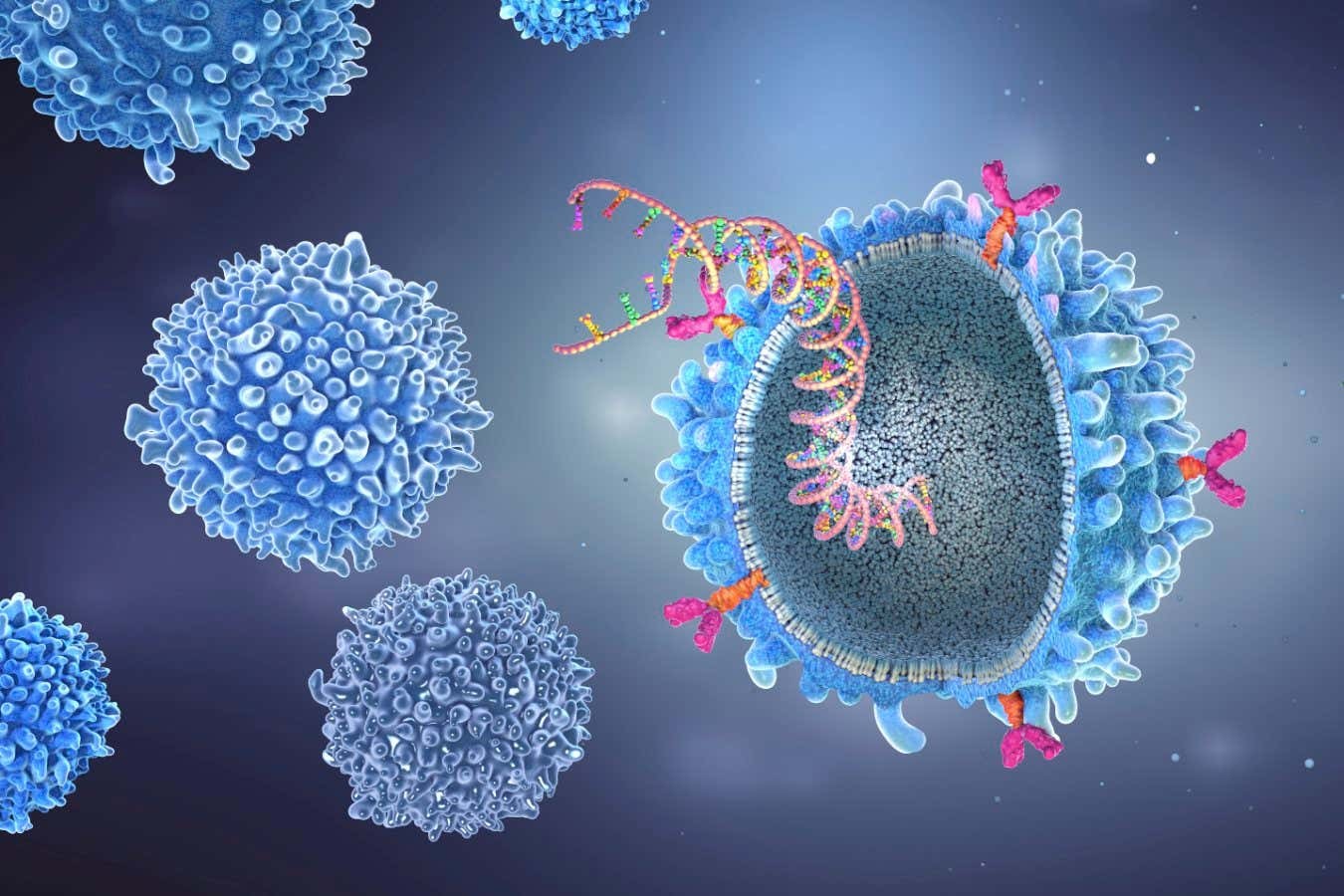
– Genetic Engineering: In a lab, these cells are modified with a “Chimeric Antigen Receptor” (CAR) that directs them to hunt down a specific target.
– Precision Strike: In this case, the cells were engineered to target and destroy the specific antibody-producing cells that were causing the autoimmune attacks.
– Re-infusion: The modified cells are put back into the patient to wipe out the source of the disease.
“She was deathly sick and bedridden… seven days later, she got out of bed,” says Fabian Müller of the University Hospital of Erlangen.
A Safer Profile for Autoimmune Care
One of the most encouraging findings is the safety profile of the treatment. In cancer therapy, CAR T-cells often cause severe, sometimes life-threatening side effects because they are tasked with killing massive amounts of tumor cells.
However, in autoimmune cases, the “target” is much smaller. Because the therapy only needs to eliminate a specific subset of rogue cells, the side effects appear to be significantly milder. Crucially, the treatment does not erase the entire immune system; the patient retains her original T-cells and her immunity to childhood diseases and vaccinations.
Challenges: Cost and Longevity
While the results are “remarkable,” as noted by experts at King’s College London, two major hurdles remain:
- The Cost of Personalization: Because each dose is custom-built for an individual, the price tag is massive. Cancer treatments can cost between $200,000 and $600,000. While high, proponents argue that the long-term savings—avoiding years of hospitalizations, transfusions, and lost productivity—may eventually offset the initial expense.
- The Question of a “Cure”: Medical researchers remain cautious. While many patients remain disease-free, some have seen their symptoms return, requiring a second round of therapy. Long-term studies are still necessary to determine if this is a permanent cure or a long-term remission.
Conclusion
The successful treatment of three simultaneous autoimmune conditions with a single CAR T-cell infusion marks a paradigm shift in immunology. If long-term trials continue to show success, this “living drug” could transform chronic, debilitating diseases from lifelong management struggles into curable conditions.