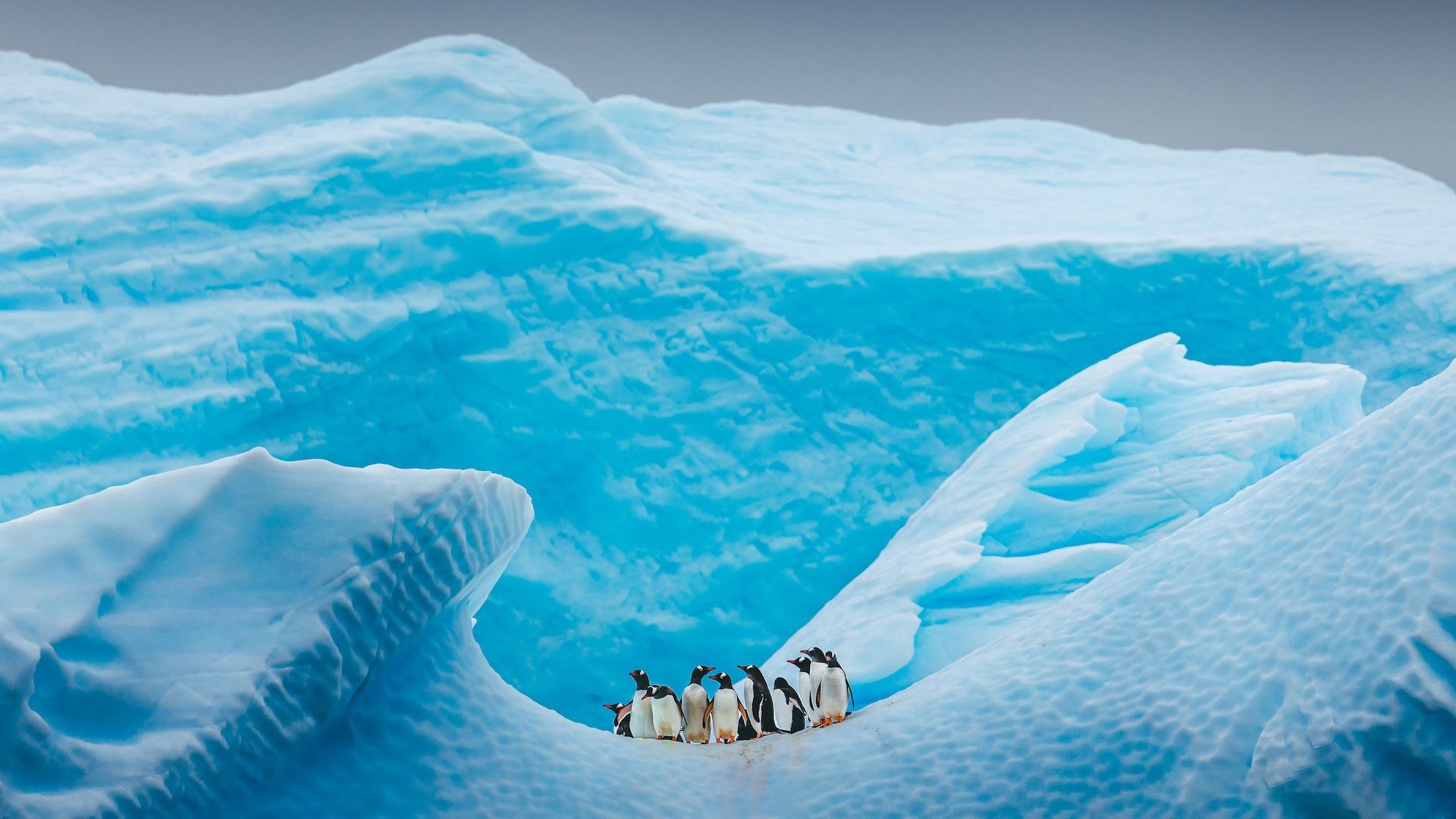
Antarctica, a continent roughly four times the size of the United States, remains almost entirely encased in miles-thick ice sheets today. Yet, geological records reveal that the South Pole hasn’t always been frozen. The last time Antarctica was largely ice-free was approximately 34 million years ago, marking a pivotal change in Earth’s climate history.
The Eocene-Oligocene Transition
Around 50 million years ago, the Earth experienced significantly warmer temperatures, averaging roughly 25°F (14°C) higher than present-day levels. Over the next 16 million years, temperatures gradually declined. By the time of the Eocene-Oligocene boundary – 34 million years ago – the planet was still 14°F (8°C) warmer than today, but conditions were rapidly shifting towards glaciation. This period represents the last time Antarctica was largely free of ice, resembling the tundra and coniferous forests of modern-day northern Canada.
Two Key Drivers of Change
The transition wasn’t sudden; it was driven by a combination of factors. Carbon dioxide (CO2) levels and continental movements played critical roles. Atmospheric CO2 concentrations plummeted from approximately 1,000–2,000 parts per million (2.5–5 times today’s levels) between 60 and 50 million years ago, initiating a global cooling trend. Simultaneously, the separation of South America from Antarctica created the Drake Passage, a crucial ocean current that effectively isolated the continent.
The opening of the Drake Passage led to the formation of a circumpolar current, blocking warmer air masses from reaching Antarctica and accelerating cooling.
Geological Evidence: Oxygen Isotopes
Scientists confirm this shift by analyzing oxygen isotopes in ancient marine sediments. Continental ice preferentially incorporates lighter oxygen isotopes (oxygen-16), leaving heavier isotopes (oxygen-18) concentrated in the oceans. A sharp increase in oxygen-18 ratios in fossilized shells around 34 million years ago provides compelling evidence of major ice sheet formation. This confirms that the conditions for a frozen Antarctica developed rapidly at that time.
Could Antarctica Be Ice-Free Again?
While unlikely in the immediate future, scientists agree that Antarctica could revert to an ice-free state given sufficient warming. The Earth has undergone similar transformations before, and future climate shifts could trigger another such transition. However, researchers emphasize that mitigating current human-induced warming is vital to prevent the worst-case scenario, as even partial ice loss would have catastrophic consequences for global sea levels.
Antarctica’s past ice-free period underscores the planet’s sensitivity to climate fluctuations. Understanding these historical shifts is crucial for informing present-day climate policy and mitigating future risks.