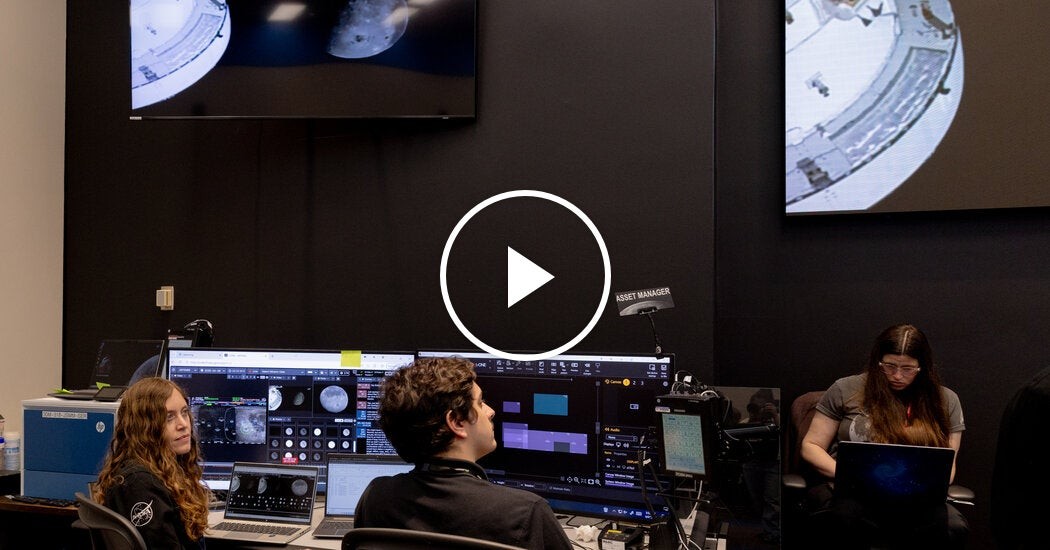
The Artemis II mission has successfully completed its journey around the Moon, marking a monumental milestone in human spaceflight. As the spacecraft, Orion, transitioned from the lunar far side back toward Earth, the mission transitioned from a technical feat to a moment of global connection.
The View from 252,000 Miles Away
During the mission, the crew provided a rare perspective of our planet from deep space. As Orion rounded the Moon, the crew captured the sight of Earth—a small, crescent-shaped marble hanging in the void—over 252,000 miles away.
This visual serves as a powerful reminder of our isolation in the cosmos. The mission’s communication highlights a profound sense of perspective:
– Global Connectivity: The crew sent greetings not just to North America, but to Asia, Africa, and Oceania, emphasizing that space exploration is a shared human endeavor.
– The Scale of Distance: The vast gap between the Moon and Earth underscores the extreme technical precision required to navigate, communicate, and eventually return safely.
Life Inside the Capsule
Despite the high stakes and the vastness of the environment, the crew reported a surprising sense of exhilaration. One crew member noted the unexpected enjoyment found within the “cramped quarters” of the spacecraft, describing the experience as “fun every single minute.”
This sentiment highlights a key aspect of modern space travel: the psychological resilience required of astronauts. Living in confined, high-pressure environments is a necessary precursor to longer-duration missions, such as those planned for Mars.
Why This Mission Matters
The success of Artemis II is more than just a technical checkbox for NASA; it represents a fundamental shift in our approach to the solar system.
“We’ve got to explore. We got to go further, to expand our knowledge, expand our horizons.”
This mission signals the end of the era where the Moon was merely a destination to visit and land on; it is now becoming a gateway. By proving that humans can orbit the Moon and return safely, NASA is laying the groundwork for:
1. Sustainable Lunar Presence: Establishing long-term habitats on the Moon.
2. Deep Space Readiness: Testing the life-support and navigation systems necessary for the journey to Mars.
3. Scientific Expansion: Using the lunar environment to better understand the origins of our solar system.
Conclusion
The successful completion