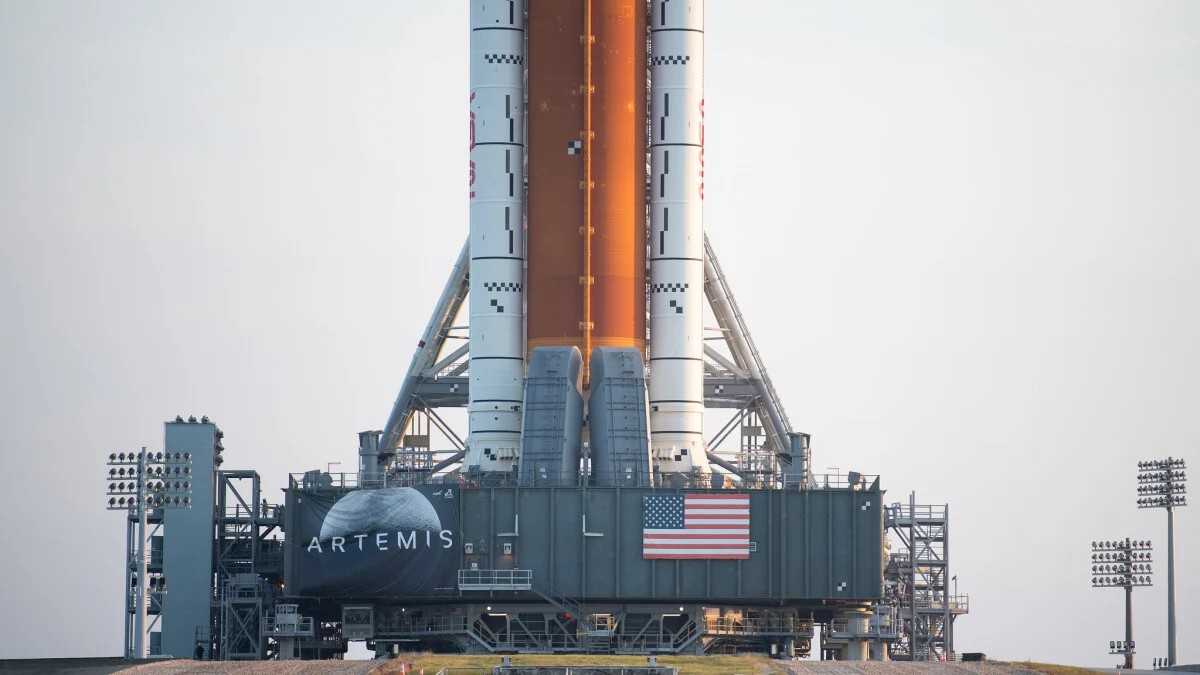
NASA’s Space Launch System (SLS) rocket is moving toward its launchpad for the Artemis II mission, the first crewed flight to the moon in over 50 years. This rollout marks a critical step in returning humans to deep space, but it also highlights a shift in the landscape of space launch capabilities. While SLS remains incredibly powerful, it no longer holds the undisputed title as the world’s most capable rocket.
The Power Shift: SLS vs. Starship
SLS generates 8.8 million pounds of thrust—equivalent to roughly 160,000 Corvette engines. This made it the most powerful operational rocket upon its debut with Artemis I. However, SpaceX’s Starship now exceeds that, producing an estimated 16 to 17 million pounds of thrust. The key distinction? SLS is ready to carry astronauts, while Starship is still undergoing testing. With Artemis II, SLS could become the most powerful rocket ever to launch humans, burning through 700,000 gallons of fuel to achieve the necessary velocity.
SLS: The Only Ride for Orion
Currently, SLS is the only rocket certified to send the Orion spacecraft to the moon. The Orion capsule, nicknamed “Integrity” by the crew, will carry four astronauts on a 10-day mission, flying approximately 5,000 miles past the far side of the moon. Upon return, it will splash down in the Pacific Ocean. This mission will test Orion’s life-support systems and deep-space capabilities, solidifying SLS’s role as the primary lunar launch vehicle for the foreseeable future.
Built on Legacy Hardware
SLS isn’t entirely new. It’s heavily based on Space Shuttle technology. Engineers repurposed the shuttle’s external tank into the rocket’s core stage and reused four Space Shuttle main engines. Despite modernization efforts, the rocket is designed for single-use, discarding the engines after each launch to maximize payload capacity. The solid rocket boosters, also derived from the Shuttle program, provide 75% of the thrust at liftoff.
Trade-offs: Reach Over Reusability
To extend its range from the Shuttle’s original 250-mile orbit to the moon (roughly 239,000 miles away), SLS sacrificed reusability. Features like parachutes and reserve fuel were removed to gain 2,000 pounds of payload capacity. This allows Orion to reach speeds of approximately 24,500 mph, but at the cost of making SLS entirely disposable. The exhaust is relatively clean, burning liquid hydrogen and oxygen to produce superheated water vapor.
A Costly Endeavor
SLS is one of the most expensive rockets ever built. In 2022, NASA’s inspector general estimated each Artemis launch would cost $4.1 billion, with roughly half tied to SLS alone. This high cost is partly due to a 2010 law mandating its construction, aiming to protect jobs during the Great Recession. Today, over 3,800 suppliers across all 50 states contribute to SLS and Orion, making it a major economic driver despite its exorbitant price tag.
Ultimately, SLS remains a critical asset for NASA’s lunar ambitions, but its dominance is waning. The emergence of reusable rockets like Starship is reshaping the space launch landscape, forcing a reevaluation of cost, efficiency, and long-term sustainability.