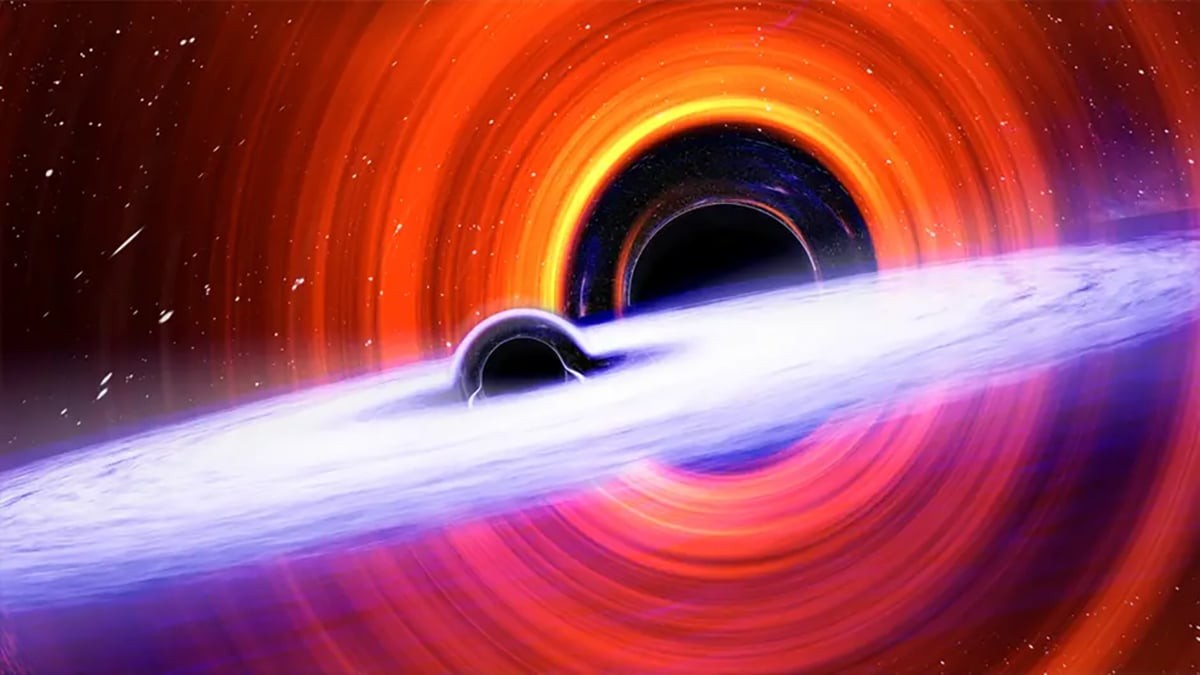
Scientists using the Laser Interferometer Gravitational-Wave Observatory (LIGO) may have detected the first primordial black hole (PBH), a type of black hole theorized to have formed in the earliest moments of the universe. This discovery, if confirmed, would provide strong evidence for a long-debated component of early cosmic history and potentially shed light on the nature of dark matter.
What Are Primordial Black Holes?
Most black holes are born from the collapse of massive stars, but PBHs are different. They’re thought to have formed within fractions of a second after the Big Bang, from extremely dense regions of matter. Unlike stellar black holes, they don’t require a star to exist in the first place – making them relics of the universe’s infancy. While their existence has been proposed for decades, concrete observational evidence has remained elusive… until now.
The LIGO Signal: A Possible Breakthrough
Astrophysicists Alberto Magaraggia and Nico Cappelluti analyzed gravitational wave data from LIGO, which detects ripples in spacetime caused by colliding black holes. The signal, designated S251112cm, suggests a collision involving an object with a mass below that of our Sun. This is unusual: stellar black holes are typically several times heavier than the Sun. The low mass makes a PBH the most likely explanation.
“The fact that one of the colliding objects was so small is a strong indicator,” Cappelluti explains. “Primordial black holes are predicted to have much lower masses than those formed from supernovae.”
Implications and Future Research
The potential detection of a PBH is significant because these objects could comprise a substantial portion of dark matter, the mysterious substance making up 85% of the universe’s mass. If PBHs are common enough, they could account for the missing mass that astronomers have been searching for.
“Confirming the existence of PBHs would be a major step towards understanding the nature of dark matter and the early universe,” says Magaraggia.
However, one detection isn’t enough. Researchers need more signals to rule out alternative explanations and definitively confirm the PBH’s existence. Fortunately, LIGO is continually being upgraded, and new gravitational wave detectors, like the European Space Agency’s LISA (launching in 2035), are on the horizon. These instruments will increase the chances of spotting more PBHs and unraveling their role in the cosmos.
Why This Matters
The search for PBHs isn’t just about confirming a theoretical prediction; it’s about understanding fundamental questions about the universe’s origins and its composition. If these black holes exist in significant numbers, they could rewrite our understanding of dark matter, the early universe, and even the formation of galaxies. The ongoing refinement of gravitational wave observatories promises to bring us closer to these answers.