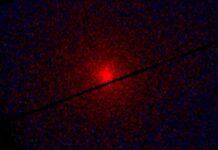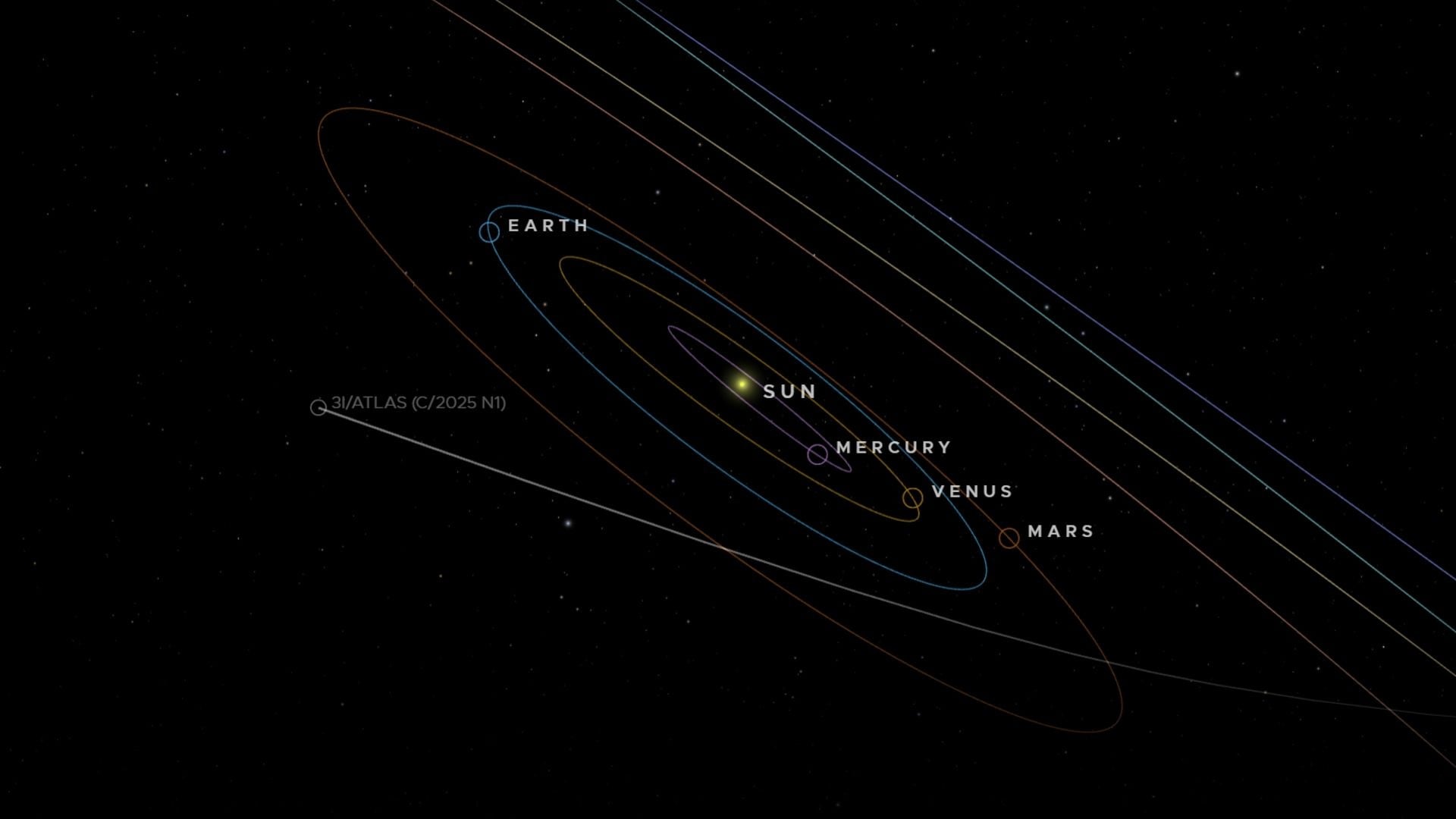
Interstellar comet 3I/ATLAS is making its closest approach to Earth tonight, December 19th. This rare visitor, originating from beyond our solar system, won’t be visible to the naked eye, but several accessible methods allow you to follow its journey as it continues its one-time pass through our cosmic neighborhood.
The Third Interstellar Visitor
Discovered in July 2023 by the Asteroid Terrestrial-impact Last Alert System (ATLAS), 3I/ATLAS is only the third confirmed interstellar object to pass through our solar system. The first was ‘Oumuamua (2017), followed by 2I/Borisov in 2019. These objects provide unique insight into the composition and formation of planetary systems around other stars. Their fleeting visits make each observation crucial for understanding the diversity of exoplanetary environments.
Closest Approach Details
At its closest point to the sun on October 31st, 3I/ATLAS came within 130 million miles. Tonight’s Earth approach will still be distant – 170 million miles away – making direct visual observation challenging without specialized equipment. However, its trajectory is now well-defined, and several resources allow tracking.
How to Track 3I/ATLAS
Here are four ways to follow the comet’s progress:
- NASA Eyes on the Solar System: This interactive 3D model lets you visualize the comet’s orbit alongside planets and spacecraft. Simply search for “3I/ATLAS” to see its path, including a future flyby of Jupiter in March 2026.
- Comet Observation Database (COBS): Track the comet’s brightness over time, as reported by amateur and professional astronomers. Its luminosity is decreasing as it moves away from the sun.
- Virtual Telescope Project Livestream: Tune into a free livestream on YouTube starting December 18th at 11 p.m. EST (0400 GMT on December 19th) for real-time images captured by robotic telescopes.
- Smartphone Astronomy Apps: Use apps like Stellarium to locate the patch of sky where 3I/ATLAS is currently traveling in the constellation Leo.
Why This Matters
Interstellar objects like 3I/ATLAS offer a rare opportunity to study materials directly from another star system. These objects may contain clues about the building blocks of other planets, providing invaluable data for understanding planetary formation beyond our own solar system. Once it leaves, 3I/ATLAS will never return, making this flyby a singular event.
The comet will continue moving outward, eventually disappearing from our view forever. By utilizing the resources above, anyone can participate in tracking this historic journey.