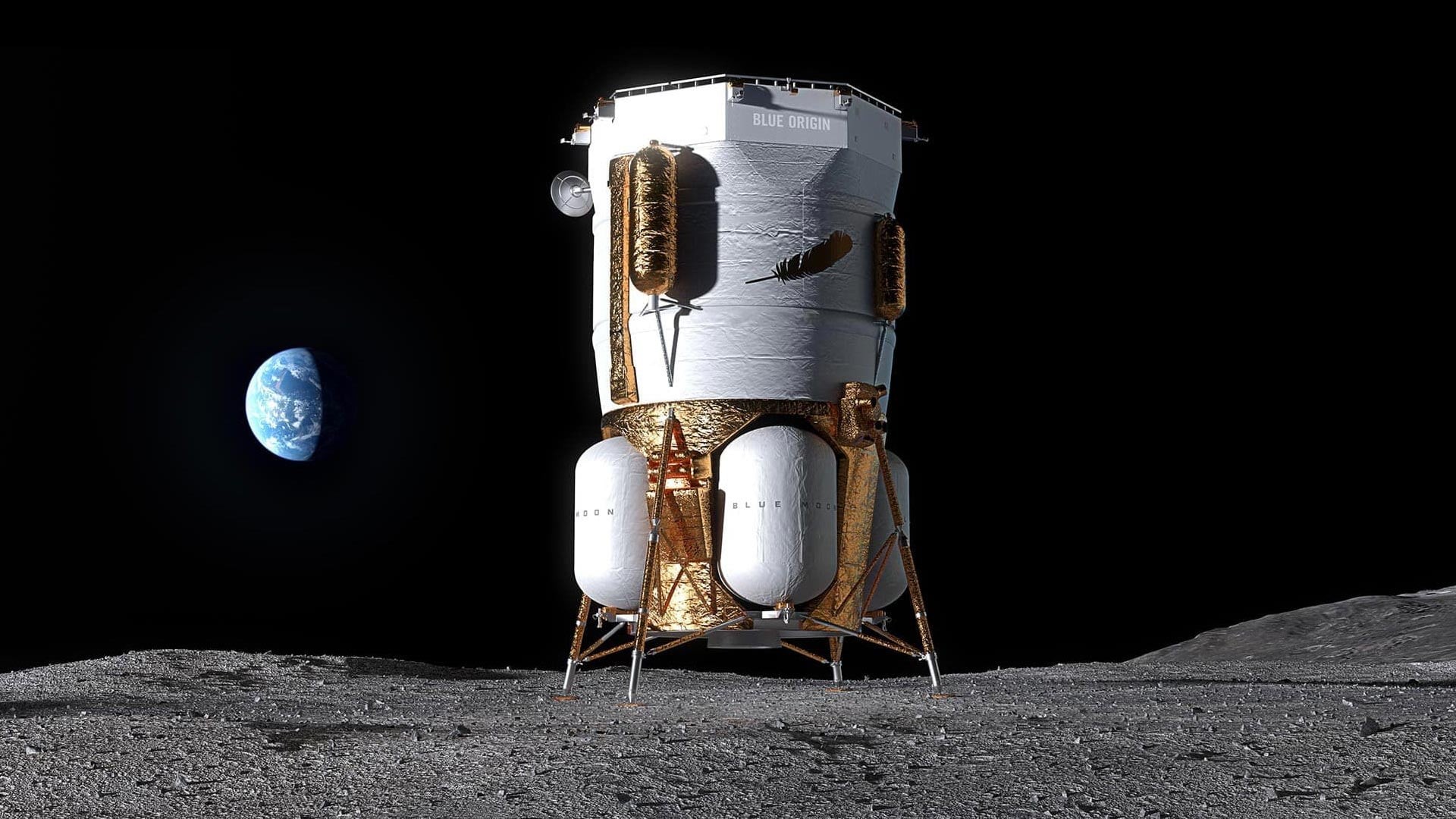
Blue Origin has taken a significant step toward supporting NASA’s Artemis program, successfully completing critical thermal vacuum testing for its MK1 lunar lander, also known as Endurance. The uncrewed spacecraft, designed to demonstrate key technologies for future lunar exploration, survived a rigorous simulation of the harsh conditions it will face in space.
This milestone underscores the growing synergy between commercial aerospace companies and federal space agencies. By leveraging NASA’s world-class facilities through a reimbursable Space Act Agreement, Blue Origin is accelerating the development of reliable landing systems while reducing risks for future crewed missions.
Simulating the Moon on Earth
The testing took place inside Chamber A at NASA’s Johnson Space Center in Houston, Texas. This facility is one of the largest thermal vacuum chambers in the world, capable of replicating the near-perfect vacuum of space and the extreme temperature fluctuations spacecraft encounter during flight.
By subjecting the MK1 lander to these conditions, engineers could verify the vehicle’s structural integrity and thermal durability before it ever leaves Earth. This process is vital because the Moon’s environment is unforgiving: temperatures swing from roughly 250°F (120°C) in sunlight to -250°F (-150°C) in shadow, with no atmosphere to buffer the changes.
“Simulating these harsh conditions on Earth allows teams to evaluate system performance and confirm the spacecraft’s resilience, ensuring that lessons learned now will support future Artemis missions.”
Key Technologies Under Scrutiny
The MK1 mission is not just about landing; it is a commercial demonstration aimed at proving several advanced capabilities required for sustained lunar operations. These include:
- Precision Landing Systems: Ensuring the lander can touch down safely in specific, potentially hazardous terrain.
- Cryogenic Propulsion: Testing engines that use super-cooled fuels, which are efficient but technically complex.
- Autonomous Guidance, Navigation, and Control: Allowing the spacecraft to navigate and land without constant human intervention.
These technologies are foundational for the Human Landing System (HLS) architecture, which will eventually transport astronauts to the lunar surface.
Scientific Payloads and the CLPS Initiative
In addition to testing its own systems, the MK1 lander is serving as a delivery vehicle for scientific research under NASA’s Commercial Lunar Payload Services (CLPS) initiative. This program partners with American companies to send instruments to the Moon, expanding our understanding of the lunar environment while preparing for crewed missions.
The MK1 mission carries two specific payloads to the Moon’s South Pole region:
- Stereo Cameras for Lunar Plume-Surface Studies: These cameras will capture high-resolution images of how the lander’s engine exhaust interacts with the lunar soil (regolith) during descent. Understanding this interaction is critical for preventing dust from obscuring sensors or damaging equipment.
- Laser Retroreflective Array: This device will reflect laser beams from orbiting spacecraft, allowing them to pinpoint the lander’s location with extreme accuracy. This data helps improve lunar mapping and navigation for future missions.
Paving the Way for Crewed Exploration
The success of the MK1 test is directly linked to the development of Blue Origin’s larger, crewed lander, the Blue Moon Mark 2 (MK2). The MK2 is designed to transport astronauts between lunar orbit and the surface, supporting long-term exploration near the South Pole.
By validating systems and processes on the uncrewed MK1, Blue Origin and NASA are de-risking the more complex human-rated missions. This “front door” approach—where commercial partners access NASA facilities and expertise while maintaining strict safety and mission assurance standards—ensures that both public and private sectors are aligned toward the common goal of returning humans to the Moon.
Conclusion
Blue Origin’s successful testing of the MK1 lander marks a pivotal moment in the Artemis program, demonstrating that commercial partnerships can effectively advance lunar exploration technologies. As these uncrewed missions validate critical systems and deliver scientific data, they lay the essential groundwork for the safe return of American astronauts to the lunar surface in the coming years.