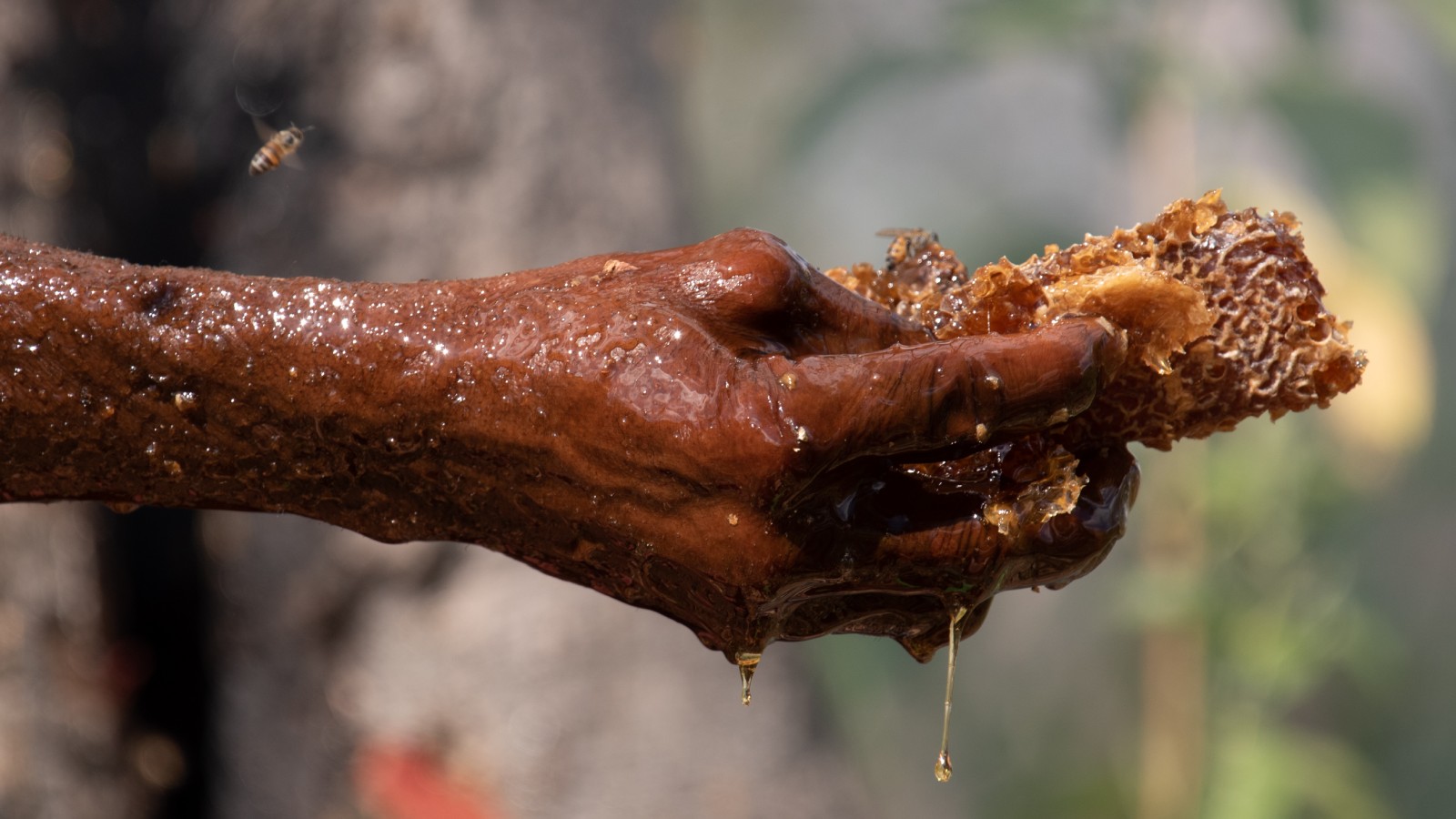
For centuries, people in parts of Africa have worked with honeyguides — small birds that lead them to beehives. Now, research reveals this isn’t just cooperation; it’s a linguistic partnership, with distinct “dialects” used by honey hunters in different regions of Mozambique. The study, published in People and Nature, shows that human signals to the birds vary even between nearby villages, and that newcomers quickly adopt the local way of speaking to them.
A Unique Partnership
The relationship between humans and greater honeyguides (Indicator indicator ) is rare. The birds benefit by getting access to beeswax and larvae left after humans harvest honey, avoiding stings in the process. Humans get a reliable guide to wild beehives, a vital resource in some communities. This isn’t just accidental; it’s an active exchange. Hunters call out, birds respond, and the hunt begins.
This is one of the few documented cases of humans and wildlife engaging in intentional, coordinated communication. The study suggests that the birds are not just following a learned behavior; they’re actively reinforcing regional dialects among humans.
How Dialects Emerge
Researchers recorded over 130 honey hunters in northern Mozambique’s Niassa Special Reserve, analyzing their calls to the birds. The calls varied significantly between villages, even when those villages shared the same habitat. This means that the environment doesn’t dictate the signal ; local tradition does.
Interestingly, when people moved between villages, they quickly shifted to the local dialect used with the honeyguides. This suggests a strong cultural pressure to conform, ensuring the birds recognize the signals. As Jessica van der Wal, lead author of the study, explains, “There is one language that they use with the birds, but there are different dialects.”
Why This Matters
The fact that human dialects influence wildlife behavior is surprising. The birds seem to be driving consistency in human communication, reinforcing regional patterns. If honeyguides discriminate against unfamiliar calls, this could explain why human dialects remain stable over time.
This suggests a co-evolutionary dynamic where the birds aren’t just responding to human signals, but subtly shaping them. It’s a unique example of how culture, even in the way we interact with wild animals, is deeply ingrained in our species.
Future Research
Van der Wal’s team plans to expand the study across Africa, documenting honeyguide behavior in multiple countries. The Pan-African Honeyguide Research Network will continue to analyze human-bird interactions, looking at how practices and signals vary. The goal is to determine whether humans and birds are mutually influencing each other’s cultures.
The long-term cooperation between these species—likely spanning hundreds or thousands of years—has created a fascinating system where both sides benefit from clear, consistent communication. This research highlights the power of cultural transmission even in non-human contexts.