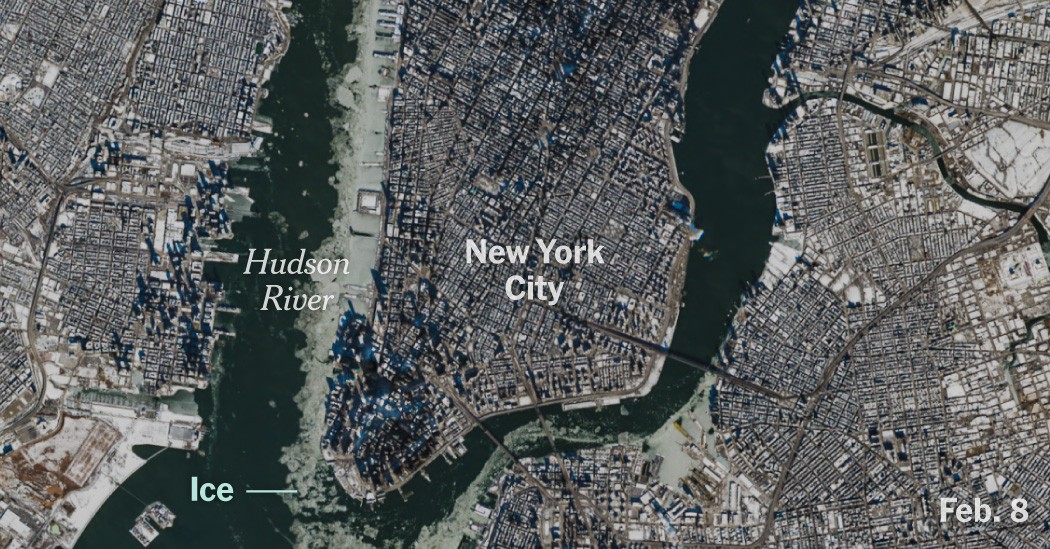
Recent satellite imagery confirms what millions across North America already feel: an unusually severe and widespread winter freeze is impacting the continent. The conditions, marked by heavy snow and ice accumulation, have disrupted daily life for over 200 million people.
Sudden Shift in Weather Patterns
The year began with unseasonably mild temperatures across much of the Eastern United States. However, on January 23rd, a massive surge of Arctic air descended from Canada, rapidly plunging temperatures and triggering a historic winter storm. This abrupt shift caught many off guard, transitioning the region from mild conditions to a near-tundralike state in a matter of days.
Widespread Impacts
The storm’s reach was extensive, stretching from the southern Rocky Mountains to the coast of Maine. Communities from Nashville, Tennessee, to the Hudson River in New York experienced extreme conditions: ice-covered streets, frozen waterways, and widespread disruptions to infrastructure. The severity of this event underscores the growing volatility of North American weather patterns.
The rapid intensification of Arctic air outbreaks raises concerns about climate change and its impact on extreme weather events. While short-term fluctuations are normal, the increasing frequency and intensity of these shifts may indicate a changing climate system.
The current freeze is not just a seasonal anomaly; it’s a stark reminder of the potential for severe weather disruptions in a rapidly changing climate. The speed with which this Arctic blast descended highlights the need for improved forecasting and infrastructure resilience.