It shouldn’t be there.
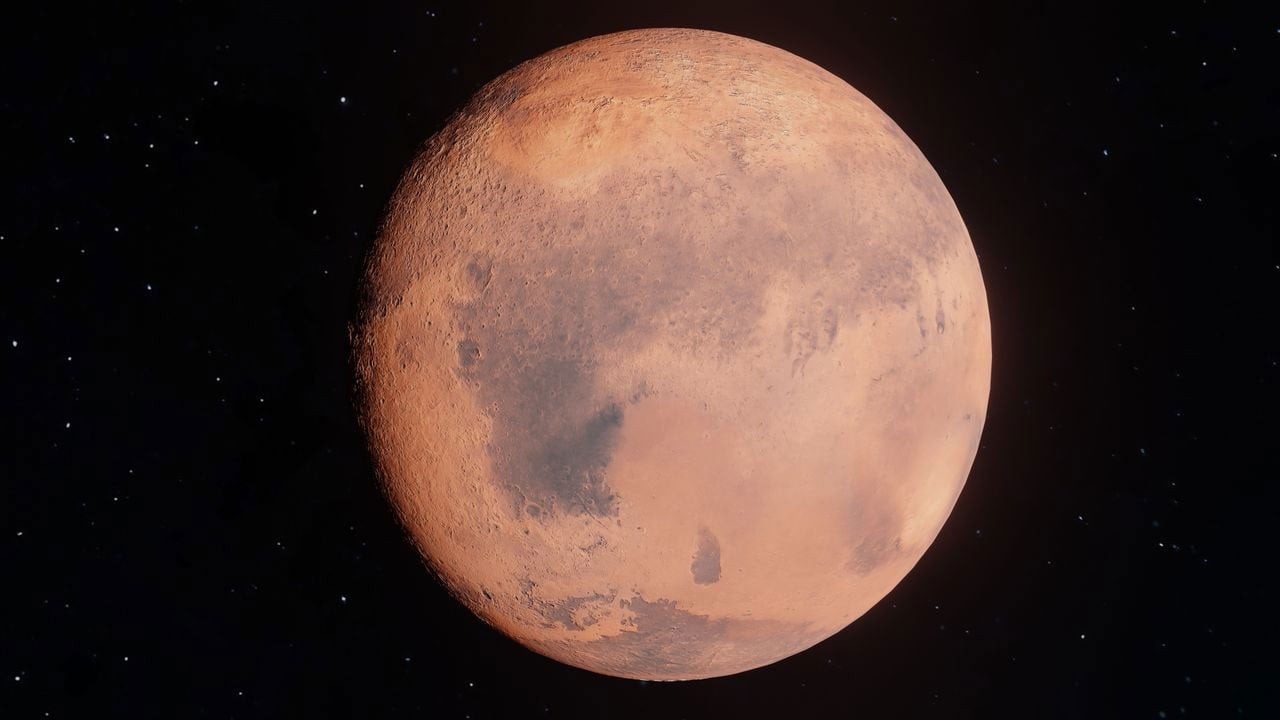
Not on Mars.
Mars is ancient. It’s cold. It’s broken. But it hasn’t been remixed by tectonic plates or churned by active volcanism the way Earth has. For billions of years, the Red Planet just sat there. A cosmic hard drive preserving data from its first few hundred million years of existence.
That makes rare rocks invaluable.
A new rock type has been found. And it contains garnet.
Yes, that garnet. January’s birthstone. The deep red gem. The mineral that usually means you’re holding a piece of deep earth that went through serious stress.
“This discovery is going to expand our kind of geologic processes possible on this planet.” — Tanya Kizovski
The mineral is a geologic thermometer. And a pressure gauge. Garnet only forms when conditions are specific. Heat, pressure, chemistry. All of it has to line up.
Finding it in a Martian sample changes the script. It suggests parts of Mars’s crust were hotter. More active. Maybe wetter. Than we thought.
How it was missed
The team wasn’t even looking for it.
Tanya Kizovski, from Brock University, was examining a fragment of a meteorite called NWA 817. It’s part of the collection at the Royal Ontario Museum in Canada.
The fragment looked normal enough. Standard meteorite junk. Until she got to this one spot.
The chemistry was off. Weird.
At first? She thought it was pyroxene. Common stuff. Everywhere in meteorites. Easy mistake. But she took a second look.
That’s when things got strange.
Using electron microscopy and specialized laser equipment — helped by teams at the University of Portsmouth in the UK and the Università di Trieste in Italy — they peered deeper.
What they found was garnet.
Never before seen in any rock from Mars. Ever.
James Darling, a professor at Portsmouth, calls it a “striking new dimension” to what we know about the planet. He’s not exaggerating. This isn’t just a pretty rock. It’s evidence of a process we haven’t directly observed on Mars yet.
Where did it come from?
Here is the kicker.
Garnet usually forms through metamorphism. That’s when existing rock gets squished or burned until it turns into something else.
On Mars? How do you get that squish and burn?
- A meteorite hits hard. Really hard. Creating a shock wave of heat and pressure.
- Magma pushes up through the crust. Cooking the rock from below.
- Or both.
Kizovski doesn’t rule any of it out. She actually warns we don’t fully know where this rock came from yet.
Did it form on Mars?
Or did it hitchhike? Maybe another rock crashed into Mars carrying the garnet inside it, mixing with local soil over millions of years. An “extra-Martian” origin. Possible. Boring if true. Exciting if not.
The isotope dilemma
So how do we tell the difference?
Isotopes.
Atoms that weigh slightly different because they have extra neutrons. Oxygen isotopes, specifically, can tell us if a mineral is local to Mars or an interloper.
It’s the ultimate detective tool.
But there’s a problem.
To measure the isotopes accurately, you have to destroy a piece of the sample.
And this might be the only garnet-bearing Martian rock anyone has.
Kim Tait and Jessica Tomacic from the ROM are working with Darling and Kizovski right now. They are comparing data to what rover sensors have picked up and orbital imagery. Non-destructive for now. Careful.
Why destroy it when we’re still trying to understand the basics?
“I’m hopeful that we will able to learn more the origin history garnet Mars,” Kizovski says.
The paper comes out in June 2026. It’s called “Expanding Mars lithologic diversity: discovery garnet-bearing clast NWA 17”. Published in Geochemical Perspectives Letters.
Funding came from the Natural Sciences and Engineering Research Canada plus Killam Trusts and Science Technology Facilities Council Portsmouth.
Standard science credits. But the find?
That feels different.
We always picture Mars as a frozen wasteland. Dead. Still. This rock says otherwise. At least four billion years ago. Something was cooking down there. Something complex.
What else are we missing?
There’s more rock out there. Waiting to be broken open. Or maybe just waiting to be found.