


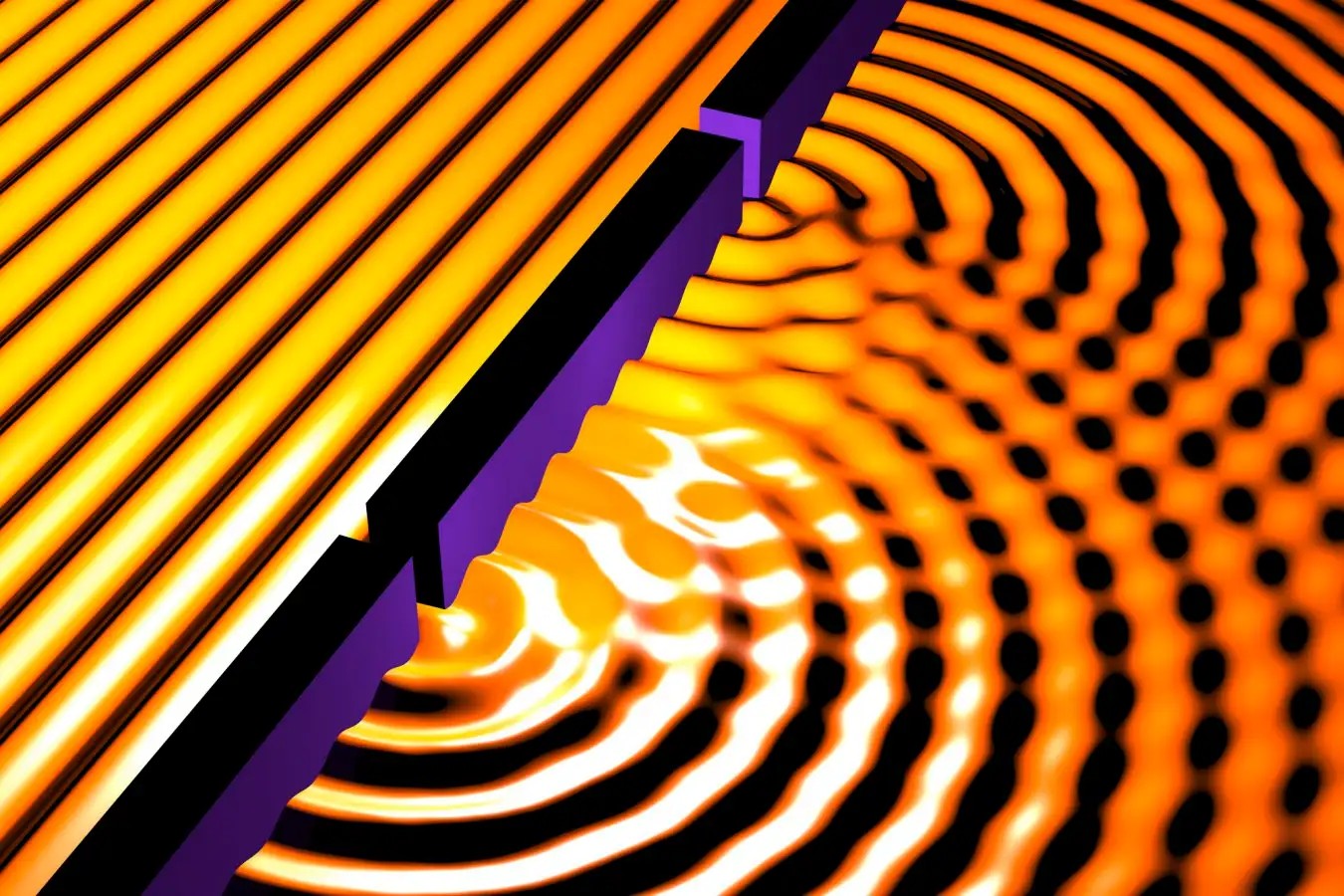
A long-held tenet of quantum physics – the wave-particle duality of light – is facing renewed scrutiny following research suggesting that the iconic double-slit experiment can be fully explained using only photon behavior, effectively removing the need for the traditional “wave” component. This shift, if widely accepted, could reshape foundational physics education and accelerate novel applications in optics and quantum technology.
The Double-Slit Experiment: A Century-Old Puzzle
The double-slit experiment, first performed by Thomas Young in 1801, demonstrated that light exhibits both wave-like interference patterns and particle-like behavior. For over two centuries, physicists have reconciled this duality by stating that light exists as both simultaneously: sometimes acting like a wave, sometimes like discrete photons.
However, a team led by Celso Villas-Boas at the Federal University of São Carlos in Brazil proposes a different interpretation. They argue that the interference patterns observed in the experiment are not the result of waves colliding, but rather the behavior of “dark states” within photons themselves. These dark states are quantum conditions where photons exist without interacting with other particles, explaining the dark fringes in the interference pattern without requiring wave-like properties.
Rethinking Light’s Fundamental Nature
The implications are substantial. If verified, this model means that the classical understanding of light as a wave is not necessary to explain observed phenomena. The team’s findings have already garnered significant attention within the physics community, with Villas-Boas reporting invitations to present the work in multiple countries and widespread citation in peer-reviewed literature.
The proposal is not without resistance. Some physicists, particularly those who have taught the wave-particle duality for decades, are skeptical. This pushback highlights a crucial point: fundamental shifts in scientific understanding often meet initial skepticism. However, Villas-Boas points out that quantum mechanics itself emphasizes the inextricable link between quantum objects and their interaction with measurement devices, including existing in dark states.
Beyond Theory: Hidden Energy and New Technologies
The research extends beyond reinterpreting existing experiments. Villas-Boas and his colleagues have also shown that thermal radiation, such as sunlight, may contain significant energy locked within these dark states – energy that does not interact with matter. This could potentially be harnessed, though the practical challenges are significant.
Furthermore, the team’s work opens doors to new technological possibilities. By abandoning the wave model, scientists could design light-driven switches or materials that interact with light in unprecedented ways, creating devices with unique optical properties.
“This is not new, in my opinion. This is what quantum mechanics already says to us.” – Celso Villas-Boas
The study’s reinterpretation of interference also offers a framework for understanding previously inexplicable phenomena, like waves interfering without direct overlap. Ultimately, the debate surrounding dark photons underscores the ongoing refinement of our understanding of the quantum world.


