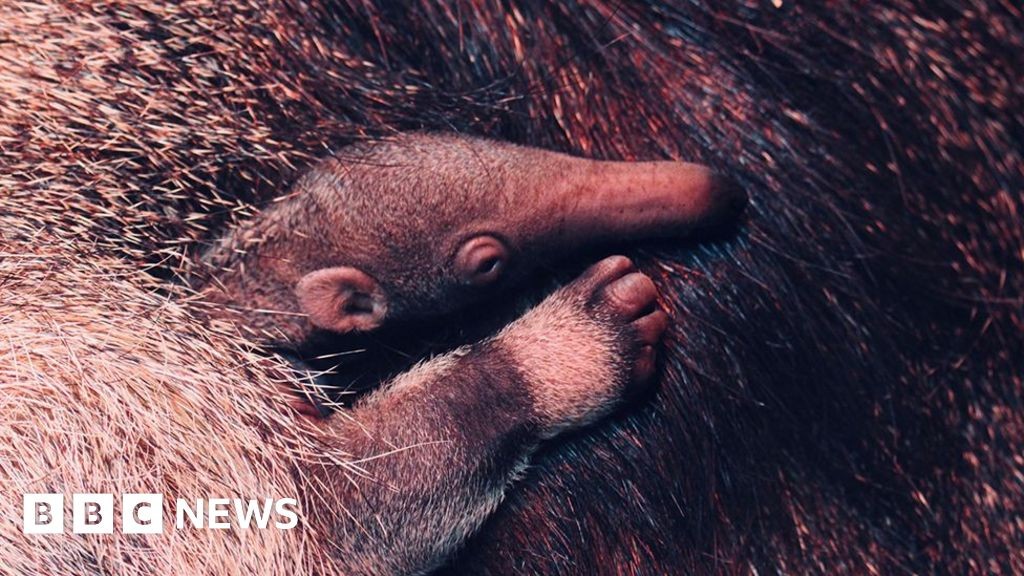
Blackpool Zoo has announced the arrival of a giant anteater pup, a significant event for the conservation of this increasingly threatened species. The pup is the fourth offspring of parents Andina and Eskil, both 15 years old, and joins their two-year-old daughter, Myrtle, in the zoo’s growing anteater family. Two older siblings have already been relocated to European zoos as part of coordinated breeding programs.
A Species in Decline
The giant anteater (Myrmecophaga tridactyla ) is classified as vulnerable to extinction, and populations are declining across its natural range in Central America. According to zoologists, it is now considered the most endangered mammal in the region. This makes each successful birth in captivity especially important for the long-term survival of the species.
Unique Adaptations and Conservation Status
Despite its name, the newborn pup is currently just 50cm (20 inches) long, and its gender remains unknown as keepers allow Andina to raise it naturally. Giant anteaters are remarkable animals – they lack teeth entirely, instead relying on their extraordinarily long, sticky tongues to consume thousands of ants and termites daily.
“Giant anteaters are such a unique species and every birth is really important for their conservation,” said Jason Keller, senior keeper at Blackpool Zoo. “They are classified as vulnerable to extinction in the wild and, with populations in continued decline, they are considered the most threatened mammal in Central America.”
The species inhabits swamps, grasslands, and humid forests spanning from Southern Belize to Northern Argentina. As the last surviving member of its evolutionary line, the giant anteater represents a unique branch of South American wildlife that evolved during the continent’s period of isolation.
The successful breeding program at Blackpool Zoo contributes to the wider effort to preserve this iconic animal, ensuring that its remarkable adaptations and genetic heritage are not lost. The new pup’s arrival underscores the importance of zoo-based conservation in protecting vulnerable species facing habitat loss and other threats in the wild.