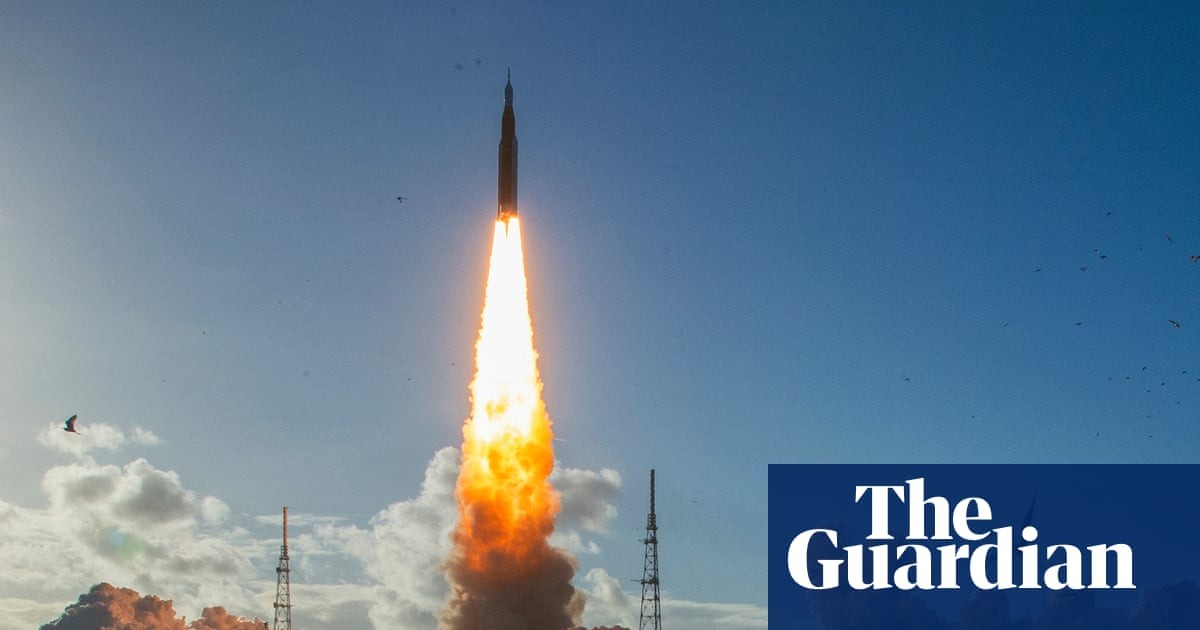
NASA has cleared its four astronauts aboard the Orion capsule to begin the first crewed lunar flyby in over 50 years. This marks a pivotal moment in space exploration, signaling a renewed focus on lunar missions and setting the stage for a sustained human presence beyond Earth. The Artemis II mission is not merely a symbolic return to the moon; it’s a rigorous test of systems vital for future lunar landings and long-term habitation.
Approaching the Moon
The astronauts will initiate a critical engine burn lasting just under six minutes, propelling Orion out of Earth orbit and onto a three-day trajectory toward the moon. This translunar injection burn, scheduled for early morning, is being monitored closely by flight controllers to ensure precision. If successful, Artemis II will send the crew farther from Earth than any human has traveled before, pushing the boundaries of space travel.
A Historic Voyage
This 10-day mission aims to loop around the far side of the moon, leveraging lunar gravity for a return trip. The crew – three Americans and one Canadian – launched Wednesday to a crowd reminiscent of the Apollo era. The mission is named after the Greek goddess Artemis, twin to Apollo, echoing humanity’s historical ambition in lunar exploration.
Testing for the Future
While the voyage is spectacular, much of the trip focuses on practical tests for upcoming Artemis missions. Early challenges have already surfaced: minor communication glitches, temperature fluctuations inside the cabin, and a faulty toilet indicator. The crew also practiced manual capsule maneuvering, critical for future docking procedures with lunar landers, including those planned for Artemis III and IV.
The New Space Race
Artemis II is expected to break the distance record set by Apollo 13 in 1970. The higher altitude (4,000 to 6,000 miles above the moon) offers unique testing conditions and stunning views of the lunar far side. NASA has ambitious plans to establish a permanent lunar base, pushing towards a long-term human presence on both the moon and Mars. This mission is occurring alongside a renewed space race, with China also targeting a crewed lunar mission by 2030, making Artemis a demonstration of American leadership in deep-space exploration.
The Artemis missions represent more than just reaching the moon again; they’re about establishing a lasting presence in space, building infrastructure, and testing technologies for deeper ventures into our solar system.