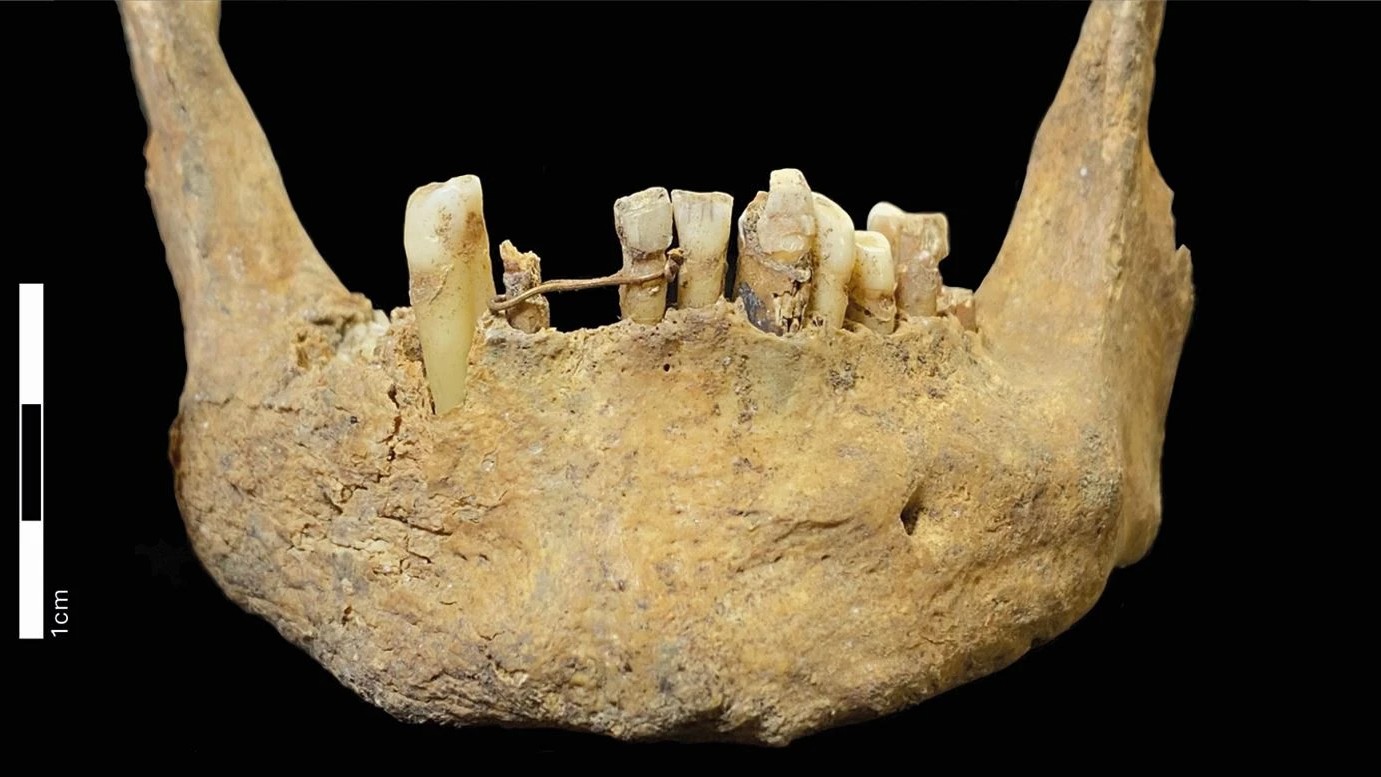
A remarkable discovery in Aberdeen has revealed the earliest known example of a dental bridge in Scotland, offering a rare glimpse into medieval oral care. The artifact—a 20-karat gold wire ligature found on a man’s lower jaw—dates back approximately 500 years and suggests that the individual underwent a sophisticated procedure to replace a missing tooth.
This find challenges the common perception that ancient dental work was limited to rudimentary extractions or simple fillings. Instead, it highlights a complex intersection of medicine, craftsmanship, and social status in late medieval Europe.
The Discovery at St. Nicholas East Kirk
The jawbone was unearthed during excavations at the St. Nicholas East Kirk in Aberdeen, a church site believed to have been constructed in the 11th century and utilized until the Protestant Reformation in the late 16th century. The site has yielded over 900 burials and thousands of human bones, but this particular specimen stood out due to the presence of the gold wire.
Although the jaw was not recovered as part of a complete skeleton, researchers determined it belonged to a middle-aged man who died between 1460 and 1670. The identification was based on the shape of the bone and specific wear patterns on the teeth.
A Glimpse into Medieval Oral Health
The condition of the teeth tells a story of both decay and determination. The man suffered from:
* Hardened plaque on all teeth.
* Cavities on three teeth.
* Periodontal disease caused by receding gums.
Despite these issues, the man had lost only one tooth during his lifetime: the lower right central incisor. To address this gap, a gold wire was intricately looped around the adjacent teeth—the lower right lateral incisor and the lower left central incisor. The wire was secured with a twisted knot, effectively creating a bridge to span the missing tooth.
“The application of the ligature would likely have caused some discomfort during the procedure,” explains Rebecca Crozier, a bioarchaeologist at the University of Aberdeen and co-author of the study published in the British Dental Journal. “But the man… would have most likely gotten used to the presence of the wire over time.”
Function vs. Appearance: Why Get a Dental Bridge?
While the gold wire likely helped restore some chewing ability, researchers suggest the primary motivation may have been cosmetic. In medieval Europe, physical appearance was often linked to moral character and social standing. A missing tooth could be seen as a sign of poor health or lower status.
- Social Signaling: For those who could afford it, dental repairs were a way to maintain a respectable appearance.
- Craftsmanship: It is highly probable that a jeweler, rather than a medical practitioner, crafted and installed the wire. Dentistry did not become an organized profession until the 19th century; before then, procedures were performed by barbers, healers, and jewelers.
The study notes that while dental fillings date back 13,000 years, wired ligatures were a well-documented treatment in medieval medical treatises. A similar, though later, example was found in France on a 17th-century aristocrat, indicating that this was not an isolated incident but part of a broader European trend among the wealthy.
The Reality of Medieval Dentistry
Living with a medieval dental bridge was not without its challenges. The wire had rubbed against the root of one anchoring tooth, suggesting it may have been slightly unstable. Crozier notes that while the patient likely adapted to the wire, eating hard foods like apples would have been problematic due to the instability of the ligated tooth.
The wire likely held either the actual extracted tooth or a prosthetic replacement in place, demonstrating a level of technical skill and resourcefulness that rivals early modern dentistry.
Conclusion
This 500-year-old gold ligature is more than just a dental curiosity; it is a testament to the human desire for wholeness and status, even in an era before modern medicine. It reveals that medieval individuals, particularly those with means, actively sought solutions to cosmetic and functional dental problems, relying on the skilled hands of local jewelers to craft their smiles.