Poker is not just a game; it is a cultural object. It originated in North America and has developed into what many consider to be the national card game of the United States. You’ll find it in smoky back rooms, high-stakes casino floors, and increasingly on your smartphone screen. Jargon has become part of everyday language, but the mechanics remain precise. If you want to understand how to play poker, you must first understand that it is a battle between odds, psychology and resource management.
Poker consists of a core of five cards. The value of your hand is inversely related to statistical rarity. The less likely a combination is to occur, the higher its ranking. Players bet on the strength of their hand. The others must then decide to match that bet, raise the stakes, or fold. The ability to bluff – to bet that you have the best cards when you don’t – is a crucial skill. If opponents with better hands don’t call, the bluffer takes the pot.
How to Play Poker: Core Mechanics
Although there are several variations, the goal is always the same: winning the pot. The pot is the sum of all bets placed during one hand. You win either by holding the hand with the highest five cards, or by forcing all other players to fold by betting aggressively.
Most poker formats can accommodate two to fourteen players. However, six, seven or eight players are generally considered to be the ideal number for the flow of the game and the chances of winning.
The Deck and Wild Cards
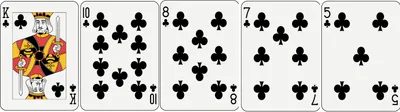
Standard poker uses a deck of 52 cards. Suits are spades, hearts, diamonds and clubs. Ace is high in value, followed by king, queen, jack and then 10-2. An ace can only act low in certain cases, like a straight or a straight that ends in an ace (5-4-3-2-A).
Joker cards are often used in casual games in Dealer’s Choice games. A wild card can represent any value the holder chooses. Common methods include:
- Joker: A deck of 53 cards where the Joker is completely wild.
- The Bug: The joker acts as the fifth ace or fills gaps in a suit or straight.
- Deuces Wild: All four deuces are wild.
- One-eyed: The King of Diamonds and the Jack of Spades and Jack of Hearts are depicted in profile, are designated as wild.
Rank of Poker Hands
Hand rankings are determined by probability. If two players have the same hands, they split the pot. Suits have no relative value.
In games using wildcards, the hierarchy changes. Five of a kind is the highest possible hand and beating even a straight flush. When there are multiple wild cards in play, ties in four-of-a-kind or three-of-a-kind are broken by the highest unmatched cards or secondary pairs in a full house.
The Deal and Dealer Button
Before the betting starts, the deal is established. In home games, the cards are dealt face up one at a time until a jack appears. The recipient of this recipient becomes the first dealer. The action always takes place counter-clockwise.
In professional settings, such as casinos and tournaments, a physical dealer leads the game. A round disc called the dealer button is moved clockwise to indicate the nominal dealer of the bet order. These venues typically charge players an hourly rental or “raking” of a percentage—often around 5%—of each pot.
Betting method: Call, Raise or Fold
Each deal consists of one or more betting intervals. Special rules determine who acts first. At each interval, players must contribute chips to the pot. If a player’s bet is equal to the highest previous bet, they are “in the pot”. If they refuse, they fold and discard their hand, removing themselves from contention for that pot.
Before the first cards are dealt, players may be required to ante. During betting intervals:
- ** Bet:** The first player to put money into the pot.
- Call: Matches the current highest bet.
- Raise: Increasing the current bet.
- Check: Stay in the hand without betting if no one has bet during this time.
A player cannot raise their own bet. An interval ends when the betting returns to the last raiser or when all active players check. After each interval (except the last one), more cards are dealt. As soon as the last betting interval is over, the “showdown” takes place. Active players reveal their hands and the highest-ranking hand wins the accumulated pot.
Understanding Poker Betting Structures
You won’t find many games where you can wager your entire life savings on a pair of deuces. Despite the “no-limit” hype, most poker tables operate within strict financial boundaries. There are three dominant ways these limits are enforced, and knowing the difference changes how you play every hand.
Fixed Limit: The Calculator’s Game
In fixed-limit poker, the math is rigid. You cannot bet or raise beyond a pre-established cap. The structure usually doubles in the later stages of the hand. Take draw poker, for instance. You might be allowed to bet two chips before the draw, but that limit jumps to four chips after the cards are exchanged. Stud poker follows a similar logic, with the final betting round allowing for higher stakes, especially if a player’s exposed cards form a pair.
Crucially, fixed-limit games often cap the number of raises per betting interval. This prevents the pot from inflating uncontrollably during a single street of betting. It’s a game of precision, not panic.
Pot Limit: Riding the Wave
Pot-limit games offer more flexibility but still enforce a hard ceiling. Your maximum bet or raise is tied directly to the current size of the pot. If you want to raise, you first must call the previous bet. Then, you can add an amount equal to what is currently in the pot.
For example, if the pot has $10 and the bet is $5, you call the $5 (now $15 in the pot), then can raise another $15. The total action you can take is significant, but it’s never infinite. Many pot-limit games also impose a secondary maximum limit on any single bet or raise, regardless of pot size, to keep the game manageable.
Table Stakes: The All-In Reality
Table stakes is the closest traditional format gets to “no-limit” rules. Your chip stack on the table at the start of the deal is your absolute limit. You cannot add more chips mid-hand, but you can bet it all. This is called going “all-in.”
Here’s where it gets interesting. If you go all-in with $50, but your opponent has $200, the extra $150 doesn’t go into the main pot. It goes into a side pot. Only players who matched the $50 can win the main pot. Only those who matched the higher bet can compete for the side pot. If you fold during a side pot contention, you forfeit your claim to the main pot too. This creates complex scenarios with multiple winners across different pots.
The Three Branches of Poker
Poker isn’t just one game; it’s a family tree. The three main branches are draw poker, stud poker, and community-card poker. The core difference lies in how cards are revealed.
In draw poker, your hand stays hidden until the showdown.
In stud poker, some cards are face up, some are face down.
In community-card poker, shared cards are exposed for everyone to use.
Almost any of these can be played high-low (or hi-lo). In this split-pot format, the highest hand and the lowest hand split the pot evenly. If there’s an odd chip, the high hand takes it. Ties in high or low hands are split further.
The lowest possible hand is traditionally 7-5-4-3-2 of mixed suits. Some variants allow the Ace to count as low, making 6-4-3-2-A the nut low, with a pair of Aces being the lowest possible pair.
Draw Poker: The Classic Concealment
Straight poker is the ancestor. Five cards dealt face down, one betting round, then a showdown. It’s simple. But after the 1850s, draw poker took over.
The mechanic is specific: each player discards unwanted cards and receives replacements from the deck. If you keep your hand, you “stand pat.” After this exchange, there’s a second betting round before the final reveal. Some games require a minimum hand, like a pair of Jacks, just to open the betting before the draw.
Draw poker’s popularity waned in the late 20th century. It lost ground to stud and community-card games, which offer more dynamic action and psychological depth.
Stud Poker: Reading the Board
Stud poker is all about information. You see your opponents’ cards. You don’t see yours.
Five-Card Stud
Each player gets one hole card (face down) and one upcard (face up). Betting occurs. Then three more upcards are dealt, one at a time, with betting after each. The hole cards are shown only at the showdown.
The player with the highest visible combination starts the betting. If there’s a tie, the player to the dealer’s left acts first. The first bettor must hit a minimum bet; later, they can check.
Five-card stud used to dominate. In the 1920s and 30s, it was in two-thirds of high-stakes games in the US. By the 1950s, it was in less than 10%. It’s a relic now, rarely seen outside of specific home games.
Seven-Card Stud
This variant gives each player seven cards: two hole cards and one upcard to start. Then three more upcards, followed by one final hole card. Each deal is followed by a betting round. At the showdown, you pick the best five-card hand from your seven.
Six-card and eight-card versions exist, but the logic remains: select the best five. Seven-card stud is often played high-low. In some hi-lo games, you can go for both sides of the pot. In others, you must declare your intent before the showdown: are you playing for high, low, or the split? If you declare both, you must qualify for both to win anything.
Unlike its five-card cousin, seven-card stud remains a staple in homes and tournaments. It rewards players who can calculate odds based on the numerous exposed cards. It’s a game of deduction.
Community-Card Poker
Texas Hold’em

The mechanics of Texas Hold’em
Texas Hold’em is not only popular. It’s the standard. World champion Doyle “Texas Dolly” Brunson called it the Cadillac of poker games, and for good reason. It’s a stud game where everyone shares five community cards face up on the table. You combine these with your own two cards to make the best five card hand. In home games or casinos with fixed or pot limits, you usually play against other people. But in tournaments, the stakes change. They use table stakes. This is where the phrase “all in” comes from. They will bet everything on the table to eliminate players faster and crown a winner through sheer attrition.
The betting structure is special here. There’s no traditional ante from everyone. Instead, two players must bet blindly before seeing their cards. The seat to the left of the dealer places the small blind. This is usually half of the minimum bet. The player to the left of the small blind posts the big blind. That’s double the minimum.
Everyone gets two cards face down. Then the action begins. The player to the left of the big blind starts. You can fold, call the big blind, or raise. If no one raises, the big blind gets a free look. They can check or raise their own bet to keep the pot moving.
The dealer then burns the card. Deals it face down. This is only to prevent cheating. Then comes the flop. Three community cards are revealed. The small blind is first to act again. Or the next player still in hand. They fold, check, or bet. When the betting round is over, another card burns. The fourth community card, known as the Fourth Street or Turn, comes up. The next betting round follows. Finally, the river. The fifth card. Fifth Street. Last chance to bet. The winner is determined by the best combination of the shared cards and the hole cards.
Why Omaha is different
At first glance, Omaha looks like Texas Hold’em. The betting process is similar. Community cards are dealt in the same order. But the rules force you to play differently. You start with four hole cards instead of two.
You can’t just pick the top two cards from your hand and three from the board. You must use exactly two of your hole cards and all three of your community cards to form your hand. This limitation changes everything. It makes drawing a flush or straight much more dangerous. You can have four cards of the same suit, but if the board doesn’t cooperate with the specific combination rules, your hand is dead.
Lowball games are also thrive in Omaha. In Omaha Lowball, straights and flushes do not count against you. In fact, they don’t count at all. The best hand is A-2-3-4-5. Suits are irrelevant. You’re looking for the lowest cards possible.
There is also an Omaha high-low split pot. This game splits the pot in half. The winner gets the best high hand. The second winner gets the best low hand. A player can win both halves with one hand, but usually the chip stack gets divided. This version is a staple of the World Series of Poker, adding a strategy that appeals to veterans who want more than high-card glory.
Dealer’s Choice and wild rules
In informal games, the dealer has the power. Literally. Dealer privilege often means the ability to choose the variant. You can choose Texas Hold’em or Omaha. But in some circles you can make up the rules on the fly.
You can mark certain cards as wild. Or you can introduce non-standard hands that beat traditional sequences. Let’s take the “big tiger”. This is a king-high-eight-low hand with no pairs. It wins any straight but loses to any flush. There is also a “little tiger”. Eight high, three low, no pair. It is located just below the big tiger. Then you have the “big dog”. Ace high, nine low, no pairs. And “little dog”. Seven high, two low, no pair. These hands sit in their own strange hierarchy.
Other house rules include “blaze”. Five picture cards. This beats Two Pair but loses to Three of a Kind. Then there is the “Four Flush”. Four cards of the same suit. It wins one pair but loses to two pairs.
If the dealer chooses these weird variants, there are two strict limits. First, no player can be forced to bet more than others. This is basic fairness. Second, if the game requires a minimum bet at the start and everyone folds, the same dealer deals again. You don’t pass the button until someone actually wins the pot.
House Banked Poker Variants
Not every poker game is a player versus player game. Some games allow you to bet against the casino. The dealer represents the house. You win if your hand beats the dealer. Or you win based on the cards you hold regardless of who beats the dealer. These house-banked games remove the social pressure to bluff other players and focus on pure odds.
How Caribbean Stud Poker Works
Caribbean Stud is one of the most popular house-banked games. It is a five card stud game played against the dealer. The structure is rigid.
You start by placing an ante bet. The dealer deals five cards to you and five cards to himself. The dealer holds four cards face down and turns one face up. You look at your cards. Now you have a choice. You can fold and lose your ante. Or you can stay in by betting an amount double your ante.
After you have made your move, the dealer will reveal his hand. But they don’t just play it. They check if there is a “qualifying hand”. A qualifying hand is ace-king high or better. If the dealer does not have at least an ace and a king, he folds immediately.
If the dealer folds, you win your ante. The double bet is ignored. They push it back or take it depending on the house rules, but the main action is over. You win.
If the dealer is qualified, the hands are compared. If your hand is better, you win. The payout isn’t just even money. It depends on the strength of your hand. The pay table is usually divided as follows:
- Ace-King high or pair: 1-1
- Two pairs: 2-1
- Three of a kind: 3-1
- Straight ahead: 4-1
- Conditioner: 5-1
- Full house: 7-1
- Fours: 20-1
- Rinse direct: 50-1
- Royal Flush: 100-1
There is a side bet that you can make right from the start. Typically, this is a flat $1 bet on the value of your own hand. This bet is paid even if you fold or the dealer doesn’t call. It is a progressive jackpot game. If you hit the flush, you can win $50. A full house costs $100. With a flush, you get 10 percent of the progressive jackpot. The royal suit takes the whole pot. The jackpot grows with each bet until someone wins the top prize.
Casino floors are full of options, but some games offer clearer paths to entertainment than others. Let it ride fits that description. It is a five-card stud variation where the house holds the bank. There is no dealer hand to compete against. Players start by placing three equal bets. They receive three cards face down. The first decision point arrives immediately. A player can withdraw the initial wager or leave it alone. A community card flips up. The second bet faces the same choice. The third bet stays put regardless. A final community card completes the board. The player now has five cards.
The payout structure depends on what you hold. If the best hand is lower than a pair of tens, the unwithdrawn bets vanish. A pair of tens simply returns the wagers. Two pairs doubles the money on the bets that stayed. Three of a kind pays 3 to 1. A straight pays 5 to 1. A flush pays 8 to 1. A full house pays 11 to 1. Four of a kind jumps to 50 to 1. A straight flush pays 200 to 1. A royal flush pays 1,000 to 1. There is also a side bet. For one extra dollar, players can chase a royal flush for 20,000 to 1. Other hands pay less on this bonus bet.
Pai-gow poker rules and strategy
Pai-gow poker uses a standard 52-card deck plus a joker. The joker acts as an ace or completes a straight and a flush. The best possible hand is five aces. Each player gets seven cards. The dealer gets seven cards too. Players must split their cards into two separate hands. One hand has five cards. The other has two cards. The five-card hand must rank higher than the two-card hand.
The comparison is straightforward. If both player hands beat the dealer’s corresponding hands, the player wins. The payout is even money minus a 5 percent commission. If the dealer wins both, the player loses the wager. If one hand wins and the other ties or loses, the bet is returned. This house-banked game offers an even-payout structure that differs from the progressive payouts of Let it ride.
Three-card poker payouts and decision making
Three-card poker is a stud game. Three cards go to each player. Three go to the dealer. Both are face down. Players place two bets. One sits on a center circle. The other goes on an ante square. The circle bet pays based on the hand value alone. A pair pays 2 to 1. A three-card straight pays 5 to 1.
The ante bet involves the dealer. After looking at their cards, the player decides to fold or raise. Folding means forfeiting the ante. Raising means continuing. The dealer must qualify with a queen high or better. If the dealer does not qualify, the ante pays 2 to 1. The raise bet is canceled. The player keeps the raise. If the dealer qualifies, both the ante and the raise are at risk. The dealer wins both bets or pays the player 2 to 1 on both. A bonus square allows an extra wager for super hands like three of a kind or a straight flush.
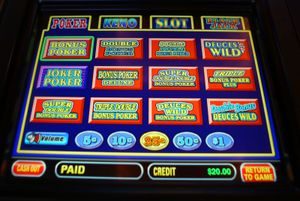
Video poker remains a staple of digital gaming. It combines elements of slot machines with the decision-making of draw poker. Players are dealt five cards. They choose which to hold and which to discard. New cards replace the discarded ones. Payouts depend on the final hand ranking. The exact odds vary by machine. Some versions offer full pay tables. Others cut corners. Understanding the specific pay table is essential before playing. The house edge shifts significantly based on which version is selected.
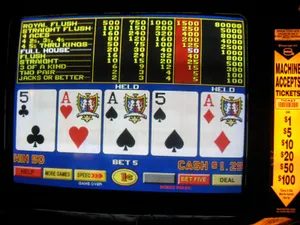
The Video Poker Paradox
Serious poker players usually scoff at video poker. The screen strips away the humanity. No bluffing. No reading tells. No psychological warfare. Just you and the machine. Yet, despite being the least “real” version of the game, these terminals are the undisputed kings of the casino floor. You see them everywhere. From traditional brick-and-mortar spots to state lottery terminals, the draw poker format dominates. The mechanic is simple. You get five cards. You decide what to keep. You draw replacements. The payout depends entirely on the final hand.
It sounds too easy. And for the casino, it is profitable because luck runs the show. For the player who treats it like a real game, it is a trap. But understanding why it works requires looking at the math behind the magic.
The Math of the Deck
Poker is one of the few card games where skill actually moves the needle. It is not as complex as bridge, but you have more control. You can fold bad hands. You can choose to play them. In a table game with inferior opponents, a skilled player wins consistently. Video poker removes the opponent, leaving only probability.
The foundation of any poker strategy is the likelihood of specific hands. A standard 52-card deck yields exactly 2,598,960 different five-card combinations. Knowing the rarity of each hand is not just academic—it is survival.
| Poker Hand | Number of Ways to Make It | Approximate Odds |
|---|---|---|
| Royal Flush | 4 | 1 in 649,740 |
| Straight Flush | 36 | 1 in 72,193 |
| Four of a Kind | 624 | 1 in 4,165 |
| Full House | 3,744 | 1 in 694 |
| Flush | 5,108 | 1 in 509 |
| Straight | 10,200 | 1 in 255 |
| Three of a Kind | 54,912 | 1 in 47 |
| Two Pair | 123,552 | 1 in 21 |
| One Pair | 1,098,240 | 1 in 2.36 |
| No Pair (High Card) | 1,302,540 | 1 in 1.99 |
The science starts here. The rarer the hand, the higher it ranks. If you are dealt a flush, you might worry about the few thousand hands that beat it. But look at the other side. There are over 2.5 million hands you can beat. That context justifies a big bet.
Pot Odds and Folding Logic
Theory is nice. Practice is brutal. The core rule of skillful play is binary: stay in the pot only if you likely have the best hand, or if the pot offers better odds than the risk of drawing.
Let’s say there are four chips in the middle. You must put in one to stay. The pot is offering 4-to-1 odds. You hold a four-flush or an open-ended straight draw (like 8-7-6-5). You need one specific card to win. The odds against hitting that card are nearly 5-to-1.
Do the math. The pot pays 4-to-1. The risk is 5-to-1. The math says fold. Always fold.
In video poker, this calculation happens in milliseconds. You don’t have time to overthink. You look at the hand. You weigh the payout table. You decide. There is no hesitation. No hesitation means no mistakes. Or rather, it means the machine does the thinking for you, and you just follow the algorithm.
The Human Element: Tells and Bluffs
Real poker has a different layer. It relies on observation. Body language leaks information. A player’s breathing changes. Their hands shake or go still. Their speech patterns shift. These are tells.
Inexperienced players do the opposite of what they should. They act bold when they are weak, trying to scare you out. They go quiet or meek when they are strong, hoping you will call. Good players weaponize this. They master the “poker face.” A flat expression. A steady demeanor. Nothing betrays the quality of the cards.
But there is a deeper game. Adjusting to the opponent. In casual games with low limits, people play too many weak hands. It is a loose table. Playing tight—waiting for strong hands—pays off because bluffs rarely work on loose players.
However, playing only tight is a mistake. If you never bluff, you build a reputation. When you finally get the nuts, no one calls you. You miss out on bigger pots. Smart players mimic the loose style. They bluff sometimes. They lose small pots doing it. But when they hit a real hand, the table believes the act and pays off.
Video poker has no such nuance. The machine never lies. It never bluffs. It never breathes. It just waits for you to make the right choice, over and over again, until the math finally balances out. Or doesn’t.
From Poque to the American Frontier
Poker’s roots go back centuries, buried in the written records of early 16th century Europe. We are talking about games like “primero” in Spain, “primiera” in Italy and “la prime” in France. These are distant ancestors. Each player has 3 cards. Winning combinations are basically three cards of the same suit, pair or flush (three cards of the same suit). As the game evolved, certain cards gained special status, such as wild cards in modern versions.
By 1700, the system had changed. The focus is on bluffing and betting. In England this caused “brag”. This is one of four card games that Edmund Hoyle took the trouble to write. On the other side of the channel, the Germans were playing a game of “pochen”. The name literally means “bluff”.
The French translated “pochen” as “poque”. This version crossed the Atlantic and first appeared in French America in 1803. This timing is no accident. New Orleans and the surrounding area had just been added to the United States by the Louisiana Purchase. Over the next two decades, English-speaking settlers in the area adopted the game. They anglicized the name as Poker. They held on to important features that we still know today.
The first mention in American literature appears in 1829. British touring actor Joe Cowell wrote about this in his memoirs. His description reveals a game played using the entire deck of cards. Each player is dealt 5 cards. All cards remain in play. Players bet on who has the best combination of five cards.
The setup is almost the same as as nas (an old Persian game). As nas is a four-handed game with 20 cards. Each player is dealt 5 cards. Some gaming historians claim that poquer is a derivative of as nas. They were wrong. This theory has been completely rejected.
The Modern Deck and Civil War Tactics
到 1834 年,扑克已经适应了现代的 52 张牌。 那是第二个已知参考文献的日期。 多年来,没有任何规则手册描述the game。 第一个发布的规则直到 1858 年才出现。到了 1860 年代,书籍将其视为一种既定的游戏,而不是新奇事物。
从那时起,扑克的历史就是一部扩张的历史。 添加了新功能以鼓励更自由的投注。 顺子被作为一手有价值的牌引入。 抽签机制允许玩家留下来,即使他们最初的交易很糟糕。 梭哈扑克增加了投注机会。 头奖创造了巨大的起始底池,要求每个玩家都下注。
大多数创新发生在 1861 年至 1870 年间。内战很可能推动了这一变化。 冲突期间,双方士兵都打了大量的扑克牌。 他们需要一些方法让游戏更有活力,在长时间的营地中更具吸引力。
在 1870 年代和 1880 年代,扑克主导了美国“狂野西部”的酒吧。 好莱坞向我们讲述了一个关于作弊指控不断枪战的神话。 现实却有所不同。 比赛很少以枪战结束。 赌注通常是筹码和金钱,而不是生命。
British Interest and Global Spread
1871 年、pokerは再び海を渡ったかもしれません。 駐英アメリカ公使ジェイコブ・シェンク大佐は、英国法廷のメンバーを含むグループにゲームについて説明した。 ヴィクトリア女王も興味を持ったそうです。 シェンクは、1872 年に一連のルールを非公開で印刷することでこれに応えました。 これは、pokerの歴史のみに特化した知られている中では最も初期の著作ですが、このゲームについてはゲームのより広範な概要で以前に言及されています。
シェンクはthe gameを「私たちの国民的試合」と表現した。 それはアメリカとしっかりと一体化しました。 おそらく彼がこのように言ったのは、アメリカで人気のある他のすべてのカード ゲームが明らかにヨーロッパに起源を持っているためです。 pokerは例外です。
1870 年代に英国の宮廷界に短期間存在しました。 しかし、イギリスとヨーロッパ大陸で広く受け入れられるようになったのは、1911 年から 1920 年になってからでした。 第一次世界大戦は大きな役割を果たしました。 アメリカ遠征軍がthe gameをヨーロッパの地にもたらし、それ以来ずっと続けられています。
Social Shifts and Post-War Popularity
在美国近一个世纪以来,扑克被视为男性的赌博游戏。 它被认为不适合上流社会或混合聚会。 20 年代改变了这一点。 受欢迎程度扩大到男女和所有社会阶层。
20 世纪中叶的调查捕捉到了这一转变。 扑克是美国男性最喜欢的纸牌游戏。 对于美国女性来说,它排名第三,仅次于拉米纸牌和桥牌。 在英国,它在男子和女子比赛中排名第二,仅次于合约桥牌。
这款游戏已经摆脱了其粗糙的起源。 它成为了staple。
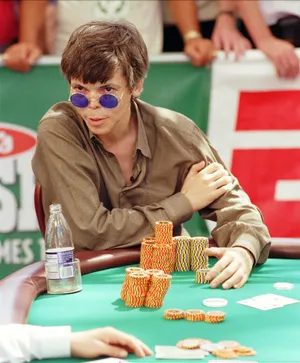
How hole card cameras ignited the poker craze
The popularity of poker around 2000 was no accident. It was a perfect storm. TV screens are full of hard work, but that’s not all. The real game changer is the hole card camera.
This small device allows the spectator to see the cards hidden in the player’s hand. Suddenly, you’re not just watching people place bets. you were in the room You know what they know. Turn passive viewing into an interactive puzzle.
Then there is the Internet.
Online poker platforms have opened their doors. The barriers to entry are zero. But Chris Moneymaker lit the fuse.
The 27-year-old is a full-time amateur who won the 2003 World Series of Poker (WSOP) Main Event. He was not from a gambling family. He qualified through online satellite communications for just $39. When he won against the pros, it caused an uproar in the community.
If he can do it, anyone can.
There were a lot of amateurs around the table. Sports has changed from a boring behind-the-scenes event to a mainstream spectacle. The camera on the bottom card shows the action. Online poker provides access. Moneymaker gives hope.
The rest, as they say, is history. But how did it feel to see those cards turned over? It stayed.
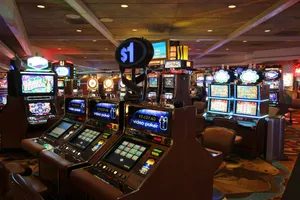
The World Series of Poker wasn’t built overnight. The event originated as a five-month marathon held near the front window of Benny Binion’s Horseshoe Casino in 1949. Texas prospect Johnny Moss vs. Nick “The Greek” Dandolos. A large crowd gathered for the competition. The public watched for months. Mr. Dandolos lost $4 million and reportedly lost, “Mr. Moss, I have to let you go.” For 20 years, Binion has had the idea of a major tournament.
By 1970, he was inviting his best players to Las Vegas. Six men paid a $5,000 entry fee. The structure is very simple. Play until everyone is at full strength or there is only one person left. Johnny Moss won the title three times in the first four years. By 1972, the fee had doubled to $10,000. Soon, anyone with money will be able to join Legends. The field has expanded. Seven Card Stud, Omaha and Texas Hold’em all have their own events. The winner will receive an engraved gold bracelet. Texas Hold’em has become the crown jewel and its champions are considered the best in the world. Early names like Doyle Brunson, Johnny Chan, Thomas Preston and Stu Ungar are all written in history.
Qualification routes and global expansion
The WSOP format has given rise to satellite tournaments. These Qualifiers allow players to purchase for as little as $10. Winners get a free entry into the main Horseshoes game. Casinos use them as advertisements. In some cases, the payment can be left unused. The Internet makes satellites available all over the world.
This format influenced other major events. The World Poker Tour began in 2003. The event is Featured on a Weekly cable television show. There are more than a dozen large activities. It also operates satellites and sponsors online games.
How online poker works
Hundreds of websites offer 24/7 poker services. Choose from dozens of variations. The “Ring” game continues. Players buy chips, join, stay as long as they want and leave with whatever is left. “On Demand” tournaments usually have 9 or 10 players waiting for the table to fill up. They choose variations and limitations. When the table is full, the game begins. Players bring a set amount. The last one standing wins.
Scheduled matches vary. Players pay a buy-in fee. Everyone gets the same amount of chips. The game continues until there is one winner left. These are as common as satellites of major events like the WSOP.
Online poker legal swamp in USA
Most internet poker sites are located overseas. Small Caribbean countries is a hub for operators that market to US customers. Implementation is difficult. The U.S. 1961 Wire Act has been interpreted to prohibit Internet gambling in the United States. Authorities have indeed seized operators who physically entered the U.S., but the extent of the law is questionable. Some argue that it only covers sports betting on phone lines.
In 2004, the World Trade Organization ruled in favor of Antigua. The WTO said U.S. customers can use Internet betting overseas because the Interstate Horse Racing Act of 1978 allows online horse racing betting. The United States opposes this. They are asking for a retrial. In 2005, the WTO upheld the original decision. Ordered the United States to review the IHA and end discrimination in foreign services. If the United States does not comply by April 3, 2006, it will face trade sanctions. The deadline has passed. The US government reserves the right to ban online gambling. Many states have enacted their own laws against this.
Federal oppression and State Shifts
Congress passed the Unlawful Internet Gambling Enforcement Act in October 2006. The purpose of the bill is to prevent poker profits from flowing to terrorist groups. In response, major websites moved their servers outside the United States.
Then on April 15, 2011, Justice Department officials raided the offices of PokerStars, Absolute/UB, and Full Tilt. These are the three largest still operating establishments in the country. Officials were accused of money laundering.
But things have changed again. Since 2012, Delaware, New Jersey and Nevada have legalized state-regulated online poker. They issue licenses to casinos and their related entities. Other states are expected to follow suit. In the future, regulated online poker may also be offered in Indian tribal areas. Games develop in a complex legal and technological network.
Main Event Champion Evolution
The main event of the World Series of Poker is not just a tournament. It is a mirror that reflects the changing game. Look at the early years. The numbers are small. In 1970 Johnny Moss won the title. No prize money was mentioned in the documents. Only 38 participants. It was a gathering of elites. Friendly competition between legends.
Then Johnny Moss won again in 1971. He walked away with $30,000. The field was reduced to only six people. In 1972 Amarillo Slim Preston hit the pot. $80,000 changed hands. The game was still small. Still intimate.
But look at 1973. Puggy Pearson took home $130,000. The field grew to 13. Then Johnny Moss won again in 1974. Sailor Roberts followed in 1975. Doyle Brunson joined the chat in 1976 and won $220,000. In 1977, he succeeded again. Two titles in two years. The field had grown to 34 players.
The late 70s brought Bobby Baldwin in 1978, then Hal Fowler in 1979. The money kept growing. But the real change came with Stu Ungar.
Ungar won in 1980. $365,000. The field reached 73. In 1981, he struck again. $375,000. 75 participants. Ungar was a force of nature. A player who didn’t just play cards. He played people.
Jack Straus won in 1982. Tom McEvoy in 1983. Jack Keller in 1984. Bill Smith in 1985. Berry Johnston in 1986. The names are legendary, but the scale was still manageable.
Then came Johnny Chan.
The era of Chan and the million dollar mark
Chan won in 1987. $625,000. 152 players. In 1988, he won the crown again. $700,000. 167 players. The game has been expanded. The stakes were raised.
Phil Hellmuth Jr. won $755,000 in 1989. 178 entrants. Mansour Matloubi followed in 1990. Brad Daugherty in 1991. Hamid Dastmalchi in 1992. Jim Bechtel in 1993. Russ Hamilton in 1994. Dan Harrington in 1995. Huck Seed in 1996.
Did you notice the pattern? There is a limited amount of prize money. Everyone from 1991 to 1999 won exactly $1,000,000. The structure has changed. The prize pool has been set. The number of participants continued to grow.
Stu Ungar won again in 1997. He was the only player to win four times. But the field was 312 deep. The game became more and more difficult. Professionals