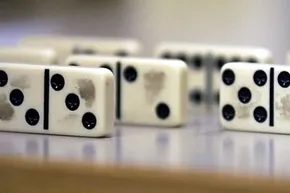
Dominoes has more variations than you can shake a stick at. But if you just want to sit down and play without digging through rulebooks for obscure regional rules, stick to the basics. This guide covers the standard 28-piece set used for block dominoes. It is the entry point. The foundation. Once you get this, everything else is just flavor text.
First, you need the layout. Everyone shuffles the tiles—also known as stones —and piles them face down. That pile is your boneyard. Each player draws their starting hand. Since we are playing block dominoes, the rest of the tiles stay in that boneyard. They are off-limits. You cannot draw from them if you are stuck. That is the core restriction that defines this specific variant.
Now, who goes first? There are two common ways to decide the downer, the player who places the first tile, also called the spinner.
- The Double Method: The player holding the highest double goes first. In a standard 28-piece set, that is the double-six. If no one has it, you look for the double-five, then four, and so on.
- The Heaviest Tile Method: Everyone draws one tile. The person with the highest total pip count takes the opening turn.
Let’s talk about that spinner. It is unique. It is the only tile where you can play on all four sides. Every other tile only offers one or three connection points, depending on whether your group allows L-shaped plays. When you play tiles next to the spinner, you place them perpendicular to its center. Two tiles against the spinner create a cross shape. It looks tidy. It feels strategic.
From there, it is simple matching. You must hook your tiles to matching pips. If the spinner is a double-six, the next player must match a six. If you have a six, you play it. If you don’t? You pass. In block dominoes, there is no drawing from the boneyard to save your skin. You sit there. You wait. You hope the next player makes a move that opens up a number you hold.
The game continues until someone empties their hand. They slap the table. They yell “Domino!” They win.
It sounds easy. It is easy. But the strategy comes in holding back the high tiles, forcing opponents into passes, and watching the board open up. The boneyard remains static. The tension stays in your hand.