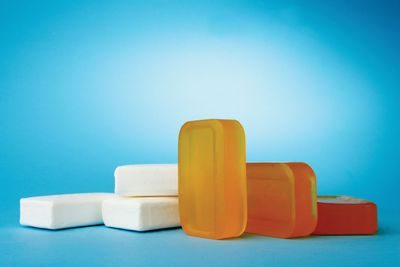
Soaps and detergents are not just liquids that form foam. They are chemical tools designed to remove dirt, oil, and grime from surfaces. Think of skin, clothes, and other solid objects. When these substances dissolve in water, they break the bond between the stain and the surface. This is why they work so well for hand washing or laundry.
But water and soap are not always available. Maybe you are walking outside. Maybe you can’t find a sink. Hand sanitizer can be helpful in this case. They come in gel, foam, or liquid form. Recommended when cleaning with soap and water is not possible.
There is another reason to use them. Repeated hand washing can damage the skin. It removes natural oils. This can cause flaking and cracks. The skin’s protective layer is compromised. Sanitizers offer a way to clean without that wear and tear. They protect the integrity of the skin and kill bacteria.
The choice between soap and disinfectant is not just about convenience. It’s all about balance. It must be kept clean and without damaging the skin’s protective layer. It is important to understand this difference. It affects how we maintain our health in our daily lives.
Disinfectants are important for hygiene when soap and water are not available.
It’s not just about cleaning. It’s all about maintenance. Your skin is your first line of defense. It’s important to keep it that way. The same applies to removing pathogens hidden in dirt. Both soap and disinfectant serve this dual purpose. They keep us safe. They keep us going.
However, the science behind it is complex. How do these molecules actually trap the oil? Why do some disinfectants cause irritation while others soothe? The answer lies in chemistry. But the result is simple. We stay cleaner. We stay healthier.
The debate between traditional cleaning and modern alternatives continues. Which one is better? It depends on the situation. It depends on your skin type. Depends where you are. But one thing is clear. Both are necessary in our lives. They solve different problems. They complement each other.
As we progress, new formulations emerge. Better detergent. A milder disinfectant. The goal remains the same. Get rid of the bad and do not harm the good. Cleanses the skin’s natural defenses without jeopardizing them.

The actual chemical reaction behind surface cleaning
It looks like the dirt is easy to wipe off. This is not true. Behind this simple action is a chaotic battle of high-stakes physics and chemistry. It’s not just about moving dirt. It manipulates surface tension, breaks molecular bonds and suspends impurities in water. If this process fails, the stain will recur.
Lowering the Barriers
First you need to get in. Pure water beads up. They repel fabrics and skin because the molecules love each other more than the surface you’re trying to clean. Detergents can solve this problem. These are surfactants that lower the surface tension of water.
In this way, the cleaning solution wets the surface immediately. In textile products, the solution is forced deep into the fiber structure. Without this wetting step, the rest of the process just splatters.
The Interface Layer
Once wet, the detergent molecules accumulate at the interface. More precisely, they form layers between water and soil as well as between water and the target surface. The use of ionic surfactants makes the layer electrically polar. This polarization is the key. It changes the way dirt interacts with water, making it easier for it to detach from fabrics and skin.
Agitation and Temperature
Dirt is difficult to remove. You have to force it out. Mechanical agitation can help. High temperatures help. In hand washing, your hands provide the energy, which creates foam and traps loose dirt. Dirt spreads into the wash water and comes off the fibers.
However, oil-based stains behave differently as dry dust. Most stubborn dirt adheres to the surface through a thin layer of grease. This oil film must be displace a detergent solution. When the detergent acts, the oil breaks down into small droplets. These droplets are washed away by the washing water.
The Protein Problem
Not all stains are created equal. Proteins like blood, milk and eggs are a nightmare for standard detergents. They are insoluble in water. They bind tightly to the fibers and forms a barrier that prevents the detergent from penetrating. Regular surfactants often fail here.
The solution is proteolytic enzymes. These biological tools break down the structure of proteins and make them water soluble or at least permeable. Once the protein barrier is gone, detergent can do its job. The dirt disperses with the oily residue.
However, there are drawbacks. People who are regularly exposed to these enzymes may be at toxic hazards. Skin irritation is common. It’s a compromise for a clean shirt and healthy hands.
Keeping Dirt Suspended
Why is it so difficult to stick right back on? When oil droplets and dirt particles clump together, they can become heavy. They flocculate. They merge into large aggregates and redeposit on clean surfaces. That’s how you get gray clothes.
Detergents prevent this by keeping the dirt stable and well dispersed. This is usually achieved with protective colloids and special additives. In textiles, small deflocculated particles pass through the gaps of the material more easily than larger lumps. The function of the detergent in maintaining this dispersion is to keep the dirt suspended in the water until it is washed away.
Without that stability, you’re just mixing dirt into sludge that will eventually find its way back into whatever you’re trying to clean.
The chemistry works until it doesn’t. Hard water can interfere with the action of ionic surfactants. Cold water slows down the enzymatic breakdown. Some stains, such as tannins from wine and coffee, are resistant to even the strongest chemical attacks. We clean up, but we never eliminate the complexity. Dirt is always waiting to come back.
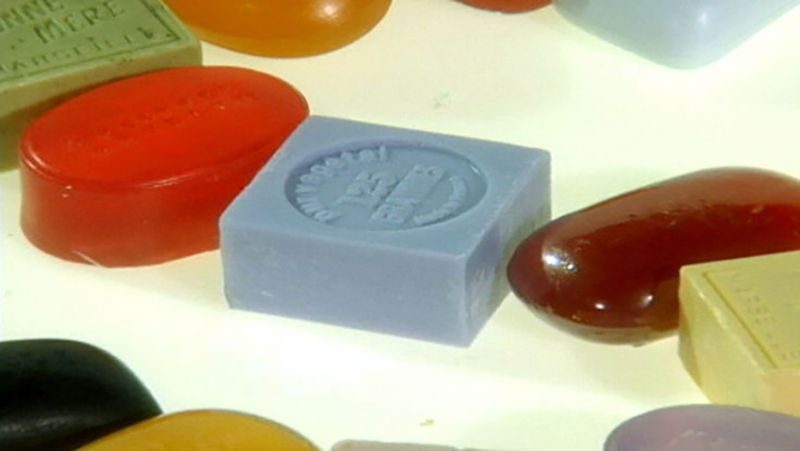

It’s easy to take cleanliness for granted, but the science behind a bar of soap or a bottle of liquid detergent is surprisingly complex. To function as surface-active agents, these cleaning products rely on a very specific molecular architecture. Each molecule is essentially a dual-natured creature. It needs a hydrophobic part that hates water, like a long-chain carbon group found in fatty acids or alkylbenzenes. This part latches onto grease and dirt.
Then there is the hydrophilic part. This is the water-loving side, soluble in water. It might be a carboxyl group like -COONa, or a sulfo group such as -OSO3Na. Nonionic synthetic detergents often use a long chain of ethylene oxide for this purpose. The magic happens when the hydrophobic tail digs into the soil or fiber, while the hydrophilic head stays in the water. The dirt gets lifted away.
The Four Types of Surface-Active Agents
Not all detergents are created equal. Chemists categorize them into four distinct groups based on how they behave in water.
- Anionic detergents: These are the most common. Soap belongs here, along with the majority of modern synthetic detergents. In solution, they produce electrically negative colloidal ions.
- Cationic detergents: These do the opposite. They create electrically positive ions in solution.
- Nonionic detergents: These don’t charge up at all. They produce electrically neutral colloidal particles.
- Ampholytic (or amphoteric) detergents: These are the chameleons. Depending on the pH of the solution, they can act as either anionic or cationic agents.
Technically, soap was the first detergent ever discovered. In a strict chemical sense, any compound formed by reacting a water-insoluble fatty acid with an organic base or an alkali metal counts as a soap. However, the commercial soap industry focuses almost entirely on water-soluble soaps resulting from the interaction between fatty acids and alkali metals. There are exceptions, of course. Salts of fatty acids with ammonia or triethanolamine are used in shaving preparations, where the texture matters just as much as the cleaning power.
The Ancient Origins of Cleaning
Soap isn’t new. Humans have known about it for at least 2,300 years. Pliny the Elder recorded that the Phoenicians were preparing soap from goat’s tallow and wood ashes as early as 600 BCE. They even traded it as a commodity with the Gauls. It became widely known throughout the Roman Empire, though historians still debate whether the Romans learned its manufacture from ancient Mediterranean peoples or the Celts of Britannia.
The Celts produced their soap from animal fats and plant ashes, calling it saipo. That word is the root of our modern term. But for a long time, nobody realized its value as a cleaning agent. It wasn’t until the 2nd century CE that things shifted. The Greek physician Galen began mentioning soap as a medicament and a way to cleanse the body. Before that, it was mostly used as medicine. By the 8th century, Arab scholar Jābir ibn Hayyān (known in the West as Geber) repeatedly cited soap as a cleansing agent in his writings.
European Production and the Tax Wars
In Europe, the center of soap production moved like a tide. It started in Marseille, then shifted to Genoa, and finally to Venice. Meanwhile, in Germany, the substance was so novel that a box of soap presented to the Duchess of Juelich in 1549 caused a genuine sensation. Fast forward to 1672, and a German man named A. Leo sent a parcel of Italian soap to Lady von Schleinitz. He had to include a detailed instruction manual on how to use the mysterious product.
The English soapmaking scene emerged at the end of the 12th century in Bristol. By the 13th and 14th centuries, a small community of soapmakers had settled near Cheapside in London. But there was a catch. They had to pay a duty on every single bar they produced. After the Napoleonic Wars, this tax skyrocketed to three pence per pound. The enforcement was draconian. Soap-boiling pans were fitted with lids that the tax collector could lock every night to prevent producers from working under the cover of darkness.
It wasn’t until 1853 that this oppressive tax was finally abolished. The state lost over £1,000,000 in revenue to get it done. But the result was clear. Soap entered common use in the 19th century. German chemist Justus von Liebig went so far as to declare that the quantity of soap consumed by a nation was an accurate measure of its wealth and civilization.
The Chemistry of Early Saponification
How did they make it all those centuries ago? Early soapmakers likely used little more than ashes and animal fats. The process was simple but slow. They dispersed simple wood or plant ashes, which contained potassium carbonate, in water. Then they added fat.
The mixture was boiled. As the water evaporated, more ashes were added repeatedly. During this heating process, a slow chemical splitting of the neutral fat occurred. The fatty acids released by this split then reacted with the alkali carbonates from the plant ash. This reaction is called saponification. It turned raw fat and lye into something that could lift dirt from cloth and skin. It wasn’t much, but it was the foundation of modern hygiene.


The story of the soap begins with a messy, greasy reality. The Celts did not have modern chemistry. They had animal fats rich in free fatty acids. These acids act as natural catalysts and initiate reactions. This is a crude method, but it works. This method remained backbone until the end of the Middle Ages. That’s where slaked lime came into play. It causticizes the alkali metal carbonates and allows the chemically neutral fats to react with the lye. Suddenly, soap making turned from a backyard craft into an emerging industry.
Two major changes drove this industrialization. The first Leblanc process appeared around 1790. It pulled soda ash from salt water and produces a stable and inexpensive alkali. Second, the French chemist Michel Eugène Chevreul changed our understanding of chemistry itself. In 1823, he showed that saponification wasn’t just mixing. it was a specific chemical split. Fats break down into alkali salts of fatty acids (soaps) and glycerol. Knowing exactly what is going on allowed for precision.
By the end of the 19th century, methods further mechanized with open-steam boiling. Soap is no longer just a household item. It is an industrial product.
Rise of early synthetic detergents
The industry began in the mid-1800s, and turkey-red oil (a sulfated castor oil still used in textiles and leather) was credited as the first synthetic detergent. However, these are not suitable for general household use. They are industrial tools.
The first synthetic detergents for consumers appeared during the First World War. Germany produced synthetic detergents out of necessity. Fat was needed to make explosives and other war materials. Soap had to be replaced. The solution was short-chain alkyl naphthalene sulfonate. Manufacturers coupled propyl or butanol with naphthalene to sulfonate the mixture. The result was branded as Nekal.
Necker is a mediocre cleaner. However, it is an excellent wetting agent. Although it did not replace household soap, it created a permanent niche in the textile industry. Today, these chemicals are still used in large quantities in industry.
The 1920s and early 1930s brought molecular upgrades. Researchers have begun to sulfonate long-chain alcohols. These are sold as neutralized sodium salts. Sodium sulfate is used as an inexpensive filler. By the early 1930s, long chain alkyl aryl sulfonates became available on the US market. These molecules are characterized by benzene rings and alkyl side chains derived from kerosene fractions. Like their alcohol sulfate cousins, they are stretched with sulfates sodium salts.
Neither group conquered the market right away. These are cleaning agents, but they are not yet essential. Then the Second World War changed the dynamic. By the end of the war, alkyl aryl sulfonates had crushed alcohol sulfates in sales of general cleaning products. Alcohol sulfates retreated, but they found a new home. These products have become backbone in shampoos and high-end detergents.
Historically, synthetic detergents were created as an alternative to fatty soaps. They evolve into something more sophisticated.
Why synthetics beat soap
The benefits extend beyond the supply chain. This is chemistry. Soap has a fatal flaw: hard water.
When soap comes into contact with calcium and other metal salts in hard water, it reacts. A precipitate forms. That precipitate is scum. You see it as a ring in the bathtub. Appears as a white residue on glassware. It looks like a sticky curd found in the laundry rinse water.
You also feel it. Does your hair look dull, lustreless after shampooing? This is a soap-scum complex. What should I do if my clothes have yellow stains after ironing? More shit. Do you use a lot of soap? Waste products that are created when metal salts are neutralized before their cleaning power is used.
Synthetic detergents don’t suffer from this defect. They are not significantly affected by metal salts and acids. These may react chemically, but the resulting compounds remain soluble or colloidally dispersed. They don’t clump. They don’t scum.
When you add to this the solubility in cold water and the flexibility in formulation, you get a product that can quickly replace traditional soaps in many applications.
How Soap Manufacturing Works
The core reaction remains the same. Hot caustic alkali, usually sodium hydroxide (caustic soda), attack natural fats and oils such as tallow and vegetable oils. As a result, sodium salts of fatty acids (soap) and glycerin are formed. This saponification reaction is the basis of all traditional soap making.
When manufacturers use industrially produced fatty acids instead of natural fats, the chemical properties change slightly. Reacts with Caustic soda to form soap and water. No glycerol byproducts.
Raw materials and additives
Fats and bases are not negotiable. Everything else is optional. Adjust performance by adding optical brighteners, water softeners and abrasives. Turn basic cleaning products into special products.
The role of alkali
Sodium hydroxide is used in the production of most soaps. But potassium hydroxide (basic potassium) also plays a role. Potassium soap dissolves easily in water. The condensed form is called soft soap.
Soft soap has become less important. It is still sold in liquid form and is often mixed with sodium soap. They are used in shaving products and the textile industry, where their solubility is an advantage.
Manufacturer of laundry soap
Laundry soap is rarely just soap. Most contain alkaline builders. These substances increase the cleaning power. The most common are sodium silicate (water glass), sodium carbonate (soda), sodium perborate and various phosphates. These solve the problem of hard water caused by soap and keep the detergent active.
The Fat Mix That Defines Your Soap
Chemistry is not the only backbone of bars and powders. It’s what you put into it. Soap manufacturers use different raw materials. There are also animal fats, vegetable oils, straight-chain fatty acids and even by-products of the paper industry, such as resin and tall oil. But not all fats are created equal. The fat you choose determines how your soap behaves on your skin and in water.
Based on their offerings, they can be divided into four different camps.
Hard Fats for Slow, Creamy Lather
Tallow is the heavyweight champion here. This is the most important factor in the production of hard fats with slow foaming properties. Other players in this category include garbage greases, high-melting hydrogenated marine and vegetable oils, and palm oil.
What exactly do these do? The soaps they make do not lather well in cold water. Bubbles need heat to work. Once used, however, it is gentle on the skin and cleans effectively. Gentle yet powerful makes this group a leader in the international soap industry.
Hard Fats for Quick Bubbles
Then you see the other side of the coin. Coconut oil, palm kernel oil, babassu oil. These are hard fats, but they behave differently. It makes soap that lathers quickly.
There are technical reasons for this. These fats are less sensitive to electrolytes such as salt. This is important. This makes it the number one choice for marine soap that need foaming even in sea water. Palm kernel oil is obtained from the inner core of the fruit, while palm oil in the previous part is obtained from the outer part of the fruit. Don’t confuse the two. Coconut oil is the mainstay of the second most important category.
Soft Oils and the Rancidity Risk
Olive oil, soybean oil and peanut oil belong to the third category. Produces soap with a soft texture. It contains linseed oil and whale oil as well as semi-drying and drying oils.
There’s a catch. These will change when exposed to air, light, or simply poor storage conditions. The finished soap may turn rancid or discolored. There is a trade-off: the texture is softer, but the shelf life is shorter and the higher sensitivity to the environment.
Resin and tall oil
Resin and tall oil form their own group. Resin is a resin that is obtained as a by-product in the production of chemical wood pulp. It is used in inexpensive laundry soaps, some bath soaps and various special industrial products. Tall oil? It is the main ingredient of liquid soap.
Why Your Clothes Look Whiter (It’s Not Magic)
Almost all laundry detergents today contain optical brighteners. They work by attaching to the fibers in the solution and remain there even after rinsing. They convert invisible ultraviolet light into visible light on the blue side of the spectrum.
result? Fibers reflect more visible light. Looks bright. The extra reflected light is bluish violet, which counteracts any yellowing on the fabric. Yellow and blue complement each other well, making the object appear brighter and noticeably whiter.
Chemical processes are complex. Many formulations are trade secrets.
Not to be confused with old-style laundry blueing. Older methods used blue dyes or pigments adsorbed to the fibers. This blue pigment absorbs yellow light and reflects a richer blue color. However, this also means that the fabric absorbs some of the incoming light. It reflects less light than it receives. The result is whiter, but not brighter. Optical brighteners can actually increase light output.
Keep away from hard water
Water quality changes everything. Hard water contains calcium and magnesium, which interfere with cleaning. Enter sequestering or chelating agent.
EDTA (ethylenediaminetetraacetic acid) or its sodium salt are the standard means of forming molecular complexes here. This process, called chelation, traps calcium ions. It no longer functions ionically. Calcium and magnesium are inactivated in hard water. The water softens effectively. EDTA can also remove other metal ions, making it a versatile tool in formulation mixtures.
Scrubbing Power
Sometimes you need grit. Water-insoluble minerals are ground into powder and added to soaps and synthetic detergents. Think talc, diatomaceous earth, silica, marble, volcanic ash (pumice), chalk, feldspar, quartz and sand.
Organic abrasives are also available. Sawdust is one example. These increase the mechanical effect in removing stubborn stains.
How It All Comes Together
The production of the final product requires different techniques, most of which require heat. The process can be carried out continuously, pumping through the material or in batches. The methods vary depending on the scale, materials and desired end result. The chemical reaction is fixed. Implementation is where manufacturing takes place.
An old-fashioned cooking method
Although the cooking process is often overlooked, small and medium producers still rely on it. Why? neat soap – Produces a refined glycerine-free base essential for making soaps, flakes, beads and powders. This old but effective method is based on a series of steps called “changes” in the kettle (or pot in the UK).
First, add the melted fat to the pot. Add the caustic soda solution gradually. Then comes the heat. The open steam from the perforated coil boils the substance. The saponification reaction begins. When the caustic soda reacts with the fat, the mixture thickens and emulsifies. Soap and glycerin are produced together in this slurry.
Next, you need to separate the glycerin. Add salt water. The substance “salts out” and separates into two separate layers. The top layer is curdy, impure soap mass. The bottom layer is a saline solution containing glycerol. This works because soap does not dissolve in salt water, while glycerin dissolves easily in salt water. The bottom layer (called spent liquor) is drained and treated to recover the glycerol.
Grainy and cheesy remains in the kettle. It still contains unsaponified fats, dirt and colorants from the original oil. Enter the “strong change”. Add the strong alkaline solution and boil again to remove the rest of the free fat.
The final step is casting and settling. This transforms the mess into neat soap. Some manufacturers may rinse the soap with salt water to remove free bases. Others pitch it directly. Pitching means boiling with water and boiling it until it reaches a certain concentration, at which point the water separates into two layers again. The top layer is pure soap or kettle soap. The composition of a particular grease is fairly standard: about 70 percent soap and 30 percent water. The bottom layer is nigre. There are many varieties of nigre and it contains 15 to 40 percent soap.
Why keep the nigre? It is a trash can for storing impurities. Pigments, mud, salt, alkali and metallic soaps will dissolve in black, but keep them out of pure soap. Most of these pollutants are dense. they settle down. The nigre pulls them out and leave clean soap behind.
Continuous soap making and hydrolyzer
The boiling process is very slow. It will take a few days to resolve. A huge kettle is needed to produce soap in large quantities. This is ineffective. As a result, continuous soap making largely replaced the old cooking method.
Currently, most continuous processes leave out natural fats and oils. Use fatty acids instead. Why switch? Fatty acids do not contain impurities. When reacting with a base, water is produced instead of glycerol. There is no need to remove impurities or glycerin from the final product. Steering becomes easier. More specifically. Fatty acids are fed into the system via a flow meter or dosing pump. Use a pH meter and a conductivity meter for final adjustments.
The continuous hydrolysis process starts with natural fats. High temperature, high pressure and zinc soap catalyst break down fats into fatty acids and glycerol. The reaction is continuous. Typically occurs in vertical columns 15 m (50 ft) or taller. Melted fat and water enter from opposite ends. Fatty acids and glycerin are withdrawn simultaneously.
The fatty acids are then vacuum distilled for purification. Finally, neutralization with a basic solution (such as sodium hydroxide) produces pure soap. When making bath soaps, excess free fatty acids are often left over or added at the end. It is sometimes used in combination with super fattening agents such as olive oil or coconut oil. The goal is simple. Eliminates the risk of the final product having too much base.
Speed is the main advantage. The entire hydrolysis process from natural fat to salable product takes several hours. The traditional cooking process took 4-11 days. Glycerol is a valuable by-product that is refined and concentrated during fatty acid production.
Cold and Semiboiled Methods
Not everyone needs industrial speed. The cold method is suitable for small-scale operations. A mixture of fats and oils, usually rich in coconut oil or palm kernel oil, is mixed into the alkaline solution. Use a little less base than theoretically needed. This leaves a small amount of unsaponifiable fat in the finished soap, which acting as a superfatting agent. Stir the mixture in an open pan until it thickens. Then pour it into the frame. There it soaps up and hardens.
The cooking method is similar, but requires heating. Add the fat to the pot. Add the alkaline solution while stirring and heating the mixture. It didn’t boil. Soapy mass in the pot. Pour into the frame and let harden.
These methods are technically simple. Little investment is needed for machines. These are ideal for small plants that cannot justify the expense of continuous hydrolyzer or large boilers. They work, are cheap and still make soap. The market for small-batch artisan soaps is robust, keeping these old methods alive in a world dominated by automation.
From Paste to Product
Soap does not lose its effectiveness when it comes out of the boiling pot. It still needs work. The hot viscous mixture is cooled in frames or pressed into blocks. Then cut to size and stamped. This is a standard bar. But what if you want flakes? Thin, transparent sheets? The mass gets extruded into ribbons. Dried. Cut again. Smaller. Thinner.
Bath soap and hand soap have different processing methods. Perfumes. Colors. SuperTallowting agents to keep skin moist. Next, perform vacuum drying. cool. Solidification. Next, homogenize. Milling. Crushing. until the consistency is just right. You want it fine. Or rough. It depends on your goal.
Air is forced under pressure into a warm substance. Just as it exits the vacuum drier. result? floating soap. It stays on top of the water. It’s not a sink. Medicinal soaps contain chlorinated phenols or xylenol derivatives. deodorant. Disinfectant. Shaving foam? These are based on a combination of potassium and sodium soaps. There are two metals. One job.
The Rise of Anionic Syndets
Synthetic detergent. Syndets. The name sounds clinical. But they dominate the market. Anionic-active types are the heavy hitters. Look at molecules. long carbon chain. Binds to the sulfo group (-SO3). This group has a negative charge. Anionic. The cleaning power comes from here.
The structure of the carbon chain must be suitable. Industrial processes require the simple addition of sulfo groups. Sulfonation. The method is important. Sulfuric acid. Oleum. Fuming sulfuric acid. Gaseous sulfur trioxide. Chlorosulfonic acid. Any of these will work. But not all are equal.
Raw Materials: From Whales to Petrochemicals
Fatty alcohols are the backbone of anionic synthetic detergents. In the 1930s, everything changed when a cheaper way to make them was invented. Before that? Sperm oil. bottlenose whale oil. expensive. Ethical nightmares. The industry has changed since then. coconut oil. palm kernel oil. Tallow. Triglycerides from plants and beef. cheaper. More abundant.
Bouveault-Blanc method was introduced in 1903. Uses metallic sodium. Worked in labs. But the cost is too high for factories. Prices fell in the 1950s. Suddenly this was possible. High-pressure hydrogenation followed. Oil-hardening processes for natural oils. Manufacturers began converting coconut and palm oil into Tallowty alcohols. Later, a synthetic version appeared. Of ethylene. The Alfol process. Diethyl aluminum hydride. Effective. Scalable.
World War II changed the raw material situation again. Alkylbenzene. Available in huge quantities. It became the most important ingredient. In the USA and Western Europe, about 50% of synthetic detergents are based on it. Alkyl? Usually C12H24. Tetrapropylene. Derived from propylene gas. Petrochemicals.
Alkylbenzenes are formed by alkylation. Various catalysts help. Then sulfonation occurs. Alkylbenzene sulfonate. powder. liquid. Cleans well. Creates foam. Lots of it.
The Foam Problem
I have a problem. in terms of. It won’t go away. Soaps and Tallowty alcohol detergents break down. These are not. When wastewater is transferred from the city’s sewer network to the sewer network, foam accumulates on top of the wastewater. Then to the river. Then go to the beach.
This affects navigation. Ships cannot pass. The foam is also resistant to biological degradation. The drainage system is blocked. Watered fields are covered with foam. What a mess.
Research was concentrated in the 1960s. Chemists study the molecule. Tetrapropylene has a branched chain structure. Bacteria cannot easily break it down. they replaced it. Direct carbon chain. Alkyl. Direct chain. Bacteria like linear things. They break them. Quickly. Problem solved. to a large extent.
Sulfonation and sulTallowion
Chemical changes are specific. organic compound. Fatty alcohols or alkylbenzenes. When sulfonated, it becomes an anionic surfactant. Or sulTallowion. The terminology can be confusing. The difference is precise.
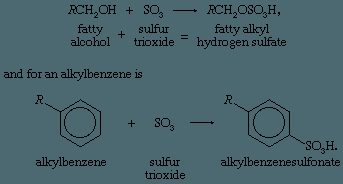
Fatty alcohol? SulTallowion. It has a sulfuric acid molecular group (-OSO3Na). Alkylbenzene? Sulfonation. The sulfonic acid group (-SO3Na) is bound directly to the benzene ring. Both are ultimately hydrophilic. Water is attracted to it. That’s the goal.
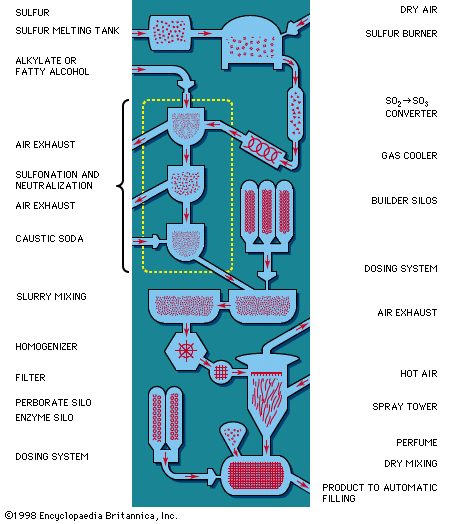
Recent technologies have revolutionized the industry. Gaseous sulfur trioxide is now the standard. Connect groups effectively. Where did it come from? Anhydrous sulfuric acid is evaporated. Liquid stable SO3. Or burn sulfur. Converts to sulfur trioxide gas. directly. clean. Effective.
Basic chemical reactions of aliphatic alcohols…


Pure chemistry: beyond the basics
The variable R in a chemical equation is not just a placeholder. This represents the hydrocarbon group, the oily body that determines how these molecules interact with dirt and water. When the chemical reaction is complete, we proceed to the neutralization process. This is where caustic soda comes into play, balancing the acidic byproducts and ensuring that the final product is stable and safe to use.
The petrochemical industry goes beyond traditional soaps. They designed new anionic synthetic detergents, especially directly sulfonated paraffinic compounds. Let’s take alpha-olefins as an example. Researchers have found a way to convert raw paraffin wax directly into sulfonates. What’s the trick? A mixture of sulfur dioxide and air catalyzed by radioactive cobalt. It’s a form of industrial alchemy that transforms simple hydrocarbons into powerful cleaning agents.
Non-ionic detergents: building molecules
Non-ionic detergents are silent workhorses in the cleaning world. They are prepared by condensing compounds with hydrophobic groups (usually hydroxyl (OH) groups) with ethylene oxide or propylene oxide. The most common starting materials are alkylphenols or long-chain alcohols. During the reaction, ethylene oxide molecules attach to hydroxyl groups and form a chain. The length of this chain is important. It determines the properties of the detergent. Changing the structure of the alkylphenol or alcohol can change the performance of the detergent.
This synthesis is dangerous. This reaction is accompanied by a strong exotherm. It releases heat rapidly. Ethylene oxide and propylene oxide are toxic. They are dangerously explosive. They exist in liquid form only under pressure. This is why you cannot simply mix it in an open bucket. These spaces require special explosion-proof equipment. Skilled supervision is non-negotiable.
There are other types as well. Some nonionic detergents are made from the condensation of fatty acids and organic amines. These are necessary as foam stabilizers. These ingredients are included in liquid detergent formulas and shampoos to keep the lather where it’s needed.
It is not without its flaws. Some nonionic synthetic detergents can cause unwanted foaming problems in wastewater systems. This is definitely a problem. However, it is not as serious a problem as foam caused by anionic synthetic detergents.
Cationic Detergents: The Anti-Detergent
Cationic soaps are interesting. They contain long-chain cations and act as surfactants. They can be bought as a powder, paste or aqueous solution. They have excellent wetting ability, foaming ability and emulsification ability. Are they good detergents? Not very. They are bad detergents.
Why are they used then? Because there are situations where anionic soaps don’t work. Let’s think about paving, for example. Cationic surfactants are used to emulsify bitumen. It is to be expected that these creams will “break down” immediately after use. This allows adhesive layers of asphalt to be placed over the stone.
They absorb strongly onto minerals. Especially silicates. This creates a strong bond between the asphalt and the stone.
They also have another special skill: antibacterial properties. In surgery, cationic soaps are used diluted to kill bacteria. This is in stark contrast to their poor performance as scavengers.
Ampholytic Detergents: Niche Players
Amphiphilic surfactants have not received much attention. They are used for specific purposes. Found in high-end shampoos and cosmetics. The electroplating industry also relies on them. But what about volume? It is not consumed in large quantities. They are specialists, not generalists.
Synthetic finishing agent
Most synthetic detergents arrive in washrooms as spray-dried powders. The manufacturing process is interesting. Prepare an aqueous slurry. This slurry contains all the builder components. Builders are alkaline substances that enhance the effect of detergents. Sodium silicate (water glass) and sodium carbonate (soda ash) are standard. Phosphate used to be the first choice, but it caused environmental problems. The nutrients they provide sustain the growth of unwanted algae and bacteria in water bodies. Its use is banned in many western countries.
The industry is currently trying to find acceptable alternatives to phosphates. The slurry is sprayed in heat. This removes almost all moisture. The result is a powder made of hollow particles or beads. They dissolve easily in water and produce small amounts of dust.
Not all synthetic detergents are in powder form. Some are converted into liquid detergent for hand washing. Sales of solid synthetic soaps such as bath and laundry soaps also increased.
Performance tuning is common. Sodium perborate is sometimes added to the beads. Oxidation improves cleaning efficiency. Enzymes are also common additives. Modern laundry detergents are often a combination of synthetic detergents (anionic and non-ionic) and soap. The goal is to achieve maximum efficiency and controlled foam in home washing machines.
It is a complex combination of chemistry and technology. This technology is constantly evolving to find ways to wash clothes without polluting the water. Or road asphalt. Or to the operating room.