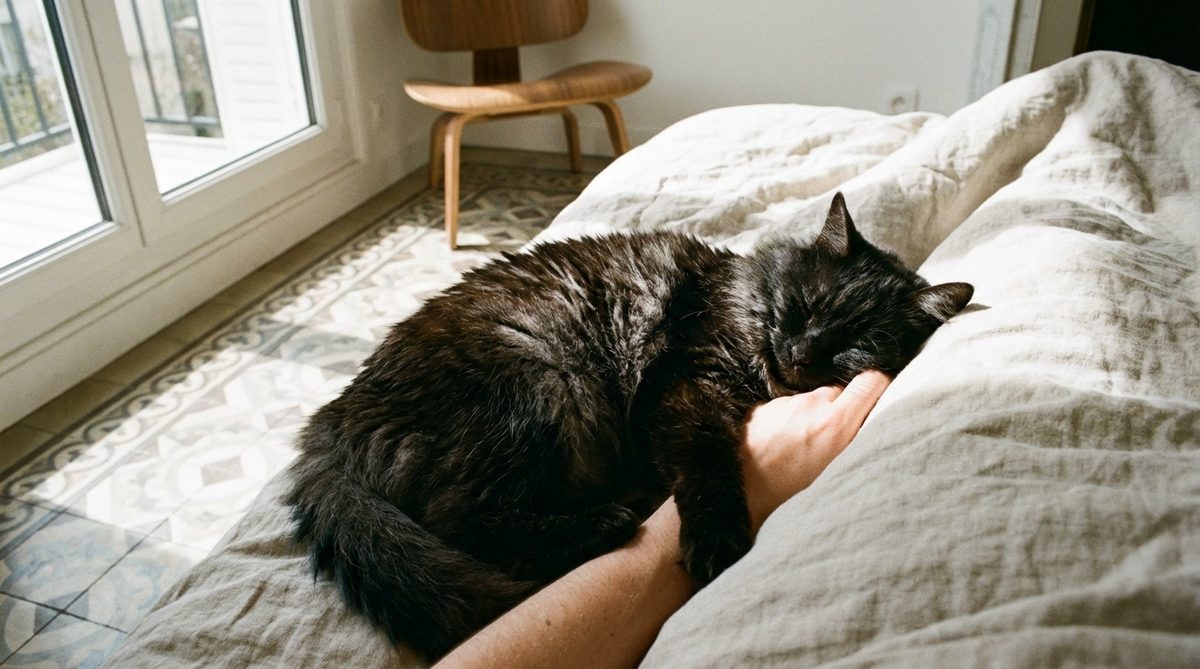
Slide under the covers. Feel that warm weight settle against your leg. Hear the low, rhythmic rumble start up. For many, this is the only way to fall asleep. But does letting a feline into your sanctuary actually wreck your rest? Science suggests the answer is complicated. It is not a simple yes or no. It depends entirely on who you are and how you sleep.
How Cat Purring Reduces Stress and Speeds Up Sleep Onset
The “engine” starting up is often annoying at first. Then it becomes a tool. That specific frequency of purring acts as a biological metronome. The vibrations trigger a physical response in the human body. Muscles relax. Heart rate slows. The tension from the day dissolves into the mattress.
This is not just anecdotal comfort. It is physiological. The sound masks other nighttime noises, creating a white noise barrier. For people who struggle with anxiety or racing thoughts, this presence provides a tangible anchor. It signals safety. The brain stops scanning for threats because a trusted companion is right there. This state of relaxation significantly cuts down the time it takes to drift off. You stop fighting the pillow and start accepting the drowsiness.
Why Co-Sleeping Creates a Sense of Emotional Security
Beyond the sound, there is the heat. Cats are living heating pads. Human bodies are wired to seek warmth during sleep, a leftover instinct from our evolutionary past. Sharing that warmth triggers a release of oxytocin. That is the bonding hormone. It reduces cortisol, the stress hormone.
When you feel a familiar presence, your guard drops. You do not feel alone in the dark. This emotional security allows for deeper mental letting go. If you lie in bed ruminating about tomorrow’s meetings, the cat’s steady breathing can interrupt that cycle. It grounds you in the present moment. The result is a more immediate transition into rest.
The Hidden Cost: Fragmented Sleep From Biological Mismatches
Here is where the picture gets messy. Cats are crepuscular. They are most active at dawn and dusk. Their internal clock does not align with human eight-hour blocks.
A cat waking up at 4 AM to groom itself, chase a shadow, or demand breakfast will disrupt your sleep architecture. These are micro-awakenings. You might not remember them in the morning. But they fragment your sleep cycles. You lose the deep, restorative stages of sleep. This fragmentation adds up. Over time, it leads to daytime fatigue, even if you slept for eight hours. The cat’s natural instincts override your need for continuity.
Allergens and Dust: The Invisible Sleep Saboteurs
Then there is the matter of hygiene. Or rather, the lack of it from a scientific perspective. Cat dander, saliva proteins, and dust mites thrive in bedding. If you have any sensitivity to these allergens, sharing a bed is a direct line to respiratory issues.
Even for non-allergic people, the accumulation of dander can cause mild inflammation in the nasal passages. This leads to congestion. Congestion changes breathing patterns. It can lead to snoring or mild sleep apnea. You wake up with a dry mouth. Your sleep quality drops not because of noise, but because of physical obstruction. The bed becomes a reservoir for triggers you cannot see.
Does the Benefit Outweigh the Risks?
So, should you kick the cat out? Not necessarily. Studies and observational data show that for most healthy adults, the psychological benefits outweigh the minor physical disruptions. The reduction in stress and the feeling of security often lead to better overall mental health. And mental health is directly tied to sleep quality.
The risks are manageable. They are not severe. There is no evidence of major medical danger for healthy individuals. The “micro-awakenings” are a trade-off for companionship. The allergens are a maintenance issue, not a health crisis. If you are not allergic and you can handle an occasional 3 AM grooming session, the data suggests you are fine.
Is It Safe to Sleep With a Cat?
Yes. It is safe. The consensus among sleep experts and veterinarians is clear. There are no major health risks for the average person. The cat is not going to steal your oxygen or cause harm. The real issue is personal tolerance.
Some people need absolute silence and stillness. For them, a cat is a disturbance. Others need touch and warmth. For them, the cat is a necessity. It is a compromise. You give up a bit of uninterrupted, clinical sleep. You gain a sense of connection and calm.
Do you push the weight off you at night? Or do you pull the covers up tighter? The science says it won’t hurt you. The habit says it feels good. Sometimes, that is enough of a reason to keep going.